China state dinner with Xi: Elon Musk, a bald eagle and Trump ‘off script’
China state dinner with Xi: Elon Musk, a bald eagle and Trump ‘off script’ – Washington rarely does understated diplomacy, and Thursday night’s White House state dinner for Chinese President Xi Jinping was certainly no exception. What was supposed to be an elegant closing event to Xi’s three-day visit quickly became a strange and memorable mix of high-level diplomacy, technology billionaires, fine dining, a symbolic bald eagle and Donald Trump deciding to leave his prepared remarks behind. China state dinner with Xi
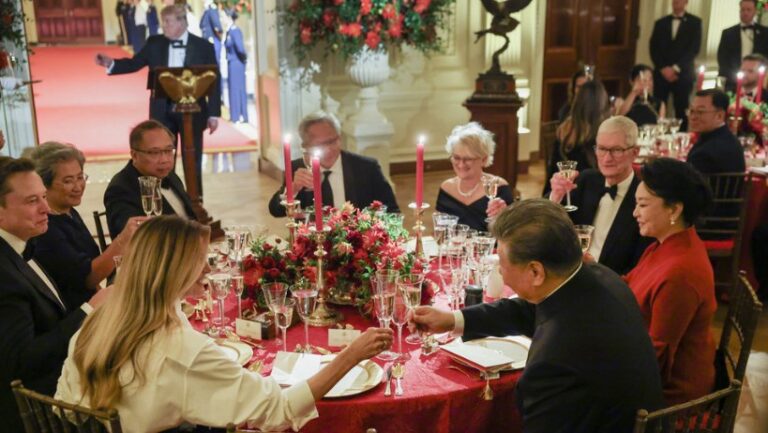
The guest list alone made the evening feel different from a traditional diplomatic banquet. Tesla and SpaceX CEO Elon Musk sat among some of the most influential figures in American business and technology, including Apple’s Tim Cook, Nvidia’s Jensen Huang, OpenAI’s Sam Altman, Amazon founder Jeff Bezos and Meta’s Mark Zuckerberg. Alongside them were senior U.S. officials, members of Congress, Supreme Court justices and prominent business leaders.
At the center of it all were Trump and Xi, two leaders whose relationship has repeatedly moved between confrontation, negotiation and highly public displays of personal rapport. Their dinner was designed to project warmth, even as major disagreements between Washington and Beijing remain unresolved.
A Dinner Designed to Look Like Diplomacy
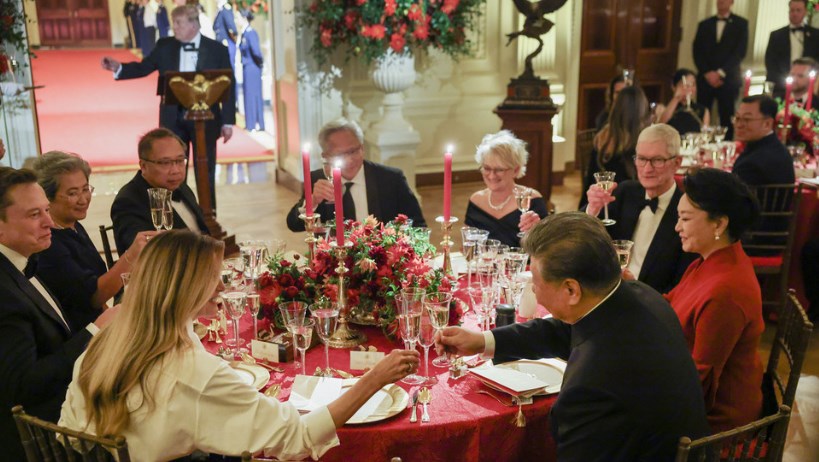
The dinner took place in the White House East Room after Trump and Xi had spent the day holding talks on issues including trade, artificial intelligence, Taiwan and other areas of U.S.-China relations. The dinner itself emphasized the softer side of diplomacy: formal clothing, carefully selected food, speeches about friendship and a room filled with some of the world’s most powerful business executives.
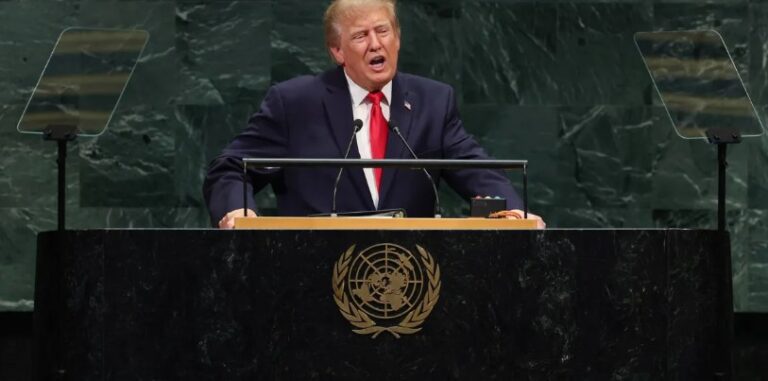
Trump used his toast to emphasize the relationship between the American and Chinese people. He acknowledged that the two countries represent different political systems but argued that their connections remain important. He also referred to the historical relationship between the nations and highlighted Chinese lives lost during the conflict against Japan in World War II. China state dinner with Xi
Xi responded in a similarly conciliatory tone. He said his discussions with Trump had produced common understanding on several issues and described the relationship as one requiring responsible cooperation between two major powers. Xi also connected Trump’s “Make America Great Again” ambition with China’s goal of national rejuvenation, presenting the two aspirations as potentially compatible.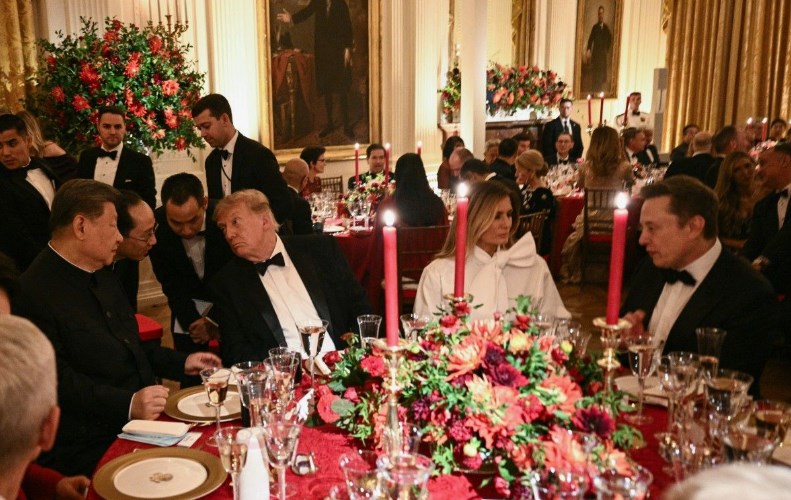
Yet beneath the polished speeches was a more complicated reality. Analysts noted that the summit produced limited publicly announced breakthroughs on some of the most difficult issues. The dinner therefore functioned not simply as a celebration, but as a carefully staged attempt to keep dialogue moving between two countries with enormous economic and strategic differences.
Elon Musk Joins a Remarkable Guest List
One of the biggest attractions for observers was the presence of Elon Musk. The Tesla and SpaceX chief was seated at the top table with Xi, Trump, Melania Trump and other major technology figures. His presence was especially notable because technology has become one of the most important areas of competition and cooperation between Washington and Beijing.
Musk was not alone in representing Silicon Valley and the American technology industry. Tim Cook, Jensen Huang, Sam Altman, Mark Zuckerberg, Sundar Pichai, Jeff Bezos and several other technology executives were among the guests. Their presence reflected how deeply U.S.-China relations now extend beyond traditional diplomacy and into artificial intelligence, semiconductors, electric vehicles, cloud computing and advanced technology.
The guest list also gave the dinner an unusual atmosphere. It was not simply a gathering of diplomats and politicians. CEOs who influence billions of dollars in investment, technology development and global supply chains were sitting alongside government officials responsible for national security and foreign policy.
That combination was particularly relevant given that trade and artificial intelligence were among the issues discussed during Xi’s visit. Technology companies increasingly operate directly within the geopolitical relationship between Washington and Beijing, making executives such as Musk and Huang important participants in conversations that once belonged almost exclusively to government officials.
Then Came the Bald Eagle
Perhaps the most visually memorable moment of the evening came when Trump presented Xi with a bald eagle statue. Trump described the bald eagle as a national symbol of the United States and an embodiment of the “free and soaring spirit of America.” He told Xi that he hoped the sculpture would find a suitable place in Beijing. The sculpture had been designed with involvement from Trump and first lady Melania Trump.
The gift was classic state-dinner symbolism. An eagle is immediately recognizable as an American national emblem, making the sculpture more than a decorative object. It allowed Trump to wrap the diplomatic message in something distinctly American while presenting it as a personal gift to his Chinese counterpart. The symbolism was also notable because the dinner was built around the idea that competition and cooperation can exist at the same time. Trump and Xi were discussing serious disputes, yet the evening featured friendship, hospitality and ceremonial gifts.
Xi did not publicly present a reciprocal gift to Trump during the dinner, according to reports. Instead, his remarks concentrated on the broader relationship between China and the United States and the need for both countries to manage their differences responsibly. China state dinner with Xi
Trump Goes “Off Script”
Then, in classic Trump fashion, the evening took an unexpected turn. While delivering his prepared remarks, Trump announced that he wanted to “go off script for just a second.” What followed had less to do with China and more to do with a building project at the White House: the ballroom Trump is constructing on the South Lawn. Trump invited the dinner guests to see the construction area after the event. He described the future ballroom enthusiastically and suggested that the guests would be among the first people to step into the space.
It was an unusual interruption to a diplomatic toast. Xi was in Washington for discussions about trade, technology, Taiwan and strategic relations, but Trump temporarily shifted the attention toward his White House construction project. The moment also illustrated how Trump’s public appearances frequently mix formal political messaging with personal interests and spontaneous commentary. Instead of sticking strictly to the diplomatic script, he used the occasion to showcase a project that has become one of the most visible physical changes associated with his second administration. For guests expecting a conventional state dinner, it was an unexpected detour. For anyone familiar with Trump’s public speaking style, however, it was much less surprising.
A Lavish Menu and a Complicated Relationship
The food was considerably more traditional than Trump’s impromptu remarks. Guests were served a menu that included yellow squash velouté with wild mushrooms, sesame-crusted sea bass, baby bok choy, roasted eggplant and a sophisticated dessert featuring vanilla crémeux, sour cherry confit and walnut frangipane. White House honey ice cream was also served. The menu carried its own historical touch. Trump and Melania hosted Xi with food combining American ingredients and subtle Chinese influence, while the dinner was served on red china dating to the Ronald Reagan administration.
There was also an element of historical irony surrounding the event. During Trump’s first presidential campaign in 2015, he criticized the lavish reception being prepared for Xi during the Chinese leader’s visit to Washington under President Barack Obama. Trump famously suggested that Xi and his delegation should simply go to McDonald’s before returning to negotiations. More than a decade later, Trump was the one hosting Xi at one of the most elaborate diplomatic dinners the White House could offer.
That contrast made the 2026 event particularly striking. The relationship between the United States and China had changed dramatically since 2015, and so had Trump’s position within it. The dinner did not erase disagreements between Washington and Beijing. It did, however, provide a highly choreographed setting in which both leaders could publicly emphasize cooperation, personal diplomacy and the importance of keeping the relationship stable.
With Elon Musk at the table, a bald eagle destined for Beijing, an extravagant meal and Trump stepping away from his prepared remarks to promote his ballroom, the night was anything but ordinary. For a few hours, the intense rivalry between the world’s two largest economies was wrapped in tuxedos, red-and-gold decorations, diplomatic toasts and carefully prepared courses. And perhaps that was the real point of the evening: diplomacy is not always conducted through formal agreements. Sometimes it happens through dinner, symbolism, conversation and the simple decision to keep talking.
About the Author