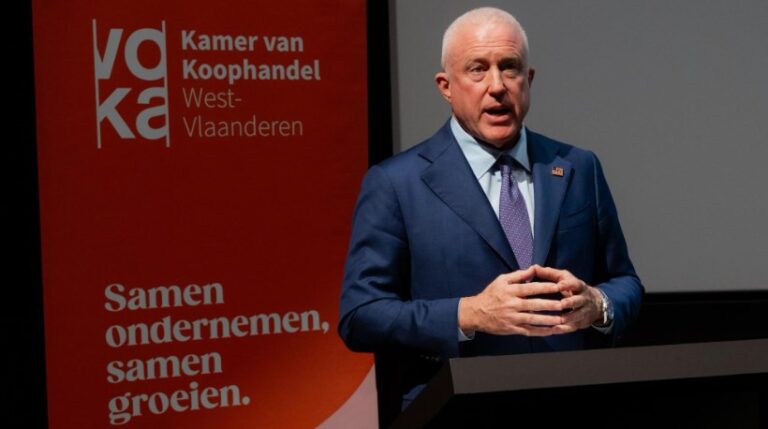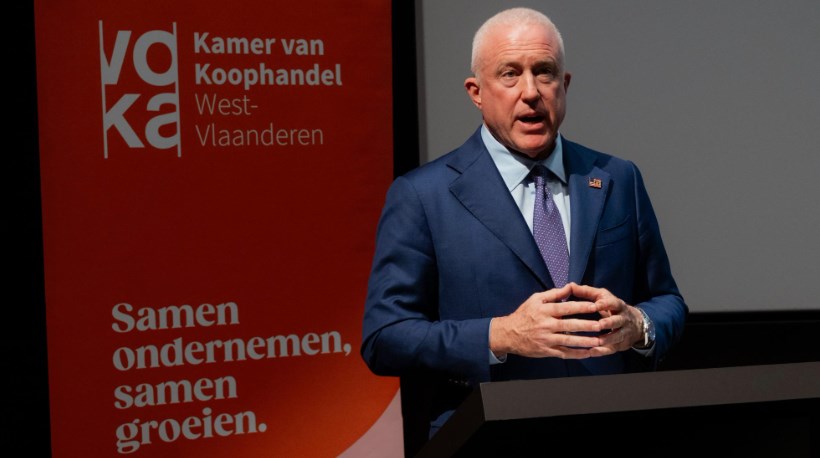
US ambassador to Belgium outraged by Brussels synagogue attack – An attack on a synagogue in Brussels has sparked strong reactions from American and Israeli diplomats, bringing renewed attention to concerns about antisemitism and the safety of Jewish communities across Europe. US Ambassador to Belgium Bill White has expressed outrage over the incident, describing it as a clear antisemitic attack and calling for stronger security measures to protect the targeted religious site. US ambassador to Belgium outraged by Brussels synagogue attack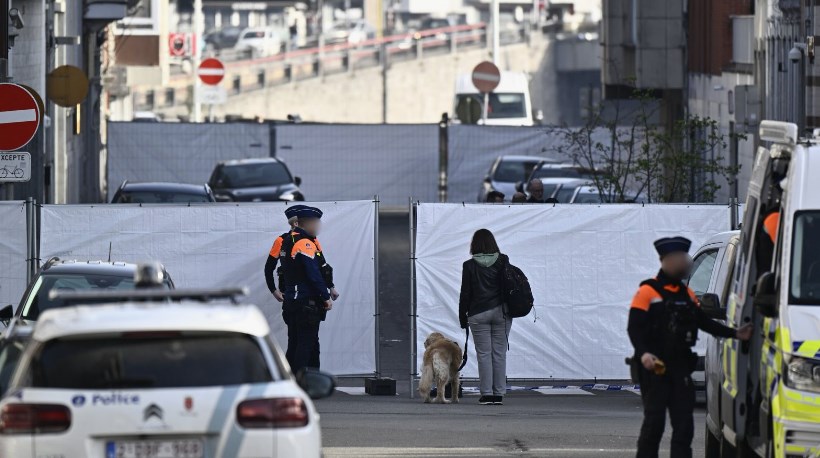
The incident took place during the night of October 27–28, when a paving stone was thrown through a third-floor window of an Orthodox Jewish synagogue in Anderlecht, a district of Brussels. The building serves members of the local Jewish community and is located on Kliniekstraat in the Cureghem neighborhood.
White visited the synagogue on November 7 alongside Israeli Ambassador to Belgium David Saranga to show solidarity with the congregation. The visit was intended to demonstrate that Jewish residents should not have to worry about their safety when attending religious services or gathering with their community.
The American ambassador did not hide his anger about the incident. He argued that the damage was unlikely to have been accidental because the targeted window was located high above other protected windows. He also called on Belgian authorities to identify and prosecute whoever was responsible. The incident has now become more than a local vandalism investigation. It has raised questions about religious freedom, security arrangements, and the responsibility of authorities to protect vulnerable communities.
Bill White Condemns the Attack on the Anderlecht Synagogue
Bill White made his position clear during his visit to the Orthodox Jewish synagogue. Accompanied by Israeli Ambassador David Saranga, he inspected the building and spoke about the importance of ensuring that Jewish residents can practice their religion without fear. White said the visit was made at the request of US President Donald Trump, reflecting Washington’s support for the Jewish community in Brussels. He described the incident as antisemitic vandalism and emphasized that attacks against places of worship should never be treated lightly.
The ambassador was particularly concerned about how the stone reached a third-floor window. According to his explanation, the window was positioned above protected glazing, making it difficult to believe that the damage happened accidentally. White expressed hope that investigators would identify the individual responsible and that the person would face prosecution if the evidence established wrongdoing. US ambassador to Belgium outraged by Brussels synagogue attack
His reaction also carried a broader message about religious freedom. People should be able to attend a synagogue, church, mosque, or other place of worship without worrying about intimidation or violence. In a statement shared on social media on November 10, White reiterated his commitment to improving security around the building. He also assured Brussels’ Jewish community that it was not standing alone in the face of the incident.
US Ambassador Wants Soldiers Stationed Near the Synagogue
Beyond expressing concern, White wants Belgian authorities to consider additional security measures around the targeted synagogue. One of his proposals involves asking Belgium’s Defence Minister Theo Francken and Interior Minister Bernard Quintin to consider stationing soldiers near the religious building. He believes a stronger security presence could help reassure Jewish residents and discourage potential attackers.
The ambassador also indicated that he intends to raise funds to improve protection around the synagogue. Additional security arrangements could include better surveillance, stronger physical protection, and closer coordination between local authorities and community representatives. However, any decision about deploying soldiers would ultimately belong to Belgian authorities. White can make recommendations and raise the issue diplomatically, but Belgium’s government must determine which security measures are appropriate.
His proposal comes amid broader concerns about the protection of Jewish institutions in the country. Synagogues, schools, and other community facilities have required security attention as authorities respond to concerns about antisemitism. White has also said he intends to meet Anderlecht Mayor Fabrice Cumps to discuss practical ways of improving relations between local residents and the Jewish community.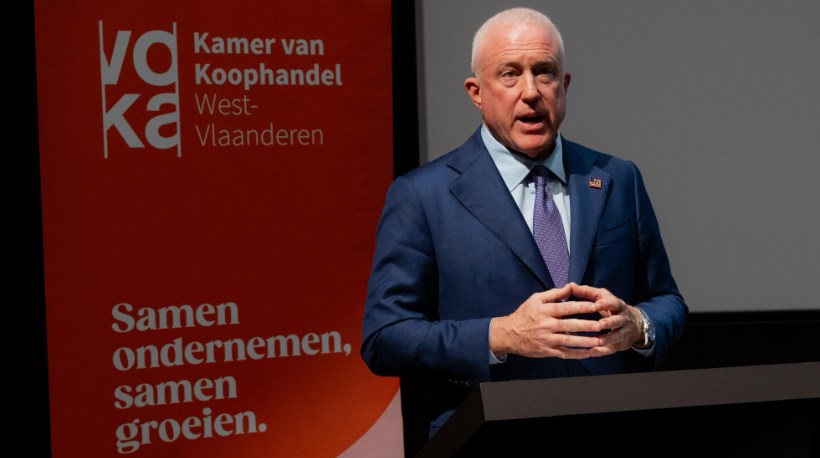
For the ambassador, protecting the synagogue is not simply about installing additional security measures. It is also about creating an environment where Jewish families can move around their neighborhood without feeling threatened.
Israeli Ambassador Warns About the Wider Meaning of the Attack
Israeli Ambassador David Saranga also condemned the incident during the visit, describing the damaged synagogue window as a warning that European governments should take seriously. Saranga pointed to the timing of the incident, which occurred shortly before the November 9–10 commemoration of Kristallnacht, the 1938 Nazi pogrom against Jewish communities in Germany and Austria. For Jewish communities, the historical significance of that period remains deeply painful. Kristallnacht involved widespread destruction of Jewish businesses, homes, and synagogues, marking a major escalation in Nazi persecution.
Saranga argued that an attack on a Jewish place of worship should be understood as an attack on broader European values, including religious freedom and the right of minorities to live safely. He also stressed that Jewish residents should never have to choose between practicing their faith and protecting themselves. The Israeli ambassador welcomed White’s involvement and expressed confidence that additional security measures could be introduced in Anderlecht. He also pointed to the stronger protection provided to Jewish institutions in Antwerp as an example of the type of arrangements that could be considered.
His comments highlight why the incident has attracted attention beyond Belgium. Antisemitism and attacks against religious institutions remain serious concerns in several European countries, making cooperation between governments and local communities increasingly important.
Belgian Police Continue Investigating the Incident
Although both ambassadors have described the incident as antisemitic, Belgian police have maintained a more cautious position regarding its circumstances. According to reporting by Belgian media, no formal complaint specifically identifying an antisemitic act had been filed at the time of the ambassadors’ visit. Investigators had also considered the possibility that the stone might have fallen from the roof rather than being deliberately thrown at the window.
That distinction matters because authorities must establish what happened through evidence rather than assumptions. Determining whether the incident was intentional, identifying a possible perpetrator, and establishing a motive are all important parts of the investigation.
White, however, believes the location of the damaged window makes an accidental explanation difficult to accept. He has urged investigators to take the incident seriously and pursue those responsible if evidence confirms a criminal act. The difference between the ambassadors’ assessment and the police’s initial position illustrates the importance of allowing the investigation to continue while taking community concerns seriously. Regardless of the final findings, the incident has highlighted the anxiety that damage to a synagogue can create among people who already worry about religious discrimination.
White Proposes Community Events to Build Stronger Relationships
Interestingly, White’s response has not been limited to calls for additional police or military protection. He has also proposed bringing different communities in Anderlecht together through cultural and social activities. Before visiting the synagogue, the American ambassador said he had spoken with Morocco’s ambassador to Belgium, Mohammed Ameur. White and Saranga hope to meet with him to discuss organizing a concert and other neighborhood activities involving members of the Moroccan community and the synagogue’s congregation.
The proposal reflects an effort to address another important part of community security: building trust between neighbors. Anderlecht is home to people from different cultural and religious backgrounds. Creating opportunities for residents to meet, communicate, and participate in shared activities could help strengthen relationships and reduce misunderstandings.
White believes music and friendship can serve as useful tools for bringing people together. A community event celebrating religious freedom and peaceful coexistence could send a positive message following an incident that has caused concern among local residents.
He also hopes to work with Mayor Fabrice Cumps and other community leaders to make the initiative possible. Such activities cannot replace proper security arrangements or law enforcement investigations. However, they could contribute to a neighborhood environment where residents feel more connected and supported.
A Wider Debate Over Antisemitism and Religious Freedom in Europe
The Brussels synagogue incident comes at a time when European governments continue to face difficult questions about antisemitism and the protection of Jewish communities. Religious institutions are particularly sensitive targets because attacks against them can affect far more than the physical buildings involved. They can create fear among worshippers, discourage families from attending services, and undermine confidence in the ability of authorities to protect religious freedom.
Belgium has already taken security measures to protect Jewish institutions, including the deployment of soldiers to guard certain sites and support police operations. Nevertheless, the latest incident has renewed calls for authorities to examine whether additional protection is necessary in Anderlecht.
The involvement of American and Israeli diplomats has also given the situation greater international visibility. At the same time, it is important to distinguish between condemning antisemitism and establishing the facts of a particular incident. Belgian authorities must complete their investigation, while political leaders and community representatives can continue working to improve safety and public confidence. The challenge is to ensure that Jewish residents feel protected without allowing fear and suspicion to divide the wider neighborhood.
What Happens Next for the Brussels Jewish Community?
For now, the focus remains on the police investigation and the possibility of stronger security around the synagogue. White has indicated that he will continue discussions with Belgian officials about deploying soldiers and improving protection at the site. He is also interested in raising funds and supporting community initiatives that bring different groups together.
The planned discussions with Moroccan representatives and Anderlecht’s local leadership could provide an opportunity to turn diplomatic expressions of solidarity into practical neighborhood projects. Meanwhile, the Jewish community will be watching closely to see whether the incident leads to meaningful improvements in security.
The damaged window may appear to be a relatively small act of vandalism, but its impact reaches much further. For people who depend on their synagogue as a place of worship, gathering, and community life, feeling safe inside that building is essential. White’s message is straightforward: nobody should be afraid to practice their religion, regardless of where they live or which faith they follow. US ambassador to Belgium outraged by Brussels synagogue attack
Whether through stronger security, effective investigations, or better relationships between neighbors, the next steps will matter. Ultimately, protecting the Brussels synagogue is about defending a basic principle that should apply everywhere: people must be free to worship, gather, and live according to their beliefs without intimidation or fear.
About the Author