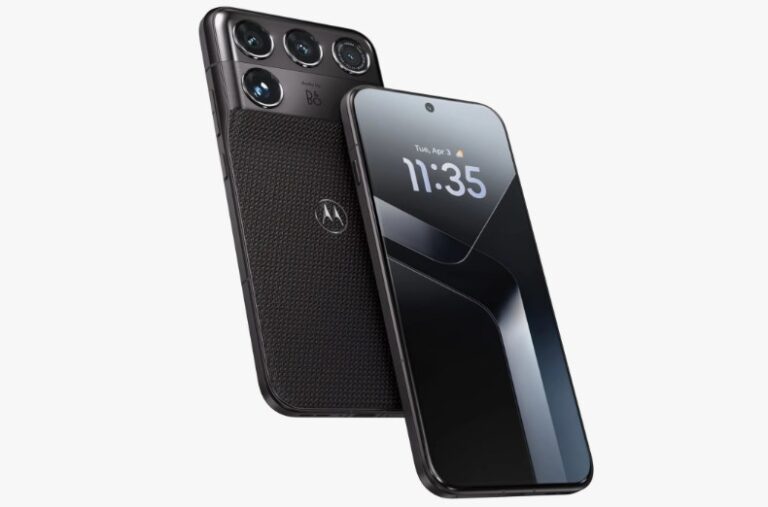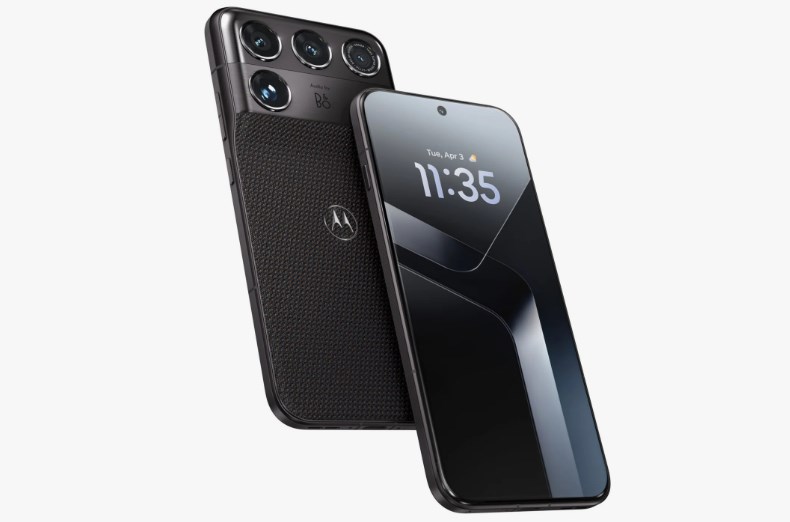
Motorola Signature 27 beats iPhone 18 Pro Max in DxOMark camera test – Motorola is making a serious statement in the premium smartphone market with the launch of its new flagship, the Motorola Signature 27. The device is already attracting attention for its impressive camera performance after earning a remarkable 173 points in DxOMark’s camera evaluation. That result places it ahead of Apple’s iPhone 18 Pro in the published global ranking and makes Motorola’s latest flagship one of the strongest camera phones tested in 2026.
For a company that has spent years competing against bigger names in the smartphone industry, this is an important achievement. Apple, Samsung, Google, and Huawei have traditionally dominated conversations about flagship photography. Motorola now has a stronger reason to be part of that discussion.
The Signature 27 does not rely on a single impressive camera specification. Instead, it combines a 50-megapixel main sensor, a 50-megapixel ultra-wide camera, and a high-resolution 200-megapixel periscope telephoto lens. Its performance in portraits, medium-range zoom, low-light photography, and video recording helped it secure a place near the top of DxOMark’s rankings.
There is an important detail behind the headline comparison: DxOMark’s published ranking lists the iPhone 18 Pro at 172 points, one point below Motorola’s 173. The available ranking does not separately establish a Pro Max score in that comparison. Nevertheless, the result puts the Signature 27 ahead of Apple’s listed Pro model and highlights Motorola’s progress in mobile imaging.
Motorola Signature 27 earns an impressive 173 camera points
DxOMark awarded the Motorola Signature 27 an overall camera score of 173 points and its Gold Label recognition. The score places it second in the global camera ranking, just behind the Huawei Pura 80 Ultra, which holds 175 points.
The result is particularly notable because the Signature 27 also improves on the original Motorola Signature, which received 164 points. That nine-point increase suggests that Motorola has made meaningful progress in its camera hardware and image-processing technology.
DxOMark evaluates smartphones across several photography and video scenarios rather than judging them on megapixel counts alone. Its testing considers exposure, colour accuracy, autofocus, texture, noise, zoom performance, and video stability. This broader approach helps explain why a phone with a well-balanced camera system can outperform a competitor with impressive specifications on paper.
For the Signature 27, portrait photography and medium-range zoom were among the strongest areas. Testers also highlighted generally reliable exposure, pleasant colours, and dependable autofocus across different lighting conditions.
A triple-camera system built for flexibility
The Motorola Signature 27 features a versatile rear camera arrangement designed to cover different photography situations. Its primary camera uses a 50-megapixel Sony LYTIA L910 sensor with an f/1.6 aperture and optical image stabilisation. Motorola has also highlighted Sony’s LOFIC technology, which is designed to improve the handling of bright highlights and darker areas in challenging scenes.
The second camera is a 50-megapixel ultra-wide shooter with a 122-degree field of view. It gives users more room to capture landscapes, architecture, group photographs, and wider indoor scenes. The camera also supports close-up photography, making it useful for subjects that require a different perspective.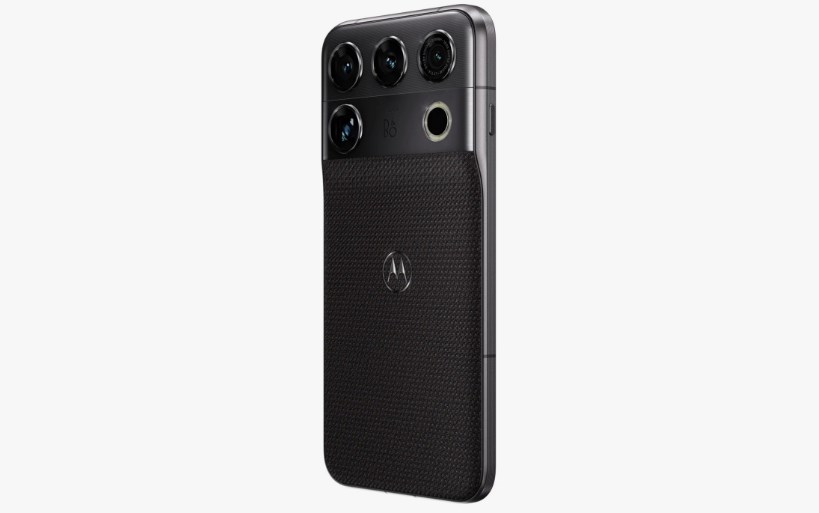
The biggest headline specification, however, is the 200-megapixel periscope telephoto camera. It provides 3x optical zoom and optical image stabilisation, allowing users to photograph distant subjects without depending entirely on digital enlargement. This setup gives the phone considerable flexibility. Users can switch between standard photographs, wide compositions, and zoomed-in shots without carrying additional camera equipment.
Portrait photography and zoom are major strengths
Portrait performance played an important role in the Signature 27’s DxOMark result. The testers reported natural-looking skin tones, accurate exposure, and good facial detail. The phone also performed well when photographing groups, where keeping several people in focus can be more challenging.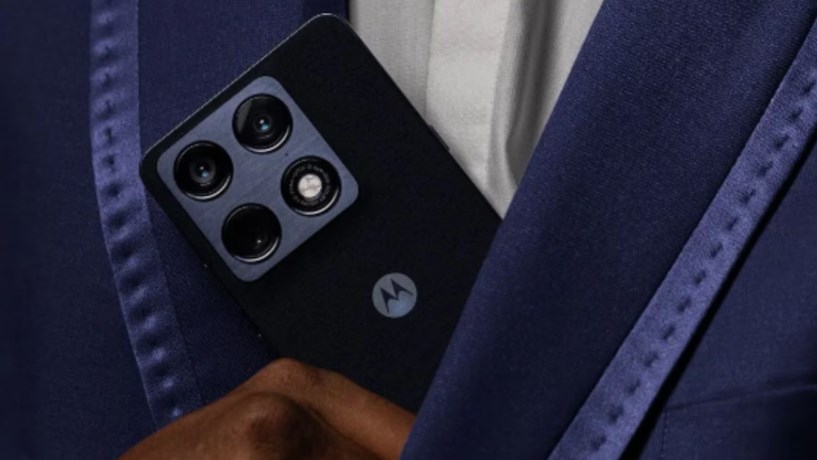
Motorola has introduced additional portrait options, including different focal lengths and adjustable background blur. Its Dynamic Bokeh feature is designed to vary the appearance of background separation according to the distance between the subject and surrounding objects. Zoom performance is another highlight. The dedicated 3x periscope camera produces detailed results at medium distances, with DxOMark finding that image quality remains relatively strong between approximately 3x and 6x.
The camera also changes sensor modes around the 6x range to help preserve texture as magnification increases. This approach helps maintain useful detail without requiring a separate telephoto camera for every zoom level. However, the results become less impressive at very long distances. DxOMark noted that fine details can become softer compared with competing smartphones equipped with more specialised long-range zoom hardware. In other words, the Signature 27 is particularly convincing at everyday zoom levels, but it is not necessarily the best choice for extreme-distance photography.
Low-light photos and video receive positive feedback
Taking good photographs at night remains one of the biggest challenges for smartphone cameras. Limited light can introduce noise, reduce sharpness, and make colours less accurate. Motorola appears to have made progress in this area with the Signature 27.
DxOMark found that the phone generally delivered well-exposed low-light photographs with pleasant colours and controlled noise. Its main camera can preserve a useful balance between highlights and shadows, helping nighttime scenes retain more visual information.
Video performance also contributed to the overall result. Testers praised its stable exposure, consistent colour reproduction, and reliable autofocus when moving between different environments. Image stabilisation helps keep footage smooth during everyday recording.
There are still limitations. In very dark environments, moving subjects can appear blurred, and some fine details may disappear because of noise reduction and motion blur. These weaknesses show that even expensive flagship smartphones continue to face challenges when recording difficult scenes. Motorola Signature 27 beats iPhone 18 Pro Max in DxOMark camera test
200MP zoom, action photography, and advanced video features
Motorola has included several additional imaging features to make the Signature 27 more appealing to photography enthusiasts. One interesting addition is a dedicated Event Vision Sensor, which detects changes in light intensity at the pixel level. It works alongside the Action Shot feature to help the phone recognise movement and adjust shutter speed when photographing fast-moving subjects.
This could be particularly useful when capturing children playing, pets running, or sporting activities. Instead of relying entirely on users to adjust camera settings manually, the system is designed to help produce sharper action photographs. Motorola Signature 27 beats iPhone 18 Pro Max in DxOMark camera test
The 200-megapixel telephoto camera also supports Super Zoom Pro, extending the zoom range up to 100x with AI-assisted processing at higher magnifications. The phone supports 4K Dolby Vision recording at up to 60 frames per second across its rear cameras, while the main and telephoto cameras also support 8K recording at up to 60fps, according to Motorola’s specifications. A 50-megapixel front camera completes the imaging package, giving users a high-resolution option for selfies and video calls.
Premium hardware comes with a premium price
The Motorola Signature 27 is not positioned as an affordable flagship. It is a premium device built to compete with expensive smartphones from established manufacturers. Its hardware includes Qualcomm’s Snapdragon 8 Elite Extreme Gen 6 platform, a 6.78-inch AMOLED display with a 120Hz refresh rate, and a 7,000mAh battery. Motorola also advertises 90W wired charging and 50W wireless charging.
The company has announced US pre-orders beginning November 19 at $1,599.99, with sales scheduled to start on November 26. Pricing and availability may vary across international markets. That price places the phone firmly in the ultra-premium category. Buyers will therefore expect more than an impressive camera score, including strong performance, battery endurance, display quality, software support, and dependable everyday usability.
A serious camera-phone contender for Motorola
The Motorola Signature 27’s 173-point DxOMark result is an important milestone for the company. Its position just behind the Huawei Pura 80 Ultra and ahead of the iPhone 18 Pro in the published ranking demonstrates that Motorola can compete with some of the industry’s strongest imaging devices. Its biggest strengths are its balanced photography performance, natural-looking portraits, useful medium-range zoom, and stable video recording. The 200-megapixel periscope camera and dedicated action sensor also give it features that may appeal to people who regularly take photographs of moving subjects. Motorola Signature 27 beats iPhone 18 Pro Max in DxOMark camera test
It is not perfect, particularly when dealing with extreme zoom distances or very dark scenes involving movement. Still, the overall result is impressive. For consumers comparing premium camera phones, the Signature 27 deserves attention. Motorola has delivered a flagship that challenges familiar competitors and shows that the camera-phone conversation is no longer limited to Apple, Samsung, and Google.
About the Author