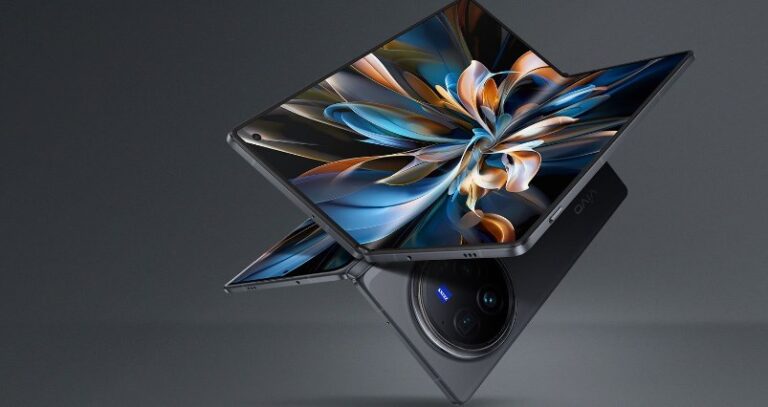
Qualcomm launches Snapdragon 8 Elite Gen 6 and flagship 8 Elite Extreme Gen 6

Qualcomm launches Snapdragon 8 Elite Gen 6 and flagship 8 Elite Extreme Gen 6 – Qualcomm has officially expanded its flagship smartphone chip lineup with the launch of the Snapdragon 8 Elite Gen 6 and the more powerful Snapdragon 8 Elite Extreme Gen 6. Announced on September 22, 2026, the two mobile platforms represent Qualcomm’s latest push toward faster on-device artificial intelligence, stronger gaming performance, better camera processing, and more efficient connectivity. Qualcomm launches Snapdragon 8 Elite Gen 6 and flagship 8 Elite Extreme Gen 6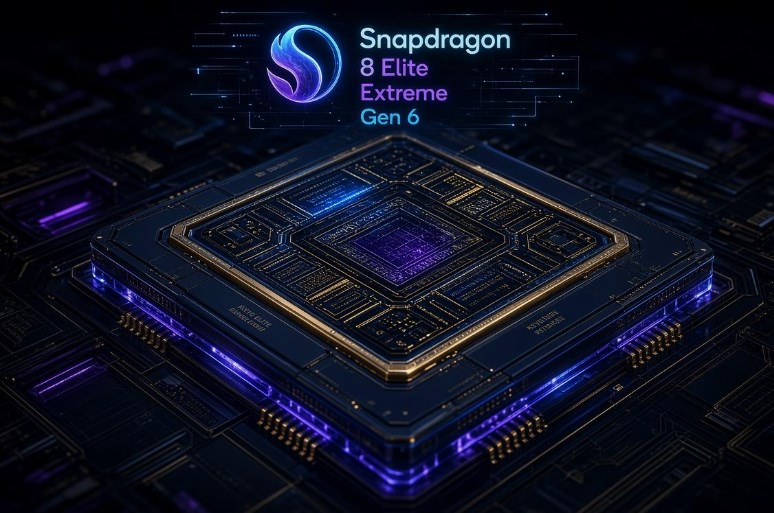
The biggest story is not simply another annual processor upgrade. Qualcomm is now offering two distinct flagship platforms, giving smartphone manufacturers more flexibility when building premium devices. Both chips move to an advanced 2nm manufacturing process and use Qualcomm’s custom Oryon CPU architecture, while the Extreme version adds additional hardware aimed at demanding AI workloads, gaming, and professional video production.
Snapdragon 8 Elite Gen 6 Brings 5GHz Performance to More Flagships
The Snapdragon 8 Elite Gen 6 is positioned as the more broadly available flagship option. Qualcomm says its Oryon CPU becomes the world’s first mobile CPU to reach a 5GHz clock speed, using two Prime cores running at up to 5GHz alongside six Performance cores reaching up to 4GHz. The platform also includes a 16MB Oryon Flex Cache designed to help maintain performance across demanding workloads. Qualcomm launches Snapdragon 8 Elite Gen 6 and flagship 8 Elite Extreme Gen 6
Compared with the previous generation, Qualcomm claims the standard Snapdragon 8 Elite Gen 6 delivers a 10% improvement in CPU performance while improving CPU power efficiency by 37%. Those numbers are particularly interesting for smartphones because raw benchmark performance is only part of the equation. Better efficiency can potentially mean less heat, longer battery life, and more sustained performance during gaming, video editing, navigation, and other intensive tasks.
Graphics also receive a major update. Qualcomm says the new Adreno GPU provides a 35% performance improvement and up to 40% better power efficiency compared with the previous generation. That should give manufacturers more room to push high-refresh-rate displays, advanced lighting effects, high-resolution textures, and demanding games without relying entirely on higher power consumption.
The Gen 6 also has a stronger AI engine, with Qualcomm reporting a 14% improvement in Hexagon NPU performance. Instead of treating AI as a separate feature, Qualcomm is integrating it across the CPU, GPU, NPU, camera system, and connectivity hardware. The goal is to make AI functions feel more natural and less dependent on cloud processing.
Snapdragon 8 Elite Extreme Gen 6 Pushes the Hardware Even Further
For users who want the highest level of mobile performance, Qualcomm has introduced the Snapdragon 8 Elite Extreme Gen 6. It shares the same 2nm foundation and Oryon CPU concept, but Qualcomm has added more specialized hardware to separate it from the standard Elite Gen 6.
The Extreme model also reaches 5GHz on its Prime CPU cores. Qualcomm claims a 13% CPU performance increase over the previous generation, while the new Adreno GPU delivers up to 44% higher graphics performance and 40% improved power efficiency. The Extreme platform also includes 18MB of dedicated Adreno High Performance Memory, giving the GPU additional resources for complex graphics workloads.
One of the most interesting additions is Adreno Neural Fusion. The technology combines dedicated AI processing with the GPU to support features such as AI-powered super resolution, frame generation, and image reconstruction. In practical terms, the technology is designed to make games look more detailed while reducing the amount of conventional rendering work required from the GPU. Qualcomm says this approach can reduce rendering power consumption by as much as 40% in an internal demonstration.
The Extreme chip is also designed with modern game engines in mind. Qualcomm highlights support for technologies such as Unreal Engine’s Lumen Global Illumination, MegaLights, and Nanite Virtualized Geometry, as well as integrations for other major game engines. This could become increasingly important as mobile games attempt to approach console-style graphics quality.
AI Becomes the Center of the Smartphone Experience
Artificial intelligence is arguably the biggest theme behind both new Snapdragon platforms. Qualcomm is moving beyond conventional generative AI features and focusing heavily on what it calls agentic AI. Instead of simply responding to a question, an on-device agent can understand context and potentially carry out multi-step actions on the user’s behalf.
The Snapdragon 8 Elite Extreme Gen 6 is equipped with a reengineered Hexagon NPU that Qualcomm says is 35% faster and up to 33% more efficient than the previous generation. The company also says the Extreme platform can run mixture-of-experts AI models with more than 30 billion parameters directly on the device, with support for context windows of up to 32,000 tokens. Qualcomm launches Snapdragon 8 Elite Gen 6 and flagship 8 Elite Extreme Gen 6
That matters because running AI locally can reduce dependence on remote servers. Personal information can remain on the phone for certain workloads, while responses can potentially happen with lower latency. Qualcomm is also upgrading its Sensing Hub with dual micro-NPUs, which the company says deliver up to 85% better compute performance. These processors are designed for low-power, always-on contextual functions.
The standard Snapdragon 8 Elite Gen 6 receives many of the same underlying AI improvements, although the Extreme version has additional memory and hardware resources for more demanding AI models. Qualcomm’s two-tier strategy therefore allows manufacturers to choose between premium AI performance and the company’s highest-end configuration.
Cameras, Video and Connectivity Get Serious Upgrades
Smartphone photography has become another major battlefield for flagship processors, and Qualcomm is putting significant emphasis on computational imaging. The Snapdragon 8 Elite Gen 6 introduces Intelligent Pixel Control, which is designed to analyze individual pixels and improve image consistency while reducing problems such as halos and lens flare. Its Elite Color Engine also works to improve video quality and reduce noise.
The Extreme version takes video capabilities considerably further. Qualcomm lists support for 8K video recording at 60 frames per second and 4K slow-motion recording at 240 frames per second. It also adds native support for Advanced Professional Video, or APV, giving compatible smartphones a more production-oriented video workflow.
Connectivity is another major part of the package. Both platforms use Qualcomm’s X105 5G Modem-RF system, with theoretical peak download speeds of up to 14.8Gbps and upload speeds of up to 4.2Gbps. The platforms also support satellite communication technologies and Qualcomm’s FastConnect 8800 connectivity system.
FastConnect 8800 is particularly notable because Qualcomm lists peak Wi-Fi speeds of up to 11.6Gbps and support for next-generation Wi-Fi technologies, including Wi-Fi 8 capabilities. The platforms also support Bluetooth 6.0, Ultra Wideband, and Thread, giving future flagship phones a broader connectivity toolbox.
What the New Snapdragon Chips Mean for 2026 Flagship Phones
Qualcomm’s decision to launch two flagship Snapdragon 8 Elite platforms gives smartphone manufacturers more choices than before. The Snapdragon 8 Elite Gen 6 can serve as the foundation for high-end phones that need strong performance and efficiency, while the Extreme Gen 6 provides additional resources for manufacturers targeting gaming enthusiasts, AI-heavy applications, and professional mobile video.
Qualcomm has confirmed that smartphones using the two platforms will come from brands including HONOR, iQOO, Motorola, OnePlus, OPPO, REDMI, RedMagic, vivo, and Xiaomi. Devices are expected to begin appearing globally in the coming weeks. The first announced phone using the Extreme platform is Motorola’s Signature 27 Extreme, which Motorola says will launch globally before the end of 2026.
Ultimately, the Snapdragon 8 Elite Gen 6 family represents more than a simple speed increase. Qualcomm is clearly designing its latest smartphone silicon around a future where AI agents, advanced mobile gaming, computational photography, professional video, and high-speed connectivity all work together. The standard Gen 6 and Extreme Gen 6 take slightly different approaches, but both point toward the same direction: smartphones are becoming increasingly capable computers that can perform more sophisticated tasks directly in the user’s hand.
For consumers, the real test will come when these chips arrive in actual phones. Manufacturer choices around cooling, battery capacity, cameras, displays, software, and pricing will determine how much of Qualcomm’s new hardware potential users ultimately experience. Still, with a 2nm process, 5GHz Oryon CPUs, stronger AI engines, redesigned Adreno graphics, and significantly expanded imaging capabilities, the Snapdragon 8 Elite Gen 6 generation marks a substantial step forward for premium Android hardware. Qualcomm launches Snapdragon 8 Elite Gen 6 and flagship 8 Elite Extreme Gen 6
About the Author