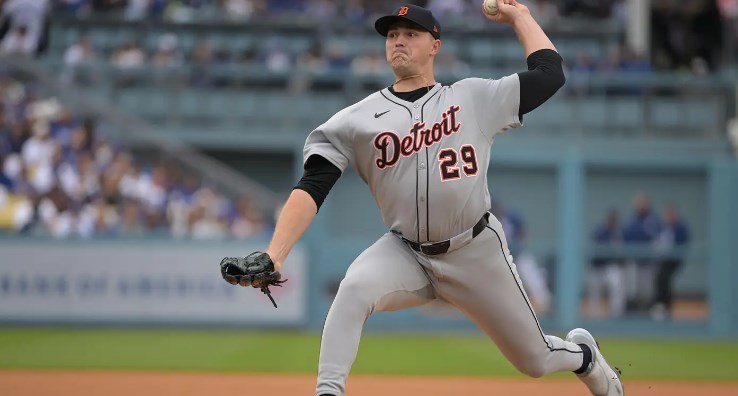
What’s next for Dodgers? Top free agent targets after Tarik Skubal signs with Mets – When the New York Mets handed two-time American League Cy Young Award winner Tarik Skubal a record-shattering nine-year, $450 million contract on Sunday night, the ripple effects immediately reached Los Angeles. Having acquired Skubal from Detroit at the summer trade deadline to anchor their rotation, the Dodgers watched their prized rental head east without even submitting a formal contract offer. Yet for a front office accustomed to operating at the top of Major League Baseball’s financial food chain, missing out on the winter’s biggest prize is less a setback and more a calculated pivot.
Understanding why Los Angeles let Skubal walk helps clarify where president of baseball operations Andrew Friedman will direct his resources next. Entering the offseason with roughly $392 million already committed toward the 2027 luxury-tax threshold—and staring down looming labor uncertainty ahead of the December 1 collective bargaining agreement expiration—the Dodgers balked at guaranteeing $50 million annually to a 30-year-old pitcher who underwent an elbow scope in May. Rather than locking themselves into nearly a decade of commitment through Skubal’s age-38 season, Los Angeles can now spread its payroll flexibility across a deeper tier of free-agent arms and strategic roster upgrades.
Even without Skubal, the Dodgers’ projected starting rotation remains the envy of most franchises. Yoshinobu Yamamoto, Blake Snell, and Tyler Glasnow form a formidable top three, supported by young talent including Roki Sasaki, Emmet Sheehan, Gavin Stone, Justin Wrobleski, and Landon Knack. However, with Shohei Ohtani unlikely to return to the mound at the very start of the season and Glasnow and Snell carrying lengthy injury histories, adding reliable innings remains a clear priority.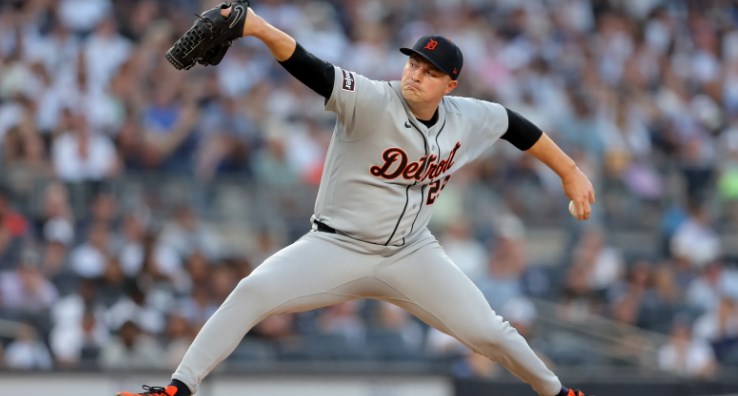
At the top of the remaining free-agent pitching board sits right-hander Michael King. King offers the exact blend of swing-and-miss stuff and multi-inning durability that fits the Dodgers’ pitching laboratory. Having proven himself both as a high-leverage reliever and a frontline starter in the National League West, King would slot seamlessly behind Yamamoto without requiring the decade-long financial commitment that scared Los Angeles away from Skubal. His familiarity with the division and ability to miss bats in October make him arguably the most logical target on the open market. What’s next for Dodgers
If the Dodgers prefer a proven workhorse with postseason pedigree, Freddy Peralta stands out as another compelling option. Peralta has spent years thriving near the top of Milwaukee’s rotation, consistently generating high strikeout totals while taking the ball every fifth day. For a Los Angeles staff that frequently juggles load management and midseason IL stints, Peralta’s durability and competitive edge would provide invaluable stability from April through September. What’s next for Dodgers
For a team that loves upside plays on left-handed pitching, Trevor Rogers presents an intriguing mid-tier avenue. Rogers has revitalized his career by refining his secondary offerings and limiting hard contact, offering the kind of southpaw balance the Dodgers value when Shohei Ohtani is limited to designated hitter duties. Signing a pitcher in Rogers’ tier would allow Los Angeles to fortify its rotation depth while keeping powder dry for midseason trade deadlines.
Beyond starting pitching, passing on Skubal preserves the financial breathing room needed to address subtle flaws elsewhere on the roster. High-leverage bullpen help is perpetually on Friedman’s shopping list, particularly arms capable of handling the eighth and ninth innings when games tighten in October. Additionally, with an aging core around the diamond, Los Angeles could explore versatile positional upgrades—such as an athletic second baseman like Jazz Chisholm Jr. or a bounce-back outfield bat like Trent Grisham—to inject speed and left-handed power into the lineup.
Ultimately, watching Tarik Skubal sign with Steve Cohen’s Mets stings far less in Chavez Ravine than it might in most baseball cities. The Dodgers have built a sustainable juggernaut precisely because they refuse to chase every bidding war to its breaking point. By stepping aside from a $450 million commitment, Los Angeles has preserved the agility to target multiple impact free agents—and position itself to strike again whenever the next superstar becomes available. What’s next for Dodgers
About the Author