The base Galaxy S27 Ultra could miss out on Samsung’s faster RAM and storage – For years, buying Samsung’s “Ultra” flagship meant getting the company’s absolute best hardware right out of the gate, regardless of which storage tier you selected. Whether you opted for the entry-level model or splurged on the top configuration, the underlying processor, memory speed, and storage architecture remained identical. However, fresh supply-chain leaks surrounding the upcoming Galaxy S27 lineup suggest that Samsung may be preparing to draw a sharp hardware line right down the middle of its flagship series—and buyers eyeing the base 256GB Galaxy S27 Ultra could end up paying the price. The base Galaxy S27 Ultra could miss out on Samsung’s faster RAM and storage
According to a detailed configuration breakdown shared on the South Korean tech forum Meeco and reported by industry outlets, Samsung plans to reserve its next-generation LPDDR6 RAM and UFS 5.0 storage for only three out of ten planned Galaxy S27 variants. Crucially, the entry-level 256GB Galaxy S27 Ultra is reportedly left off that list. If these specifications hold true when the series launches in early 2027, customers who purchase the base Ultra model will receive the exact same older memory and storage standards—likely LPDDR5X and UFS 4.1—found inside the standard Galaxy S27 and Galaxy S27+.
To unlock the true next-generation memory speeds that Samsung’s semiconductor division has been touting, Ultra buyers would reportedly need to step up to at least the 512GB tier. Even then, the hardware tiering does not stop there. The leak indicates that while the 512GB Galaxy S27 Ultra will make the jump to faster LPDDR6 memory and UFS 5.0 storage, it will remain capped at 12GB of RAM. Shoppers who want the full 16GB RAM ceiling alongside those cutting-edge memory speeds will reportedly have no choice but to spring for the top-of-the-line 1TB model.
On paper, the performance gap between these two storage generations is far from trivial. Samsung rates its UFS 5.0 flash storage for sequential read speeds of up to 10.8 GB per second and write speeds reaching 9.5 GB per second, alongside a forty percent improvement in power efficiency compared to UFS 4.1. When paired with LPDDR6 memory, those upgrades translate into noticeably snappier app launches, faster 8K video transfers, smoother multitasking, and substantially better responsiveness for on-device artificial intelligence models that rely heavily on rapid memory bandwidth. The base Galaxy S27 Ultra could miss out on Samsung’s faster RAM and storage
Behind the scenes, Samsung’s motivation for splitting its flagship hardware comes down to relentless component inflation and margin protection. Across the mobile industry, the cost of advanced 2-nanometer processors, high-density memory chips, and next-generation OLED panels has climbed steadily. Having already raised the retail price of the Galaxy S26 Ultra to $1,399.99 in late 2026, Samsung faces fierce consumer resistance if it pushes the starting price of the S27 Ultra even higher. Keeping LPDDR5X and UFS 4.1 in the base 256GB model allows Samsung to hold the line on its entry-level price tag—or at least prevent an even steeper hike—while quietly nudging power users toward higher-margin 512GB and 1TB upgrades.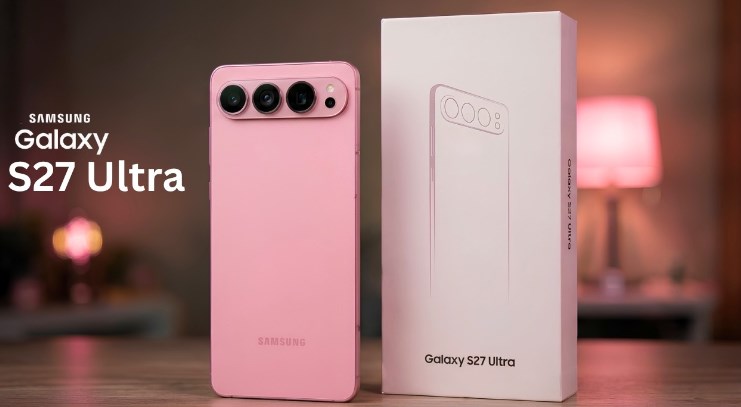
The leaked breakdown also sheds light on how Samsung intends to position the rumored Galaxy S27 Pro, a new compact flagship expected to join the lineup alongside the standard S27, S27+, and S27 Ultra. While earlier rumors suggested the Pro model might adopt LPDDR6 across the board, the latest report indicates that only a top-tier 1TB variant of the Galaxy S27 Pro—potentially tied to regional Exynos 2700 configurations—will feature the faster memory and storage standards. Every other version of the S27, S27+, and S27 Pro is tipped to stick with current-generation memory hardware.
For everyday smartphone users, the real-world difference between UFS 4.1 and UFS 5.0 during basic web browsing or social media scrolling will likely remain subtle. Yet for enthusiasts who buy an Ultra phone specifically for future-proofing over a seven-year software support window, discovering that a $1,400 base model ships with last year’s memory architecture feels like a tough pill to swallow. Until Samsung makes its official announcement in early 2027, these configuration tables remain subject to final supply-chain adjustments—but if the leaks prove accurate, the entry-level Galaxy S27 Ultra may carry an asterisk that savvy buyers will want to read carefully before clicking pre-order. The base Galaxy S27 Ultra could miss out on Samsung’s faster RAM and storage
About the Author