Russian helicopter violates European airspace following drone attack – For nations bordering the Baltic Sea, the war in Ukraine has long felt uncomfortably close to home, yet rarely has the spillover been quite so visible from the shoreline. On Saturday, November 21, 2026, a dramatic sequence of events unfolded in the Gulf of Finland after a drone strike left a Russian cargo vessel burning and adrift, culminating in a suspected Russian helicopter incursion deep into Finnish airspace. The incident has prompted immediate coordination with NATO, triggered emergency maritime and aviation restrictions, and renewed urgent warnings from European leaders that the conflict is bleeding directly into NATO territory. Russian helicopter violates European airspace following drone attack 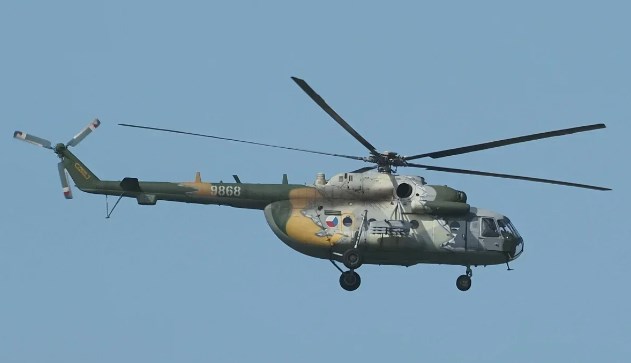
The chain of events began early Saturday morning when drones struck the Sparta II, a Kaliningrad-bound Russian cargo ship widely linked to Russia’s Ministry of Defense and previously documented transporting military hardware. According to Commander Ilja Iljin of the Finnish Border Guard, Ukrainian drones hit the vessel in Russian territorial waters, igniting a fire on board and knocking out its steering. Disabled and engulfed in smoke, the Sparta II drifted westward across the maritime boundary into Finnish territorial waters off the southern coastal town of Loviisa at 12:27 p.m. local time. Russian helicopter violates European airspace following drone attack
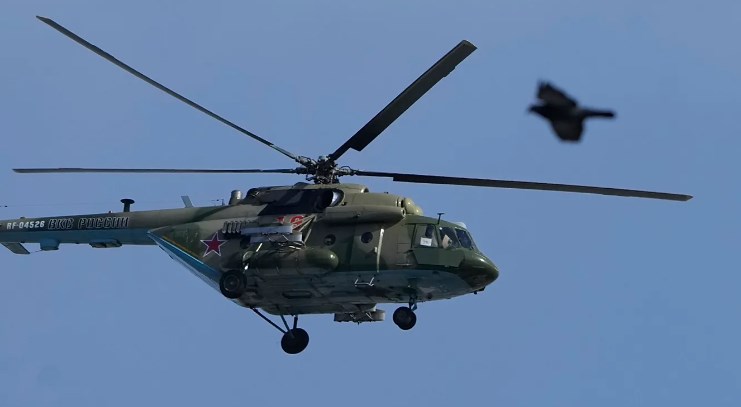
Just seven minutes later, at 12:34 p.m., Finnish radar tracked a Russian helicopter crossing into Finnish airspace in the exact same area. According to Finland’s Ministry of Defence, the aircraft penetrated up to 4.1 kilometers inside sovereign Finnish territory before turning back. Speaking shortly after the breach was detected, Finnish Defence Minister Antti Häkkänen noted that the unauthorized flight was likely tied to Russian rescue or monitoring efforts surrounding the stricken Sparta II. Even if the incursion stemmed from a chaotic maritime emergency rather than deliberate aggression, crossing more than four kilometers into a NATO member’s airspace without clearance represents a serious breach of international aviation rules and national sovereignty.
Out on the water, Finnish authorities quickly took charge of the unfolding maritime hazard. Once the Sparta II drifted into Finnish waters, responsibility for search, rescue, and environmental containment legally shifted to Helsinki. All sixteen crew members aboard the cargo ship were safely evacuated, while Finnish Border Guard vessels launched an intensive, multi-day firefighting and cooling operation. Crews worked carefully to douse the flames without pumping so much water into the hull that the vessel would destabilize or sink—an outcome that could trigger an environmental disaster or expose hazardous military cargo on the seabed.
Simultaneously, the Finnish Defence Forces moved swiftly to secure the eastern Gulf of Finland. Authorities imposed temporary air and sea restrictions across the surrounding area as a precaution against further drone or air-defense activity, while the Finnish Border Guard opened a formal investigation into the helicopter’s flight path. Helsinki also immediately notified NATO headquarters of both the drone strike and the subsequent airspace violation, ensuring alliance commanders were briefed in real time.
The timing of the Gulf of Finland incident has heightened anxiety across Europe because it did not happen in isolation. Just one day earlier, on Friday, November 20, two Russian missiles and a drone crashed inside Polish territory roughly thirty-five kilometers from where thousands of European troops were conducting joint training exercises. Warsaw condemned that incursion as an intentional provocation, prompting NATO Secretary General Mark Rutte to reaffirm in Warsaw on Saturday that the alliance will defend every inch of allied soil ahead of an emergency North Atlantic Council meeting in Brussels.
Taken together, back-to-back incidents along NATO’s eastern and northern flanks illustrate how fragile the buffer between active warfare and peacetime Europe has become. Speaking after Saturday’s events, Finnish Prime Minister Petteri Orpo warned bluntly that the war in Ukraine is spilling over into Finland’s immediate neighborhood. Echoing that concern, retired General Jarmo Lindberg, Finland’s former chief of defense and chair of the European Center of Excellence for Countering Hybrid Threats, observed that Europe is already operating in a perilous gray zone somewhere between peace and open war. Russian helicopter violates European airspace following drone attack
For Finland, which joined NATO in 2023 specifically to shield itself from Russian volatility, Saturday’s episode served as both a stress test and a validation of its readiness. Border Guard crews contained a burning ship without loss of life, air-defense monitors tracked the intruding helicopter to the kilometer, and alliance channels functioned seamlessly. Yet as long as drones, missiles, and military vessels continue trading blows across the Baltic corridor, European nations on Russia’s doorstep will remain on permanent high alert—knowing that the next stray aircraft or drifting hull could test alliance resolve all over again.
About the Author