
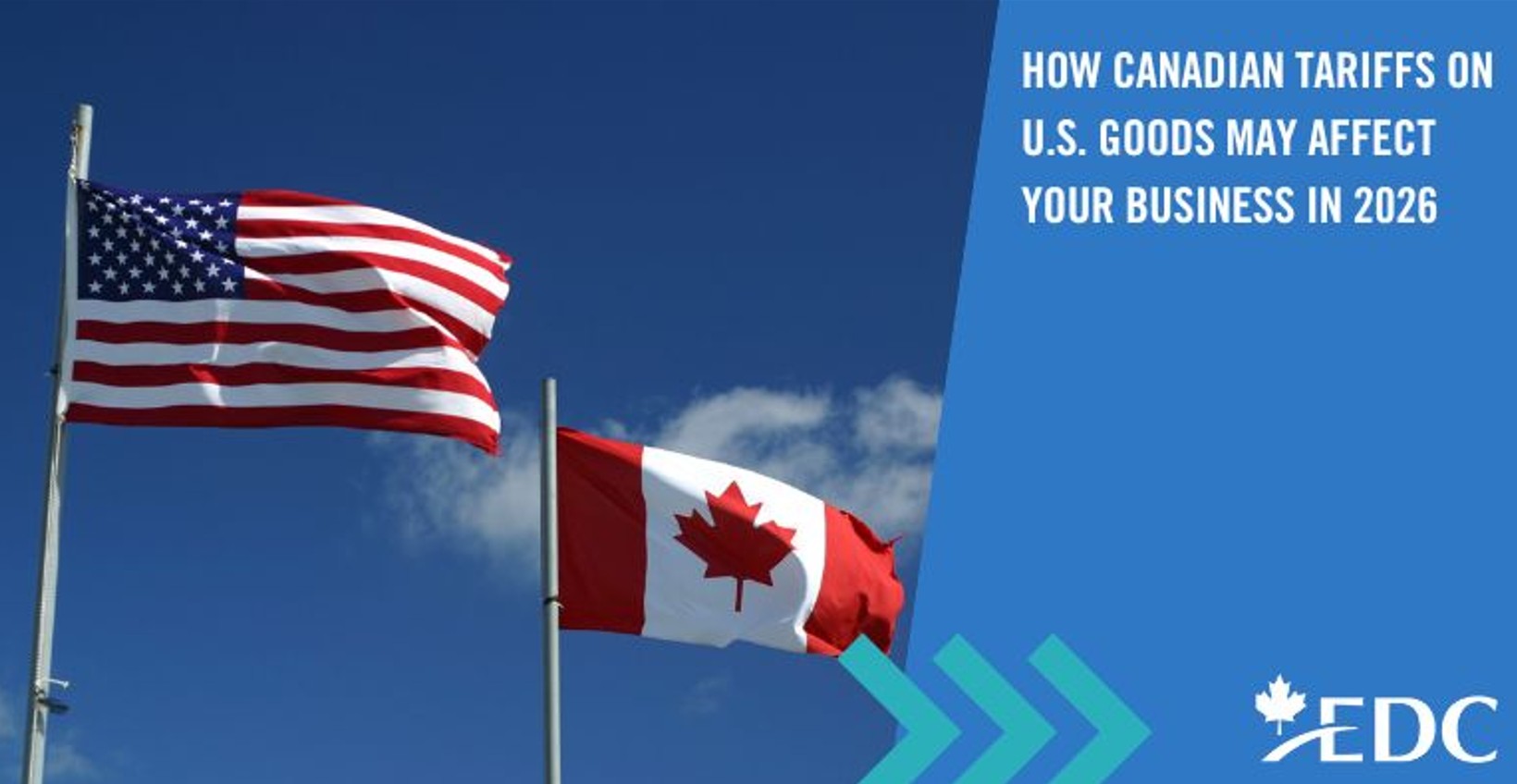
US goods are subject to Canadian tariffs. Which goods are affected? – On September 8, after midnight, Canada imposed retaliatory tariffs on American imports, escalating the trade war between the US and its second-largest trading partner.
Canadian Prime Minister Mark Carney issued counter-tariffs after talks broke down last month and President Donald Trump’s administration levied 50% tariffs on an estimated 5% of Canadian imports. They range from 15% to 50% across a variety of goods and account for around $20 billion in U.S. exports to Canada.
According to Angelo Kourkafas, senior global strategist of investment strategy at Edward Jones, “the new tariffs create a meaningful but manageable headwind” for the Canadian economy, even though their effects will be seen unevenly across provinces and sectors.
Since the Canadian tariffs on U.S. goods are a fee that Canadian-based importers must pay, most Americans’ budgets are not anticipated to be significantly impacted. However, Shikha Jain, a Simon-Kucher partner and lead of the consumer sector for North America, told Sortea that American manufacturers who frequently ship goods to Canada will probably encounter decreased demand and must reconsider their supply chains to service other nations or more domestic consumers.The tariffs that American importers must pay are what matter most to American consumers, according to Padhraic Garvey, head of research at the Dutch bank ING. “Those who import goods and pay the tax have a decision to make. Do they absorb it or do they transfer it to the customer?
These US goods are impacted by Canadian tariffs.
A list of hundreds of American goods are the subject of Canada’s new retaliatory tariffs. They are concentrated in a few industries, such as electronics, pulp & paper, dairy, appliances, agricultural equipment, and plastics.
In order to match American prices, Canada also raised its current retaliatory tariffs on American steel and aluminum from 25% to 50%.
American milk, T-shirts, perfume, cellphones, and even furniture are among the goods subject to 50% taxes. American cheese, toilet paper, carpets, and certain appliances are subject to 25% tariffs. 15% tariffs apply to certain equipment parts and American air conditioners.
According to Garvey, the effects of the Canadian tariffs on American goods are probably “relatively minimal” for average Americans. Prices may still increase, though, since both nations’ manufacturing depends on imports from one another. Let’s say tariffs force Canadian producers to pay extra for materials imported from the US. The product may be subject to additional tariffs if it is manufactured using those resources and then exported back to the United States, increasing its cost.When it comes to trade between Canada and the United States, you end up with a drop in efficiency, and any decrease in efficiency is probably going to result in higher pricing,” Garvey stated.
Which products are impacted by US tariffs on Canada?
Canada’s dairy, wine, and automobile industries are the main targets of US import levies. Critical minerals, natural gas, and oil are still exempt.
There are eighteen pages on the White House’s list of products impacted by the new tariffs. It includes everything from silver and cameras to hockey equipment and toys. Honey, flowers, video game consoles, golf equipment, gold necklaces, and clothing are also included.
According to Jain, people who depend on buying Canadian imports should anticipate price increases from most merchants in the upcoming months, even though they can purchase American goods to avoid these levies.
The already costly process of building new homes in the United States may become much more costly, according to experts, because U.S. homebuilders have historically obtained some building supplies from Canada that made the list.
As the trade battle intensifies, threats persist.
Trump threatened to prevent Canadian airplane manufacturer Bombardier from selling in the US market unless it relocates its manufacturing to the US the day before Canada’s new tariffs went into effect.
In a post to Truth Social, Trump stated, “Over 50% of their revenue comes from the United States – They live off American Buyers, American Companies, American Airports, and American Service – All while Canada blocks our GREAT American Banks and Companies, throughout the U.S.A.” “We’re done with that era! They must stop treating America as a “piggybank” and start building here if they want our market.
Trump has previously threatened to boost U.S. tariffs on Canada’s auto industry to 50% starting on January 1, 2027. Because major automakers rely on Canadian manufacturing facilities before importing automobiles to sell to U.S. consumers, analysts said that if he follows through on that threat, Americans would likely experience higher pricing when shopping for a new car.
Threats are not just coming from Trump. Carney seemed to threaten in August that Canada would stop exporting energy to the US, which would restrict the country’s oil supplies and raise petrol prices for US customers even more. Jain told Sortea that it would be challenging for Canadian supply chains to adjust and take the position of the US as a client, so it’s unclear if that danger is real.That really turns it into a war-like situation where the U.S. infrastructure is being harmed. Furthermore, it would further harm Canada, according to Garvey. “To be honest, I don’t think I’ll get there. And even if we do make it there, we will be in a lot worse situation than we are now.”
Who prevails and who fails?
A trade war between the United States and Canada could not have a real winner.”It’s more about who loses the least,” Garvey remarked.
He claimed that the majority of metrics indicate that Canada, whose economy has underperformed over the last ten years, is more negatively impacted by the trade war. However, Garvey noted that both nations “absolutely do need each other.”
In August, Carney said that “Canada fuels American growth” by providing most of the country’s imports of crude oil, electricity, and natural gas. Additionally, according to Kourkafas, the United States accounted for roughly 17% of Canada’s nominal gross domestic product and 72.5% of all Canadian exports in 2025.In the end, the two economies are too interwoven for this conflict to last forever, but the road to a settlement is probably going to be unstable, expensive, and unpredictable,” Mario Lefebvre, chief economist at CoStar Groups Canada, wrote to Sortea.
About the Author