Trump downplays fuel price concerns, says ‘we’re making a frickin fortune’ – President Donald Trump is brushing aside concerns about rising fuel prices, arguing that the United States is benefiting financially even as drivers and businesses worry about the cost of gasoline and diesel. His blunt remark, “We’re making a frickin fortune,” has drawn attention to the growing tension between the administration’s economic messaging and the everyday financial pressures facing American households. Trump downplays fuel price concerns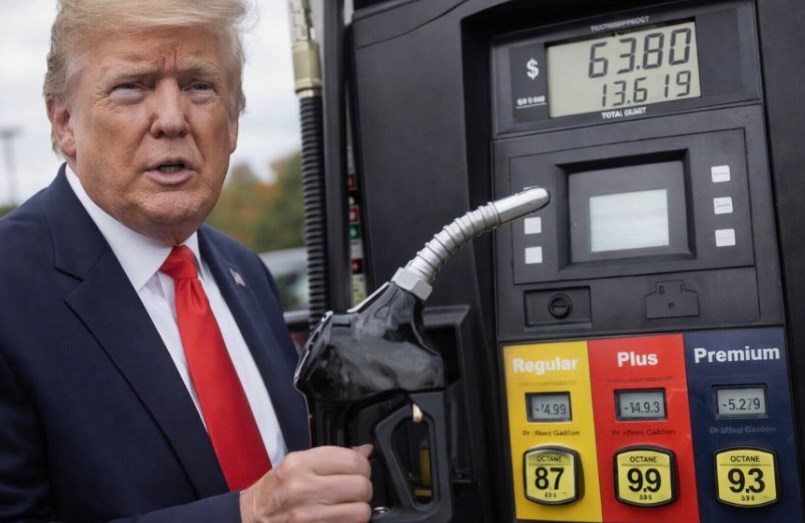
For millions of drivers, fuel prices are not an abstract economic statistic. They influence the cost of commuting to work, taking children to school, delivering products, and traveling to see family. When gasoline becomes more expensive, the effects can quickly spread beyond the pump, putting additional pressure on household budgets and raising transportation costs for businesses. Diesel prices can have an even wider impact because trucks, agricultural equipment, and freight networks depend heavily on the fuel.
Trump’s comments reflect his broader effort to portray American energy production and the country’s economic position in positive terms. His administration has emphasized domestic energy resources and policies intended to strengthen the United States’ position in global markets. However, the president’s optimistic language raises an important question: if the country is benefiting financially, are ordinary Americans seeing those benefits in their daily lives?
The answer is complicated. Higher energy prices can benefit some producers and businesses while hurting consumers and industries that rely on affordable fuel. That difference helps explain why an administration can point to economic opportunities while drivers remain frustrated by what they pay at gas stations.
Trump’s Response to Rising Fuel Costs
Trump’s response has highlighted the contrast between the national economic picture he wants to emphasize and the financial concerns confronting individual Americans. From the administration’s perspective, the United States’ energy resources can provide economic advantages, particularly when global demand and international market conditions create opportunities for domestic producers.
The president has frequently presented energy production as a source of national strength. Greater domestic output can support employment, encourage investment, and reduce dependence on imported energy in certain circumstances. The United States is already one of the world’s leading oil and natural gas producers, giving it an important role in international energy markets.
Nevertheless, the relationship between domestic production and the price consumers pay is not straightforward. Oil is traded in interconnected global markets, meaning that events abroad can influence American fuel prices even when the country produces substantial quantities of crude. Geopolitical tensions, shipping disruptions, refinery operations, and changes in demand can all affect prices at the pump.
This is why Trump’s optimistic assessment may not reassure every household. A domestic oil company can benefit from higher crude prices, but a family that drives long distances to work may experience those same prices as another expense. The broader economy can generate gains in one area while creating financial difficulties in another.
For drivers already managing rent, groceries, insurance, and utility bills, the distinction matters. They are unlikely to judge energy policy solely by production figures or industry earnings. Instead, they will look at whether their transportation costs remain manageable and whether their incomes are keeping pace with everyday expenses.
The Iran Conflict Is Driving Energy Market Uncertainty
The immediate backdrop to Trump’s comments is the conflict involving Iran, which has disrupted international energy markets and raised concerns about the movement of oil through the Strait of Hormuz. This narrow waterway is one of the world’s most important routes for oil shipments, connecting major producers in the Persian Gulf with customers around the globe.
Disruptions in the region can quickly affect global oil prices because traders must account for the possibility that supplies will become more difficult or expensive to transport. When buyers worry about shortages, they may compete for available supplies, pushing prices higher. Even countries that produce large amounts of oil can feel the effects because petroleum prices are influenced by international market conditions.
Trump has argued that the United States can benefit from these developments because foreign buyers may turn to American suppliers when shipments from the Middle East become uncertain. Producers operating in states such as Texas, Oklahoma, and Louisiana could gain from stronger demand and higher crude prices. The president has also described elevated prices as temporary and suggested that costs could fall once the conflict ends.
However, predicting when prices will decline is difficult. A ceasefire or diplomatic agreement might ease market concerns, but restoring normal shipping patterns and rebuilding confidence can take time. Refinery capacity, transportation costs, inventories, and consumer demand will also influence the price of fuel. For drivers hoping for immediate relief, assurances about future declines may offer little comfort when today’s bills remain high.
Oil Companies May Benefit, but Consumers Pay More
One of the central issues in Trump’s argument is the difference between the financial gains enjoyed by energy producers and the costs passed on to consumers. Higher crude prices can increase revenue for oil companies, particularly those able to produce and sell more oil when international demand rises. Yet the same price increases can make gasoline and diesel more expensive for everyone who relies on transportation.
Recent figures illustrate the pressure facing American motorists. According to figures reported by the Associated Press and AAA, the national average price of regular gasoline reached approximately $4.29 per gallon on October 26, compared with about $2.98 before the conflict began in February. Diesel prices climbed to around $6.35 per gallon, up from approximately $3.76. Trump downplays fuel price concerns
For a household that fills up a vehicle every week, that difference can add up quickly. Drivers may respond by reducing unnecessary trips, postponing purchases, or cutting spending elsewhere. Businesses face similar decisions, particularly delivery companies, trucking operators, and agricultural producers that depend on diesel-powered vehicles and machinery.
Higher transportation expenses can also spread through the economy. When it costs more to move food, building materials, and consumer goods, companies may eventually pass some of those expenses on to customers. That creates the risk that fuel-price increases will contribute to broader inflation, making it harder for households to manage their budgets.
The energy industry can generate jobs, tax revenue, and investment, but those benefits do not automatically compensate every consumer for higher costs. Whether the country as a whole gains financially is a separate question from whether individual families are better off.
Rising Fuel Prices Could Become a Political Liability
Trump’s remarks arrive at a sensitive moment for Republicans, with the November 3 midterm elections approaching. Although the president is not personally on the ballot, his economic record and public statements are likely to influence how voters assess Republican candidates.
Affordability has become a central political concern because voters experience economic conditions through everyday expenses. A strong headline about domestic energy production may have limited impact if gasoline, groceries, and utility bills continue consuming a growing share of household income. For voters who expected lower fuel prices, Trump’s comments could reinforce concerns that the administration is not sufficiently focused on their financial difficulties.
Democrats have seized on the controversy, arguing that the president’s celebration of energy profits shows a disconnect between his administration and ordinary Americans. Republican supporters, meanwhile, can argue that stronger domestic production provides economic and strategic advantages and that international conflict has created circumstances beyond the government’s immediate control. Trump downplays fuel price concernsTrump downplays fuel price concerns
The political challenge for Trump is to explain how the country can benefit from higher oil revenues while also addressing the costs imposed on consumers. Both outcomes can occur simultaneously, but voters may be more interested in practical measures that reduce their expenses than in broader claims about national wealth.
The administration’s response will therefore matter. Efforts to increase supply, stabilize markets, and reduce transportation costs could help ease pressure, although none guarantees an immediate return to lower prices. If fuel remains expensive through the election, Republicans may find it increasingly difficult to persuade voters that the economic benefits outweigh the immediate burden.
What Happens Next for Gasoline Prices?
The outlook for fuel prices depends heavily on developments in the Middle East and the broader global economy. A reduction in hostilities and a reliable reopening of shipping routes could help ease pressure on crude oil markets. On the other hand, further disruptions, damage to energy infrastructure, or prolonged uncertainty around the Strait of Hormuz could keep prices elevated.
Domestic production may offer some protection, but it cannot completely insulate American consumers from global market movements. Increasing output takes time, and the price of gasoline also reflects refining, distribution, taxes, and local market conditions. That means even a country producing substantial amounts of oil can experience expensive fuel.
For now, Trump’s comments have placed the competing interests of energy producers and consumers at the center of the political debate. His argument is that the United States can earn substantial revenue from higher oil prices, even while acknowledging that motorists are paying more. Critics contend that the administration should focus more directly on easing the financial burden facing households.
Ultimately, Americans will judge the administration by what happens at the pump, not simply by how much money energy companies earn. If gasoline and diesel prices begin to fall, Trump’s assurances may become easier for supporters to defend. If they remain high, the gap between national economic claims and household experiences could become a more serious political problem. Trump downplays fuel price concerns
The president’s declaration that the country is making a fortune captures the complicated economics of an energy crisis: higher prices can create winners and losers at the same time. The real test for his administration will be whether it can turn the United States’ energy advantages into broader economic benefits while delivering meaningful relief to the people paying more to fill their tanks.
About the Author