The Best Wi-Fi Range Extenders for 2026 – A reliable internet connection has become an essential part of everyday life. Whether people are working remotely, attending online classes, streaming movies, playing games, or connecting smart home devices, having stable Wi-Fi throughout the house makes a significant difference. Unfortunately, even a powerful wireless router cannot always deliver consistent coverage in every room. Thick walls, multiple floors, long distances, and household interference can create frustrating dead zones where internet connections become slow or unreliable. The Best Wi-Fi Range Extenders for 2026
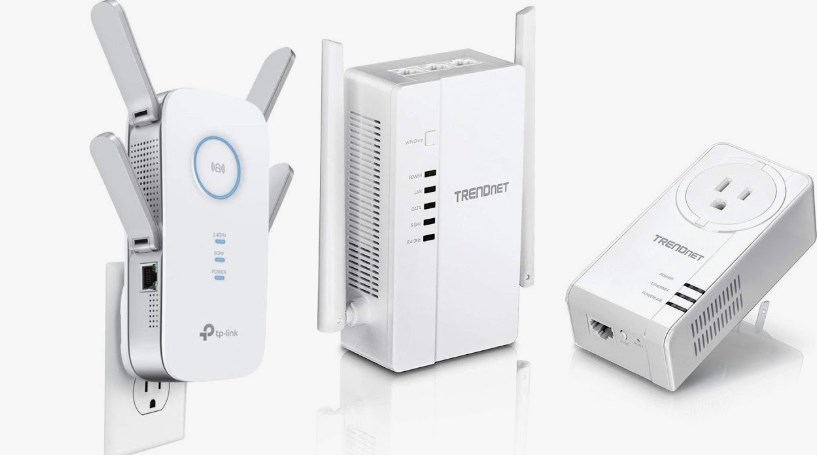
This is where Wi-Fi range extenders become useful. These relatively compact devices receive an existing wireless signal and rebroadcast it to areas that struggle to maintain a strong connection. Instead of replacing an otherwise capable router or investing immediately in an expensive mesh networking system, homeowners can use an extender to improve coverage in specific parts of their properties.
In 2026, the market offers more choices than ever, including affordable Wi-Fi 6 models and advanced Wi-Fi 7 devices designed for demanding households. Some prioritize affordability and simple installation, while others deliver faster wireless speeds, additional Ethernet connectivity, and better compatibility with modern networking equipment. Choosing the right device depends on the size of the home, internet speed, router compatibility, and the number of connected devices. Here is a closer look at some of the best Wi-Fi range extenders worth considering in 2026.
1. TP-Link RE655BE: Best Overall Wi-Fi 7 Range Extender
The TP-Link RE655BE stands out as a premium option for households looking to improve wireless coverage without completely replacing their existing networking equipment. Supporting Wi-Fi 7 technology, this extender is designed for modern internet connections and devices that require higher wireless performance. Its BE11000 classification indicates a combined theoretical wireless capacity across supported frequency bands, making it suitable for demanding home networking environments.
One of its biggest advantages is its support for Wi-Fi 7 features, along with four repositionable antennas that help distribute wireless coverage. It also includes a 2.5Gbps Ethernet port, allowing compatible wired devices to connect directly. This can be particularly useful for desktop computers, gaming systems, and other equipment that benefits from a more stable connection.
The RE655BE also supports TP-Link EasyMesh, providing additional flexibility for users with compatible networking equipment. This makes it an attractive choice for people who want to build a more connected wireless environment over time. Although its premium features may be unnecessary for smaller households, it is a strong option for users who want modern networking capabilities. The Best Wi-Fi Range Extenders for 2026
2. TP-Link RE705X: Best Wi-Fi 6 Extender for Most Homes
Not everyone needs to purchase a Wi-Fi 7 extender. For many households, the TP-Link RE705X offers a more practical balance between performance, features, and everyday usability. This AX3000 Wi-Fi 6 range extender supports dual-band connectivity, making it suitable for streaming, browsing, video conferencing, and other common internet activities.
The device supports theoretical speeds of up to 2,402Mbps on its 5GHz band and 574Mbps on its 2.4GHz band. It also features a Gigabit Ethernet port, which gives users the option of connecting compatible wired equipment. Its access point mode provides another useful option for extending network coverage through an Ethernet connection.
Another reason to consider the RE705X is its relatively straightforward installation process. TP-Link’s Tether application guides users through network configuration and provides tools for managing the extended connection. It also supports OneMesh with compatible TP-Link routers, allowing a more integrated wireless experience. For people who want better coverage without paying for the latest Wi-Fi 7 hardware, the RE705X remains a sensible choice.
3. TP-Link RE235BE: Best Affordable Wi-Fi 7 Option
The TP-Link RE235BE brings Wi-Fi 7 technology into a more accessible product category. With its BE3600 dual-band specification, it offers a modern alternative for people who want to prepare their home network for newer devices without immediately investing in a high-end extender.
Although it does not offer the same extensive hardware configuration as more expensive Wi-Fi 7 models, it provides useful networking capabilities for everyday households. Its dual-band design supports both 2.4GHz and 5GHz connections, allowing users to balance coverage and wireless performance depending on their devices and home environment.
This model is particularly interesting for households gradually upgrading their technology. Someone who already owns newer smartphones, laptops, or tablets may appreciate having an extender that supports a more recent wireless standard. However, users should remember that connecting a Wi-Fi 7 extender to an older router will not automatically transform the entire network into Wi-Fi 7. The RE235BE is worth considering for buyers who want newer wireless technology while keeping their equipment relatively simple.
4. ASUS RP-BE58: Best Alternative for Wi-Fi 7 Users
ASUS also offers interesting options for people interested in expanding their wireless networks. The ASUS RP-BE58 is a dual-band Wi-Fi 7 range extender designed to improve coverage while supporting newer wireless networking standards. One of its main attractions is its compatibility with ASUS networking features and the company’s extendable router ecosystem. This makes it particularly appealing to households already using compatible ASUS equipment. Instead of treating the extender as an entirely separate networking device, users can build a more coordinated setup through supported networking features.
The RP-BE58 is suitable for everyday connectivity, including video streaming, browsing, online meetings, and gaming. Its Wi-Fi 7 support also gives it an advantage over older Wi-Fi 5 and Wi-Fi 6 models when paired with compatible equipment. However, buyers should check their existing router’s compatibility before purchasing. Features such as coordinated roaming and unified network management can depend on the router and firmware being used.
5. TP-Link RE715X: Best for Faster Wi-Fi 6 Performance
For households that want dependable Wi-Fi 6 performance without moving to an expensive Wi-Fi 7 model, the TP-Link RE715X is another strong contender. It supports AX3000 dual-band connectivity and is designed to improve wireless coverage in areas where the main router struggles to deliver a consistent signal.
Its support for 160MHz channels can help compatible devices achieve higher wireless throughput under suitable network conditions. The extender also works with compatible TP-Link OneMesh equipment, providing additional flexibility for households that want a more integrated wireless network.
The RE715X is particularly useful for people who experience weak signals in bedrooms, upstairs offices, or entertainment areas. Its straightforward setup process also makes it accessible to users who do not have extensive networking experience.
While it may not offer all the advanced capabilities of newer Wi-Fi 7 products, its combination of Wi-Fi 6 performance and practical features makes it worth considering in 2026.
6. What to Consider Before Buying a Wi-Fi Range Extender
Choosing the best Wi-Fi range extender involves more than looking at advertised speeds. One of the first things buyers should consider is wireless compatibility. Wi-Fi 6 and Wi-Fi 7 extenders are generally attractive choices for newer devices, but their actual performance depends on the router, connected devices, and available internet connection.
Coverage is another important consideration. An extender should be placed somewhere that still receives a reasonably strong signal from the main router. Putting it directly inside a dead zone will not solve the problem because the device needs a usable connection to repeat. A halfway position between the router and the problem area is usually a better starting point.
Buyers should also pay attention to Ethernet ports, frequency bands, and mesh compatibility. Ethernet connectivity is useful for stationary equipment, while dual-band and tri-band configurations can influence how efficiently an extender communicates with the router and connected devices.
Finally, it is important to understand that an extender does not increase the internet speed provided by an internet service provider. Its primary purpose is to improve wireless coverage. Actual speeds can still be affected by signal quality, network congestion, interference, and the capabilities of the original router.
Final Thoughts
The best Wi-Fi range extender for 2026 depends on what a household needs most. The TP-Link RE655BE is an appealing premium option for Wi-Fi 7 users, while the RE705X offers a more practical Wi-Fi 6 solution for everyday connectivity. The RE235BE and ASUS RP-BE58 provide additional options for people interested in newer wireless technology, and the RE715X remains worth considering for reliable Wi-Fi 6 performance.
Before making a purchase, shoppers should evaluate their router, home layout, internet plan, and the locations where connectivity problems occur. For a single weak room, a range extender can be an affordable and convenient solution. For larger properties with multiple dead zones, however, a dedicated mesh Wi-Fi system may deliver more consistent results.
Ultimately, investing in the right networking equipment can make everyday internet use considerably more comfortable. With the right placement and compatible hardware, a good Wi-Fi range extender can help bring reliable connectivity to more corners of the home. The Best Wi-Fi Range Extenders for 2026
About the Author