‘We cannot trust the US’: The European lesson from America’s midterm landslide – The results of America’s 2026 midterm elections have sent a powerful political message far beyond Washington. While Democrats celebrated a major victory, taking control of both the House of Representatives and the Senate, European governments and political observers were left thinking about something much bigger than the outcome of an American election. For many in Europe, the results raised an uncomfortable question: can the United States still be trusted as a dependable political, economic, and security partner?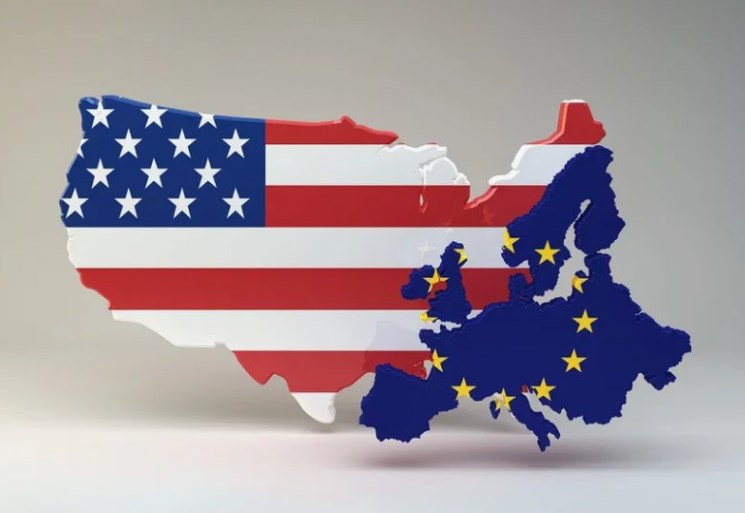
The Democratic landslide represents a significant setback for President Donald Trump, whose second administration has created considerable uncertainty in America’s relationship with its traditional allies. Some European leaders may see the results as an opportunity for Washington to return to a more predictable approach to international cooperation. However, experts are warning against assuming that everything will suddenly return to normal.
One of the strongest messages came from Javier Carbonell, a policy analyst at the European Policy Centre in Brussels. Speaking to The Brussels Times, he explained that Europe had learned an important lesson from recent American politics: it cannot build its long-term policies around the outcome of US elections. His warning was straightforward: “We have learned that we cannot trust the US.”
That statement reflects growing concerns across Europe. Even if Democrats have gained significant political ground, Trump remains president and continues to direct American foreign policy. More importantly, the political divisions and changing priorities that have affected US international relationships are unlikely to disappear after one election.
1. Democrats Deliver a Major Political Blow to Trump
The 2026 midterm elections were widely viewed as a referendum on Trump’s second term. Democrats managed to secure victories in both chambers of Congress, delivering a result that represents a serious political challenge for the president. The party also made impressive gains in traditionally Republican areas, including Texas and Kansas, demonstrating the scale of dissatisfaction among voters.
For Democrats, the result provides an opportunity to challenge the administration’s agenda and influence the direction of national policymaking. Controlling both chambers gives the opposition greater power to investigate government decisions, block certain proposals, and demand accountability from the White House.
However, Carbonell believes the outcome should not necessarily be interpreted as overwhelming support for a particular Democratic political platform. Instead, he sees it primarily as a rejection of Trump’s leadership and the policies associated with his administration.
The election brought together voters with different political backgrounds and preferences. Progressive Democrats, moderate candidates, and former Republicans all contributed to the party’s success. This suggests that dissatisfaction with the administration was a major factor behind the results rather than a single political ideology bringing everyone together.
For Trump, the outcome is particularly significant because his political identity has long been built around challenging the establishment. After returning to the White House and gaining control over major parts of the federal government, however, he became responsible for the very institutions he once criticized. That change appears to have affected how voters view his leadership.
2. Europe Is No Longer Convinced That America Will Always Be Reliable
European countries have traditionally viewed the United States as one of their most important international partners. Their relationship extends across military cooperation, trade, intelligence sharing, diplomacy, and economic development. For decades, American leadership has played a central role in maintaining the security arrangements that protect much of Europe.
However, the political changes during Trump’s second administration have created questions about the future of that relationship. European governments have increasingly recognized that American priorities can change significantly depending on who occupies the White House.
The latest election results do not automatically solve that problem. Although Democrats have gained control of Congress, Trump remains responsible for directing US foreign policy. A Democratic victory in the midterms cannot guarantee that Washington will immediately reverse its approach toward European allies.
Carbonell’s warning highlights the danger of depending too heavily on American domestic politics. European policymakers cannot simply wait for another election and hope that a different president will restore the previous relationship. They need policies that remain effective regardless of which political party controls Washington.
This does not mean Europe should abandon its partnership with the United States. Rather, it means the relationship needs to become more balanced. European countries must develop stronger independent capabilities while continuing to cooperate with Washington wherever their interests align.
3. Strategic Independence Is Becoming a Priority for European Governments
One of the biggest consequences of America’s changing political direction could be a stronger push for European strategic autonomy. This idea has been discussed for years, but recent developments have made it increasingly difficult for European leaders to ignore. Strategic autonomy means giving Europe the ability to protect its interests, defend its territory, and respond to international challenges without depending entirely on American support
Security is one of the most important parts of this discussion. NATO has traditionally relied heavily on American military capabilities, including intelligence, equipment, logistics, and strategic leadership. If Washington becomes less predictable, European countries could face serious difficulties during a future security crisis.
The midterm results may provide some reassurance to European governments, but they do not remove the underlying uncertainty. A future Republican administration could continue many of the policies introduced under Trump, while another Democratic president might bring different priorities. European leaders therefore have to prepare for several possible political scenarios rather than assuming that one election will permanently settle the relationship.
Building stronger European defense capabilities will require significant investment, cooperation, and political commitment. Individual countries cannot address every security challenge independently. They need to coordinate military spending, strengthen their defense industries, and improve cooperation across the European Union.
Ultimately, the lesson is that Europe must become a stronger partner rather than remaining dependent on the decisions made in Washington. Maintaining close relations with America will remain important, but European security should not depend entirely on the political fortunes of American presidents.
4. The Midterm Results Could Also Change European Political Campaigns
The American election could influence European politics in another important way: the issues politicians choose to emphasize during upcoming campaigns. According to Carbonell, the biggest impact may come through political messaging rather than an immediate transformation of international relations.
For years, European politicians have watched American elections closely, often looking for successful campaign strategies that could be adapted to their own countries. The popularity of affordability-focused political messages, including those associated with New York City Mayor Zohran Mamdani, has demonstrated how economic concerns can become powerful electoral issues.
Carbonell believes that the coming years will increasingly revolve around practical economic questions. Healthcare, education, housing, and the cost of everyday living are likely to become central topics in political debates.
This shift could create opportunities for left-wing parties across Europe. Instead of concentrating exclusively on cultural disagreements or political identity, they could attract more voters by presenting clear economic proposals that address everyday financial pressures.
Belgium provides an interesting example. Prime Minister Bart De Wever has been attempting to introduce approximately €10 billion in federal budget cuts. Such measures have created opportunities for opposition parties to challenge the government’s economic priorities and explain how spending reductions could affect ordinary households.
Carbonell believes the Belgian left could benefit from focusing more directly on economic issues, particularly if it can offer convincing alternatives to austerity policies. The American election provides another example of how dissatisfaction with the cost of living can become a powerful political force.
The broader message is that voters want politicians to address problems they experience personally. Affordable housing, accessible healthcare, stable employment, and better education opportunities may prove more important than political slogans that offer little practical improvement.
5. Trump’s Political Setback Does Not Mean the Far Right Is Finished
Another interesting lesson from the American midterms concerns the strength of right-wing populist movements. Trump’s defeat in the election has raised questions about whether the political momentum associated with his movement could weaken internationally.
However, Carbonell cautions against assuming that the results will automatically reduce the popularity of far-right parties in Europe. Trump’s previous electoral success helped encourage similar political movements in other countries, creating what became known as the Trump effect. His latest setback does not necessarily mean that this influence has disappeared. ‘We cannot trust the US’
One important distinction is the difference between campaigning against the establishment and actually governing. Populist candidates often attract support by criticizing existing institutions, promising dramatic changes, and presenting themselves as alternatives to traditional political leadership.
However, once they gain power, voters begin judging them according to their actual decisions and results. Carbonell argues that Trump’s experience demonstrates how anti-establishment politicians can lose support when they become responsible for implementing their own policies.
The midterm results also challenge assumptions about younger male voters. According to polling figures cited by Carbonell, approximately 65% of young men voted for Democratic candidates. This suggests that younger male voters should not automatically be viewed as permanently committed to conservative or far-right politics.
Their political preferences can change depending on economic conditions, leadership, and the alternatives available to them. Dissatisfaction with established political parties does not necessarily translate into permanent support for one ideological movement.
For European political parties, this could be an important lesson. Winning over frustrated voters requires more than appealing to their dissatisfaction. Parties must also demonstrate that they can deliver meaningful improvements once they enter government.
6. Europe Must Prepare for a Relationship That May Never Return to Normal
Despite the Democratic victory, expectations for an immediate improvement in US-European relations remain limited. Trump continues to occupy the White House, and the midterm elections do not change the president’s authority over foreign policy. The results could encourage cooperation between the White House and the newly empowered Democratic Congress, particularly on issues where both sides can find common ground. American Ambassador to Belgium Bill White also expressed hope that Republicans and Democrats would work together on matters affecting the United States, NATO, and international relationships.
Nevertheless, European policymakers face a much longer-term challenge. They must decide whether to continue relying on the possibility of a future American political change or accelerate efforts to become more independent. There is no reason for Europe to abandon its historic relationship with the United States. Cooperation remains valuable for both sides, particularly when addressing international security, trade, technology, and global economic challenges. But a reliable partnership requires consistency, and recent political developments have made that consistency harder to assume.
The 2026 midterm elections have therefore delivered two different messages. For American Democrats, they represent a major political victory and an opportunity to challenge Trump’s administration. For Europe, they provide a reminder that American politics can change quickly and that international partnerships must be prepared for uncertainty. ‘We cannot trust the US’
Conclusion
The Democratic landslide may bring some relief to Europeans who have been concerned about Trump’s approach to international relations. However, it would be a mistake to interpret the results as proof that the United States is ready to return to its previous role as Europe’s consistently dependable partner. The most important lesson is not that Europe should stop trusting America altogether. It is that European governments must stop treating American political stability as something they can take for granted.
As Javier Carbonell’s warning suggests, European policy cannot depend on what happens in individual American states every two years. Europe needs stronger institutions, greater economic resilience, more independent defense capabilities, and political strategies that can survive changes in Washington. The transatlantic relationship will probably remain important for generations. But its future may depend on Europe learning to stand more firmly on its own feet. The American midterm landslide has offered a political surprise. More importantly, it has reminded Europe that its future cannot be left in the hands of another country’s voters. ‘We cannot trust the US’
About the Author