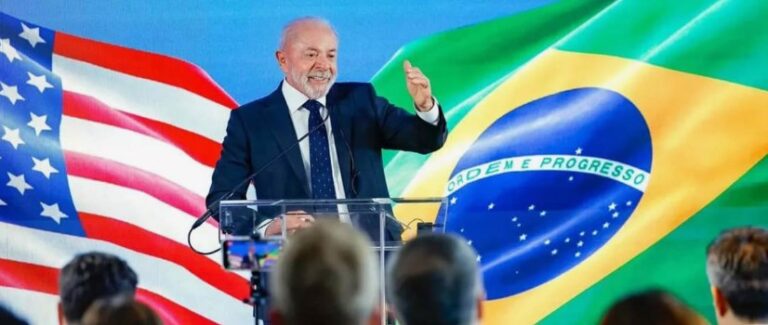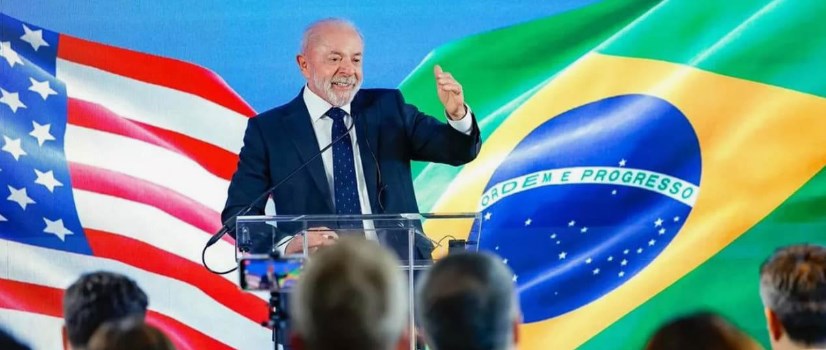
Lula wins historic fourth term in Brazil, denying Trump a close ally – Brazilian President Luiz Inácio Lula da Silva has pulled off a remarkable political comeback, winning a historic fourth presidential term and delivering a major setback to the country’s right-wing opposition. His victory over conservative challenger Flávio Bolsonaro, the son of former president Jair Bolsonaro, also represents a diplomatic blow to U.S. President Donald Trump, who had hoped to see another close conservative ally take power in Latin America’s largest economy.
The result, announced after Brazil’s presidential runoff on October 25, 2026, defied expectations and reversed the momentum of a campaign that had appeared increasingly difficult for Lula. The incumbent secured approximately 51.8% of the vote, compared with 48.2% for Bolsonaro. The narrow margin reflected a deeply divided electorate, with millions of Brazilians choosing between Lula’s promises of social protection and national independence and the opposition’s calls for political change.
For Lula, the victory is another extraordinary chapter in a political career spanning decades. For Trump, it complicates efforts to expand Washington’s influence through friendly conservative governments across Latin America. And for Brazil, the election raises important questions about democracy, economic opportunity, political polarization, and the country’s position in an increasingly competitive international landscape.
A Stunning Comeback After a Difficult Campaign
Lula’s road to victory was far from straightforward. In the first round of voting on October 4, Flávio Bolsonaro finished ahead of the incumbent, raising doubts about whether the veteran left-wing leader could secure another term. The result reflected dissatisfaction among voters concerned about the cost of living, government spending, corruption allegations, and the direction of Brazil’s economy.
The runoff changed the political picture. Lula’s campaign worked to reconnect with voters who had become uncertain about his leadership while appealing to younger Brazilians and supporters concerned about the future of democratic institutions. His message focused on protecting social programs, improving living standards, and preventing a return to the political confrontations that characterized Jair Bolsonaro’s presidency.
Lula also benefited from a political identity built over decades. Born into poverty, he worked as a metalworker before becoming a prominent trade union leader and helping establish Brazil’s Workers’ Party. His background continues to resonate with many working-class voters, particularly those who remember the economic opportunities and poverty-reduction programs associated with his earlier administrations.
The final result made history because Lula became the first presidential candidate since Brazil returned to democracy in the 1980s to finish second in the initial round and then win the runoff. His victory demonstrated that an election can change dramatically during its final weeks, particularly when voters view the choice as a decision about the country’s long-term political direction.
Why Lula’s Victory Is Bad News for Donald Trump
Lula’s reelection carries consequences far beyond Brazil’s borders. Trump has been working to strengthen relationships with conservative leaders across Latin America, including Argentina’s Javier Milei and El Salvador’s Nayib Bukele. A Bolsonaro victory would have given Washington another ideologically aligned government in a region where political influence, trade, migration, and security cooperation remain major priorities.
Instead, Brazil will continue to be led by a president who has repeatedly challenged Trump’s approach to international relations. Lula has defended Brazil’s right to pursue an independent foreign policy and resisted pressure to align automatically with Washington’s priorities. His victory therefore complicates Trump’s efforts to build a more unified bloc of conservative governments throughout the region. <Cite refs={[“turn310149news18″,”turn310149search1”]}/>
Relations between Lula and Trump have already experienced considerable tension. The U.S. president previously criticized Lula’s political positions and supported Jair Bolsonaro during Brazil’s earlier political battles. Washington also imposed punitive tariffs on Brazilian goods amid a dispute connected to the prosecution of the former president. Lula portrayed these measures as an attack on Brazil’s sovereignty, arguing that Brazilians should determine their political future without outside interference.
That message became an important part of Lula’s campaign. Rather than presenting Brazil as a country that needed to choose between Washington and its international competitors, he emphasized the importance of maintaining relationships with multiple global powers. His administration has pursued economic cooperation with China, Brazil’s largest trading partner, while continuing to engage with the United States. Lula’s reelection suggests that this independent approach will remain central to Brazilian diplomacy.
However, the outcome does not mean that cooperation between Washington and Brasília will disappear. Both countries have economic interests that could encourage continued negotiations, including agricultural trade, investment, energy, and critical minerals. The difference is that Trump will have to deal with a Brazilian leader who is unlikely to accept American demands without resistance.
Brazil’s Political Divide Remains Deep
Although Lula’s victory was significant, it did not erase the divisions that have shaped Brazilian politics for years. Flávio Bolsonaro’s strong performance demonstrated that his father’s political movement continues to command substantial support. Millions of voters remain frustrated with the current government and believe that conservative policies offer a better path toward economic stability, public security, and lower taxes.
The opposition has also refused to accept the result without a challenge. Following the announcement, Flávio Bolsonaro said he would seek to annul the election, pointing to a Supreme Court decision that extended voting hours after reports of transportation problems in several locations. Electoral authorities had declared Lula the winner, and analysts considered a successful annulment unlikely. Nevertheless, the dispute risks prolonging political tensions and deepening mistrust among rival camps.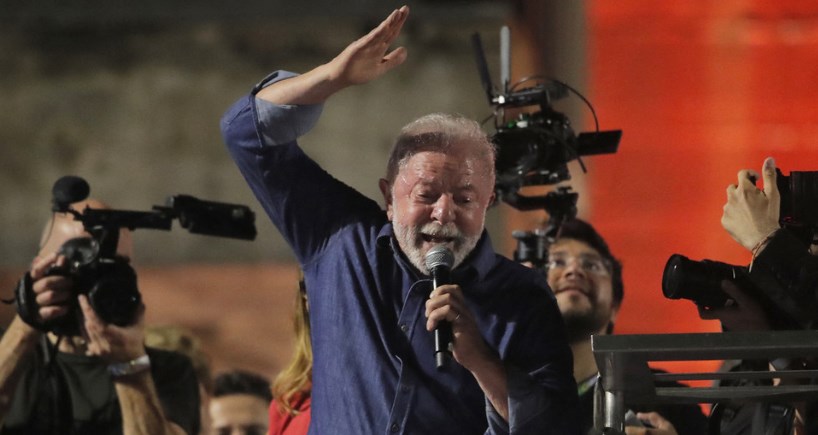
The situation is particularly sensitive because Jair Bolsonaro is serving a 27-year prison sentence following his conviction for plotting to overturn the 2022 election result. His imprisonment has become a rallying point for supporters who view the prosecution as politically motivated, while Lula’s allies argue that accountability is necessary to protect democratic institutions.
The election result also reveals the limits of relying on political personalities alone. Lula’s supporters celebrated his victory as a defense of democracy, while Bolsonaro’s voters continued to demand a different approach to governing. The next administration will need to address these competing expectations if it hopes to reduce polarization rather than simply manage it.
Economic Challenges Could Define Lula’s Fourth Term
Winning another election is one challenge. Delivering results over the next four years could prove even more difficult. Lula has promised to strengthen public services, protect workers, expand social assistance, and improve opportunities for lower-income households. These priorities reflect the central themes of his political career, but fulfilling them will require careful economic management.
Brazil faces concerns about public debt, high interest rates, household borrowing, and relatively modest expected economic growth. Government spending will remain a contentious issue, particularly among lawmakers who favor tighter budgets and a more business-oriented economic strategy. Lula must demonstrate that his social policies can improve living standards without creating additional pressure on public finances.
Another obstacle is Congress. Brazil’s newly elected legislature is among the most conservative since the country’s return to democracy, giving Bolsonaro’s allies and other right-leaning parties considerable influence. This could make it harder for Lula to pass legislation, approve spending priorities, and implement his broader economic agenda.
To move forward, the president will need to negotiate with lawmakers who do not necessarily share his political beliefs. That may require compromises on taxation, government expenditure, business regulation, and public investment. His ability to build workable alliances could ultimately matter more than the size of his election-night celebration.
For ordinary Brazilians, the most important question will be whether the next administration can make everyday life more affordable. Political victories can generate enthusiasm, but households will judge the government by employment opportunities, wages, food prices, public safety, and access to essential services.
What Lula’s Victory Means for Latin America
Lula’s win also interrupts a broader trend toward conservative electoral victories in Latin America. In recent years, several countries have seen right-wing candidates gain ground by campaigning on crime, economic frustration, immigration, and dissatisfaction with established political parties. Brazil’s result shows that this trend is not inevitable and that left-wing leaders can remain competitive when they successfully connect their platforms to voters’ concerns.
Brazil matters enormously in this regional picture. It is Latin America’s largest economy and an influential member of international groupings such as BRICS. Its decisions on trade, climate policy, energy, and international security can affect debates well beyond South America. Under Lula, Brazil is likely to continue pursuing relationships with a broad range of countries rather than aligning exclusively with the United States.
That approach could create opportunities for cooperation on environmental protection, investment, and international development. It could also generate friction when Brazilian and American priorities diverge, particularly over tariffs, relations with China, and the role of foreign powers in regional security. Ultimately, Lula’s historic fourth term is both a personal political triumph and a reminder that Latin America’s electorate cannot be understood through a single ideological trend. Voters respond to local economic conditions, political identities, social programs, and concerns about democratic institutions. Brazil’s election reflects that complexity.
Lula now faces the difficult task of turning a narrow victory into effective government. Trump, meanwhile, must confront the reality that Brazil will not automatically join his circle of conservative allies. Whether Lula can deliver economic improvements while managing a divided Congress remains uncertain, but his reelection has already reshaped the political conversation across the region. For now, the message from Brazil is clear: despite a difficult campaign and a strong conservative challenge, Lula has secured another term and preserved his country’s independent political direction. The real test begins with governing.
About the Author