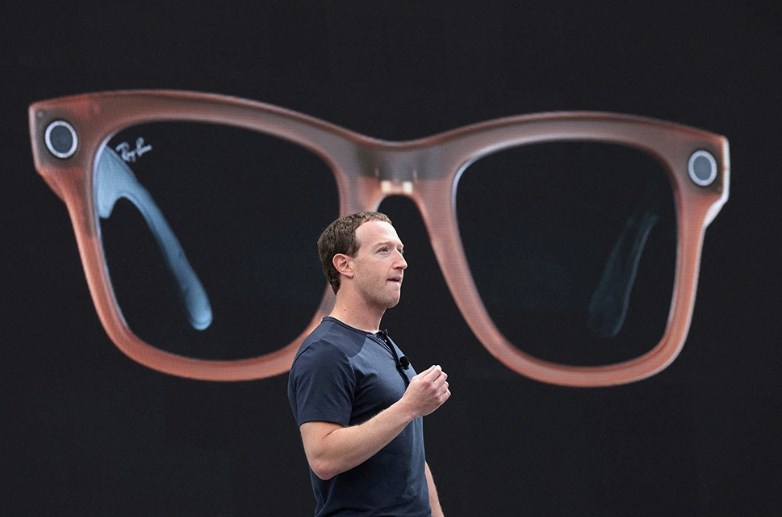
Meta Pinky-Promises Its Smart Glasses Will Be Private Soon – Meta is trying to convince people that its smart glasses can become a normal part of everyday life without turning everyone around the wearer into an unwilling participant. That is a much harder promise than it sounds. Cameras are already everywhere, but a camera mounted on someone’s face changes the social dynamic. When a person pulls out a phone and points it at a room, people generally notice. With smart glasses, recording can happen while the wearer appears to be doing nothing unusual. Meta Pinky-Promises Its Smart Glasses Will Be Private Soon
That tension has followed Meta’s smart-glasses ambitions from the beginning. The company’s partnership with Ray-Ban helped make camera-equipped glasses feel considerably less awkward than earlier wearable experiments. People can take photographs, record video, make calls, listen to music and interact with an AI assistant without constantly reaching for a phone. The technology is convenient, stylish and increasingly capable.
Privacy, however, remains the uncomfortable question sitting underneath all of those features. Meta has repeatedly emphasized that it takes privacy seriously and has introduced indicators intended to show when the glasses are capturing images or video. Yet critics and privacy advocates have argued that visual indicators alone may not fully solve the problem. Meta now appears to be signaling that stronger privacy protections are coming, asking users and the public to trust that its glasses will become more respectful of the people around them.
The Privacy Problem With Smart Glasses
The central privacy issue is remarkably simple: you cannot always tell when someone is recording you. Traditional smartphones are not invisible recording devices. A person usually has to take the phone out, unlock it, point it toward a subject and interact with the screen. Smart glasses eliminate many of those steps.
Meta’s glasses can be controlled through voice commands and physical interactions, allowing the wearer to capture moments without making an obvious gesture. That is one of the product’s greatest strengths from a convenience perspective, but it is also what makes privacy concerns more complicated. A person sitting across from a smart-glasses wearer may have no idea whether they are being photographed, recorded or simply looked at.
Meta has attempted to address this through hardware signals, including a capture LED designed to indicate when the glasses are recording. The idea is straightforward: if the light is visible, people nearby should understand what is happening. But real-world situations are rarely as clean as product demonstrations.
Someone might be standing behind the wearer. The glasses might be angled away. A busy environment could make the indicator difficult to notice. People may not even know what the light means. These practical details matter because privacy is not simply about whether a technical safeguard exists. It is also about whether ordinary people can understand and respond to that safeguard.
Meta Wants Trust to Become Part of the Product
The bigger challenge for Meta is therefore not just technical. It is social. Smart glasses have to become socially acceptable if Meta wants them to move beyond early adopters and technology enthusiasts. Consumers need to feel comfortable wearing them in restaurants, workplaces, stores, schools, public transportation and social gatherings. At the same time, people who do not own the glasses need to feel that they can exist around them without automatically becoming part of someone’s personal recording archive. Meta Pinky-Promises Its Smart Glasses Will Be Private Soon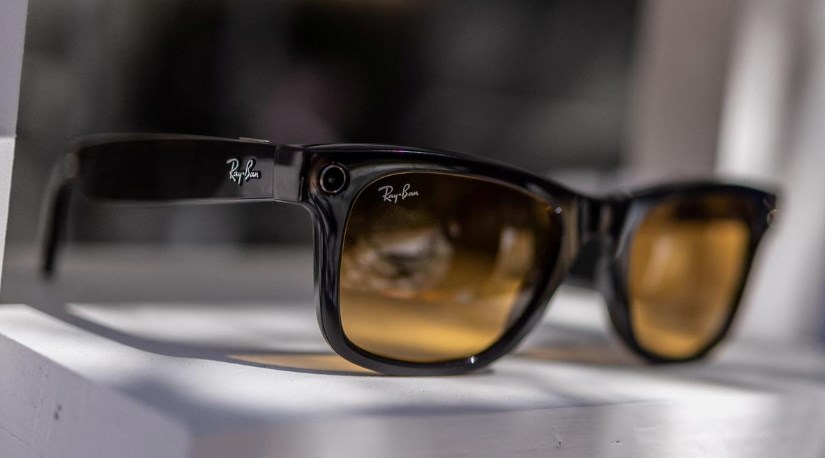
This creates a delicate balance for Meta. The company wants people to use the glasses as naturally as they use headphones or smartphones. But the more natural the glasses become, the less obvious their recording capabilities may appear. That is why Meta’s promises about privacy matter. The company is effectively asking the public to believe that the glasses can become ubiquitous without making everyday interactions feel like surveillance. It is a difficult proposition because trust is harder to manufacture than a software feature. A privacy setting can be added with an update. Public confidence takes much longer.
AI Makes the Question Even Bigger
The privacy conversation becomes more complicated when artificial intelligence enters the picture. Meta’s newer smart glasses are not simply wearable cameras. They can interact with AI systems, allowing users to ask questions about what they see, identify objects, translate information and perform other contextual tasks. That makes the glasses significantly more useful, but it also raises questions about how visual information is processed.
Imagine someone wearing the glasses while walking through a crowded market. They might ask the assistant about a product, read a sign or translate a menu. From the user’s perspective, that can be extremely helpful. But the camera does not know which person in the background has consented to being captured.
This is where the distinction between recording and sensing becomes important. A device can process visual information without permanently storing every frame, but the people around the device may not understand that distinction. To them, a camera pointed in their direction is still a camera.
Meta therefore has to communicate not only what the glasses can do, but also what happens to the information they collect. Users and bystanders need understandable explanations rather than complicated privacy language that only specialists can interpret.
Privacy Cannot Be Solved With a Pinky Promise
Meta’s informal promise that privacy will improve may sound reassuring, but consumers will ultimately judge the company by the controls it actually provides. That means privacy protections need to be visible, understandable and difficult to circumvent. Hardware indicators can play an important role. So can software controls, data-retention limits, clear account settings and restrictions on how captured information is processed. The company also needs to explain those safeguards in ordinary language. Meta Pinky-Promises Its Smart Glasses Will Be Private Soon
There is another important issue: social etiquette. Even if Meta technically prevents covert recording in certain circumstances, people still need to develop norms around smart glasses. Users may have to learn when it is appropriate to wear them and when it is better to take them off. Restaurants, workplaces, medical facilities and private events could develop their own rules. In some environments, simply having a camera-equipped device on your face may make other people uncomfortable regardless of whether it is actively recording. That is not something a software update can completely solve.
The Future of Meta’s Smart Glasses Depends on More Than Features
Meta’s smart glasses demonstrate how quickly wearable technology is moving from novelty toward something more practical. They can provide hands-free photography, communication, audio and AI assistance in a package that looks far less futuristic than many previous attempts at augmented or wearable computing.
But convenience creates responsibility. If Meta wants smart glasses to become an ordinary consumer product, privacy cannot be treated as a secondary feature that gets attention only after criticism. It has to be part of the product’s design from the beginning. That includes protecting the wearer, but it also includes respecting everyone who happens to be standing nearby.
The company’s promise of better privacy will therefore be judged in everyday situations rather than press announcements. Can a person walk into a café wearing the glasses without making everyone uncomfortable? Can someone attend a family gathering without relatives worrying about being recorded? Can coworkers understand when the glasses are active? Can people clearly know what information is being processed by AI?
Those questions will matter just as much as battery life, camera quality or AI performance. Meta may eventually deliver smart glasses that feel as ordinary as headphones. But getting there requires more than making the hardware smaller and the software smarter. The company has to build a level of trust that extends beyond the person wearing the glasses.
For now, Meta is asking the public to believe that privacy will get better. The real test will come when those promises become concrete features, clearer controls and consistent behavior in the real world. Smart glasses may have the potential to change how people interact with technology, but their success will depend heavily on whether people around the wearer feel comfortable with that change. The technology can capture the world through the user’s eyes. The harder challenge for Meta is proving that it can do so without making everyone else feel watched. Meta Pinky-Promises Its Smart Glasses Will Be Private Soon
About the Author