With Trump approval ratings so low, how does he keep ousting GOP rivals?
With Trump approval ratings so low, how does he keep ousting GOP rivals? – For years, political analysts have treated approval ratings as one of the clearest indicators of a president’s strength. When ratings fall, lawmakers typically begin distancing themselves. Allies grow nervous. Rivals smell opportunity. Yet in the case of Donald Trump, traditional political rules seem to work differently. Even as Trump’s national approval numbers remain stubbornly low among the broader American public, he continues to dominate the Republican Party with remarkable force. One by one, GOP rivals who once challenged him have either faded from relevance, abandoned presidential ambitions, or openly aligned themselves with the very man they once criticized. The question many voters, strategists, and political observers now ask is simple: How does Trump keep winning inside his party despite weak approval ratings nationwide?. With Trump approval ratings so low
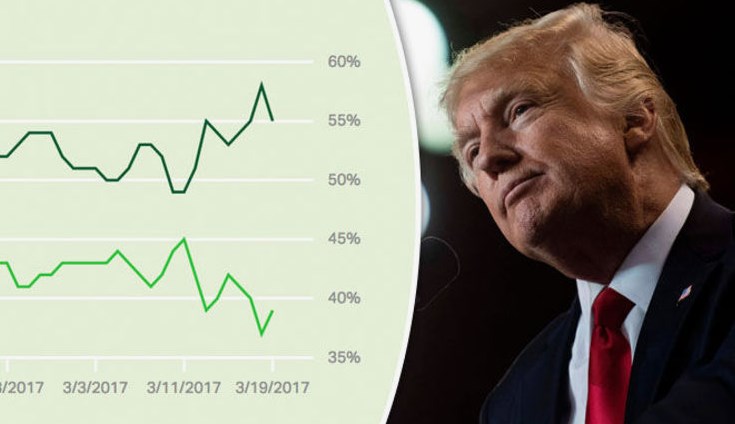
The answer lies in a combination of political fear, personal loyalty, media dominance, and a Republican base that still views Trump not merely as a politician, but as the embodiment of their frustrations and cultural identity. Trump’s approval ratings among all Americans have often hovered below the levels typically considered politically safe for incumbents or party leaders. Independent voters remain divided on him, while Democrats overwhelmingly oppose him. On paper, those numbers should create vulnerability. Historically, presidents with similar ratings struggled to maintain control over their own parties, especially during election cycles.
But Trump’s real political strength has never depended on broad national popularity. His power comes from his grip on Republican primary voters. Inside the GOP, Trump remains extraordinarily influential. Republican lawmakers understand that criticizing him can trigger immediate backlash from conservative voters, donors, and media personalities. In today’s political climate, surviving a Republican primary is often more important than appealing to moderate general-election voters. That reality has reshaped the behavior of the party.
Many Republicans who once believed they could replace Trump discovered just how difficult that task would be. Take the rise and fall of several high-profile GOP challengers over the past few years. Governors, senators, and former cabinet officials entered the national spotlight believing Republican voters were ready to move on from Trump’s constant controversies and legal troubles. Some pitched themselves as “Trump without the chaos.” Others argued the party needed a younger generation of leadership.
Yet nearly all faced the same problem: Republican voters still preferred the original. Trump’s base views attacks against him as attacks against them. That emotional connection has become one of the most powerful forces in modern American politics. Supporters often see him as someone fighting against entrenched political elites, mainstream media organizations, and institutions they no longer trust. Legal investigations, indictments, and criticism from opponents have frequently strengthened that perception rather than weakened it.
This creates an unusual political dynamic. Scandals or controversies that might destroy another politician often reinforce Trump’s standing among loyal supporters. To many Republicans, his conflicts are proof that he is challenging a system they already believe is unfair. Fear also plays a major role in Trump’s continued dominance. Republican officials have watched what happens to those who oppose him directly. Some lost primaries. Others faced relentless criticism online and at conservative events. A few eventually retired from politics altogether. Trump’s endorsements remain highly influential in Republican races, particularly in conservative states and districts where the GOP base holds enormous power. With Trump approval ratings so low
As a result, many Republican politicians calculate that cooperation is safer than confrontation. Even lawmakers who privately express frustration with Trump often avoid public criticism. Political survival increasingly depends on maintaining at least a neutral relationship with him. In some cases, former critics have reversed course entirely, praising Trump after once condemning his behavior. The transformation has been striking. Several Republicans who blamed Trump for election losses, party division, or the events surrounding the January 6 Capitol riot later returned to supporting him once it became clear that GOP voters had not abandoned him. Their reversals reflected a broader truth about the Republican Party: Trump remains its central figure, whether supporters fully embrace that reality or not.
Another major reason Trump continues overpowering rivals is his unmatched ability to dominate media attention. Modern politics revolves around visibility, and few public figures command attention like Trump. Every statement, rally, social media post, or courtroom appearance becomes headline news. Rivals struggle to break through because Trump occupies so much political oxygen. Even negative coverage often benefits him by keeping him at the center of national conversation. While opponents spend millions trying to introduce themselves to voters, Trump already controls the spotlight. Republican voters see him constantly, hear his arguments daily, and remain emotionally invested in his political battles.
That visibility makes it difficult for challengers to redefine the party around someone else. There is also the matter of identity politics within the Republican base — though not in the traditional sense often discussed in American politics. For many supporters, Trump represents resistance against cultural and demographic changes they feel are reshaping the country too quickly. Issues involving immigration, education, crime, religion, and free speech have fueled deep anxieties among conservative voters.
Trump speaks to those concerns in blunt, emotional language that many Republicans believe other politicians avoid. Traditional Republican figures often communicate like policy experts. Trump communicates like a fighter. Whether critics consider his rhetoric divisive or supporters view it as refreshing honesty, there is little doubt that his style resonates deeply with millions of voters. That connection helps explain why rivals struggle to gain traction even when they possess stronger resumes or fewer controversies.
Some Republican strategists quietly worry that the party’s dependence on Trump could eventually hurt its long-term electoral prospects. They point to suburban voters, independents, and younger Americans who remain skeptical of him. Election results in several swing states have shown signs of fatigue among moderate voters. Yet within Republican primaries, those broader concerns often matter less than enthusiasm and loyalty from core conservative voters. With Trump approval ratings so low 
Trump understands this dynamic better than most politicians. Rather than trying to appeal to everyone, he focuses intensely on energizing his most committed supporters. That strategy has repeatedly allowed him to overpower fragmented opposition inside the GOP. Meanwhile, potential challengers face a nearly impossible balancing act. If they attack Trump too aggressively, they risk alienating his loyal supporters. If they avoid criticizing him, voters wonder why they should choose a weaker imitation over the original.
Again and again, Republican rivals have found themselves trapped between those two realities. Trump’s resilience also reflects broader changes in American politics. Political parties today are increasingly driven by personality, media ecosystems, and emotional loyalty rather than traditional ideology alone. Trump did not simply lead the Republican Party — he transformed it in his own image. Many GOP voters now evaluate politicians based on their relationship to Trump himself. Are they loyal? Are they fighters? Do they challenge the same enemies? Those questions often matter more than policy details or governing experience.
As long as that remains true, Trump’s influence is likely to continue regardless of fluctuating national approval ratings. Low approval numbers may weaken him with the general public, but inside the Republican Party, Trump operates by a different political formula altogether. His hold over the GOP is rooted not just in polling, but in identity, loyalty, fear, media power, and a deeply emotional connection with millions of voters. That combination has allowed him to do something few modern politicians ever achieve: remain the dominant force in a major political party even while much of the country remains sharply divided about him. With Trump approval ratings so low