U.S. Coast Guard reports $62-million drug bust off Colombia
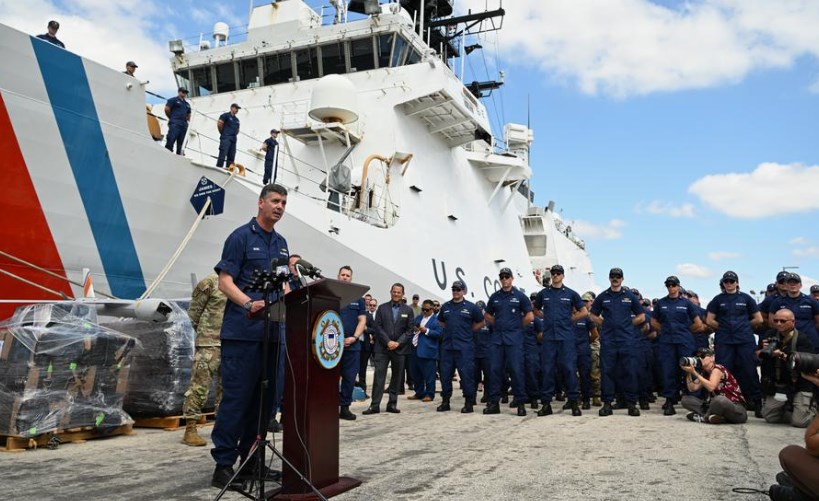
U.S. Coast Guard reports $62-million drug bust off Colombia – The United States Coast Guard has announced one of its biggest drug seizures of the year after intercepting massive amounts of illegal narcotics in international waters near Colombia. Authorities say the operation led to the confiscation of drugs worth an estimated $62 million, dealing another major blow to transnational criminal organizations that use the Caribbean Sea and Eastern Pacific as key trafficking routes into North America.
The dramatic bust unfolded during a coordinated maritime operation involving Coast Guard crews, surveillance aircraft, and international law enforcement partners. Officials revealed that the seizure included thousands of pounds of cocaine and other illicit substances being transported aboard suspicious vessels operating off the Colombian coastline.
According to the Coast Guard, the successful mission highlights the growing sophistication of anti-drug operations in one of the world’s busiest narcotics trafficking corridors. It also underscores the continued challenge authorities face in combating criminal networks that move enormous quantities of drugs across open waters every year. The operation began after maritime patrol teams detected suspicious activity involving several “go-fast” boats, a term commonly used for high-speed vessels favored by smugglers. These boats are specifically designed to outrun law enforcement and transport narcotics quickly across long stretches of ocean.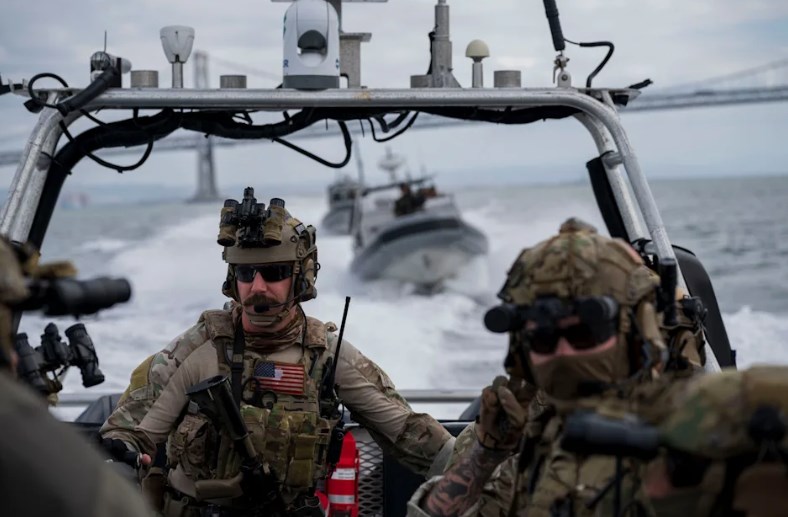
Once the suspicious vessels were identified, Coast Guard units moved into position. Helicopters and cutter crews coordinated closely to track the boats as they attempted to evade capture. Officials said smugglers onboard tried to dump packages into the sea after realizing authorities were closing in. Despite the attempts to destroy evidence, Coast Guard teams managed to recover a significant amount of contraband from the water. Boarding crews later secured the vessels and detained multiple suspects believed to be involved in the trafficking operation. Authorities have not yet released the identities or nationalities of all those arrested, but officials confirmed that the suspects are now facing federal prosecution related to international drug trafficking charges.
The Coast Guard stated that the drugs seized during the mission carry an estimated street value of around $62 million. Most of the narcotics recovered were believed to be cocaine destined for markets in the United States and other countries. Drug trafficking organizations in Latin America continue to rely heavily on maritime smuggling routes due to the enormous profits involved. Criminal groups frequently use remote sections of the Colombian coastline to launch operations into international waters before moving narcotics northward through Central America, Mexico, and eventually into the United States.
Officials say cartels are constantly adapting their tactics. In recent years, authorities have intercepted semi-submersible vessels, hidden compartments aboard fishing boats, and even homemade submarines capable of carrying tons of cocaine across oceans. The latest seizure demonstrates how international cooperation remains essential in fighting organized crime. The Coast Guard worked alongside Colombian authorities and other regional partners during the mission, sharing intelligence and coordinating enforcement efforts.
Law enforcement experts say these partnerships are crucial because drug trafficking networks operate across borders and exploit gaps in maritime security. Without coordinated surveillance and rapid response operations, many shipments could easily disappear into vast stretches of open water. Coast Guard commanders praised the professionalism and determination of the crews involved in the operation. Officials noted that interdiction missions are often dangerous, requiring personnel to work in unpredictable weather conditions while pursuing heavily armed smugglers at sea.
“These operations save lives,” one Coast Guard official said during a press briefing. “Every kilogram of cocaine we keep from reaching the streets represents fewer opportunities for criminal organizations to profit and fewer dangerous drugs entering communities.” The seizure comes amid growing concern about the global cocaine trade. International reports indicate that cocaine production has surged in recent years, fueled by expanding cultivation and increased demand in multiple regions around the world.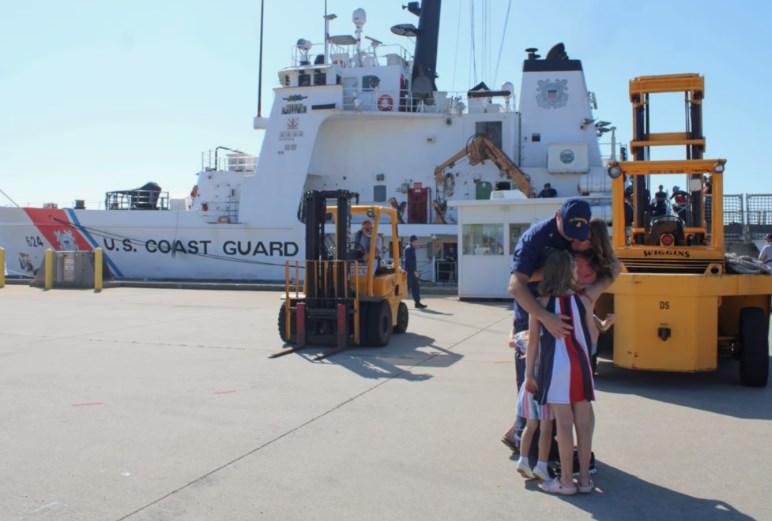
Colombia remains one of the largest producers of cocaine globally, despite years of anti-narcotics campaigns and eradication efforts. Criminal organizations continue to adapt, using new trafficking routes and technologies to avoid detection. Experts say maritime interdictions like this one play a major role in disrupting supply chains. While authorities acknowledge that seizures alone cannot eliminate drug trafficking, removing large shipments can create financial setbacks for criminal groups and temporarily disrupt distribution networks. U.S. Coast Guard reports $62-million drug bust off Colombia
The Coast Guard’s role in counter-narcotics operations has grown significantly over the years. In addition to search-and-rescue missions and maritime safety enforcement, the agency regularly conducts patrols aimed at intercepting illegal trafficking activity throughout the Caribbean and Eastern Pacific. These missions often involve weeks at sea for Coast Guard crews, who monitor shipping lanes and respond rapidly when suspicious vessels are detected. Advanced surveillance systems, aircraft, and intelligence-sharing agreements have improved the agency’s ability to identify smuggling operations before drugs reach shore.
Still, officials admit the challenge remains enormous. The vast size of the ocean makes it impossible to intercept every shipment, and traffickers continue to innovate in response to enforcement pressure. In some cases, smugglers intentionally scuttle their boats or throw cargo overboard to destroy evidence. Others attempt to blend in with legitimate fishing or commercial vessels. Law enforcement agencies must therefore rely heavily on intelligence gathering and aerial reconnaissance to identify targets.
The latest bust also reflects broader U.S. efforts to strengthen security partnerships throughout Latin America. Washington has long supported regional anti-drug initiatives through funding, training programs, and intelligence cooperation. Officials argue that targeting trafficking networks at sea prevents drugs from moving further inland, where they can fuel violence, addiction, and organized crime in communities across multiple countries.
The announcement of the $62-million seizure quickly drew attention online, with many praising the Coast Guard’s efforts. Social media users highlighted the risks faced by crews operating in dangerous maritime conditions and applauded the successful interdiction. Others, however, pointed to the ongoing scale of global narcotics trafficking as evidence that drug cartels remain highly resilient despite repeated enforcement actions. Analysts say the continued profitability of the cocaine trade ensures that criminal groups will keep searching for new ways to transport drugs internationally. U.S. Coast Guard reports $62-million drug bust off Colombia
Even so, law enforcement leaders maintain that each seizure matters. Large interdictions can weaken trafficking organizations financially while also generating valuable intelligence that helps investigators map smuggling networks and identify higher-level operatives. As the investigation continues, federal prosecutors are expected to pursue charges against the suspects detained during the operation. Authorities may also examine links between the intercepted shipment and larger criminal organizations operating throughout Latin America.
For now, the Coast Guard is celebrating the mission as another important victory in the ongoing battle against international drug trafficking. The seizure not only removed millions of dollars’ worth of narcotics from circulation but also demonstrated the effectiveness of coordinated maritime enforcement in one of the world’s most active smuggling regions. While the war against drug trafficking remains far from over, operations like this send a strong message that authorities continue to monitor the seas closely and are prepared to confront criminal networks wherever they operate. U.S. Coast Guard reports $62-million drug bust off Colombia
About the Author