Trump’s approval drops as Democrats take double-digit lead in new poll – President Donald Trump’s political standing is showing fresh signs of weakness as the 2026 midterm elections move closer, with a new national poll finding his approval rating falling sharply while Democrats open a double-digit advantage in the congressional race.
The latest Economist/YouGov survey, released September 22, found that 35% of Americans approved of Trump’s performance as president, down from 40% just one week earlier. The five-point decline erased five consecutive weeks of gains and left Trump only two points above the lowest approval rating recorded for him in that particular survey.
For Republicans, the timing could hardly be more uncomfortable. The midterms are now approaching quickly, and the president remains one of the most important figures in the campaign. Rather than simply running on their own records, Republican candidates are being forced to operate in an environment where voters are increasingly evaluating the election through the lens of Trump’s presidency.
That is exactly what Democrats have been hoping for.
Trump’s Recent Momentum Has Suddenly Reversed
For several weeks, Trump appeared to be recovering from a difficult period in the polls. His approval rating had climbed gradually, creating an argument among Republicans that his political position was stabilizing before the midterm campaign reached its final stretch. The September 22 Economist/YouGov poll interrupted that narrative. Trump’s approval fell from 40% to 35% in only seven days, demonstrating just how quickly public opinion can move in a closely divided political environment.
The number itself is important, but the direction may matter even more. A president heading into a midterm election wants voters to see his administration as improving, particularly on the economy and other issues that affect daily life. A sudden decline instead gives opposition candidates an opportunity to argue that the public is becoming increasingly dissatisfied.
Trump has faced weak numbers before. In August, another Economist/YouGov poll found that only 33% approved of his job performance while 62% disapproved, producing a net approval rating of minus 29, the lowest level recorded for either of his presidential terms at that point. That history makes the latest decline especially significant. It suggests that the improvement Trump enjoyed in recent weeks may have been more fragile than Republicans wanted to believe.
Democrats Are Turning Discontent Into a Midterm Advantage
The biggest political problem for Republicans is that Trump’s weaker approval rating is arriving at the same time Democrats are gaining ground on the congressional ballot. The September NPR/PBS News/Marist national poll found that 53% of registered voters said they would support the Democratic candidate for Congress in their district if the election were held at that moment, compared with 41% who preferred the Republican candidate. That represented a 12-point Democratic advantage.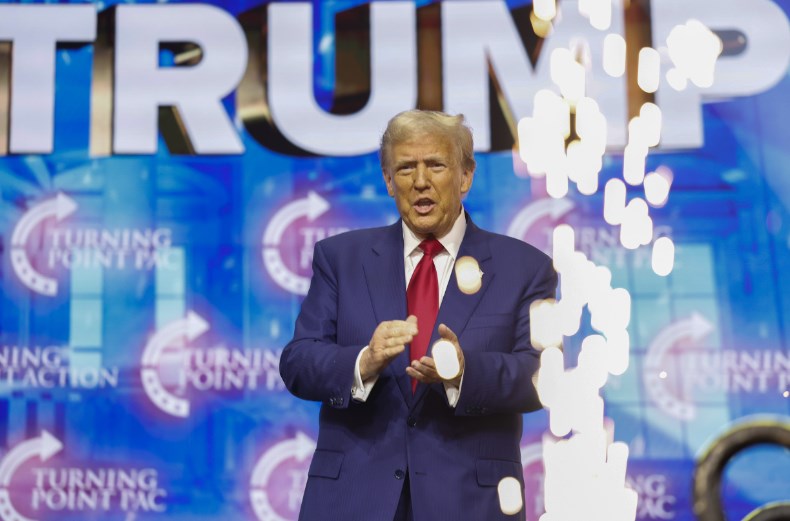
That is a substantial gap in a country where congressional elections are often decided by relatively narrow margins. Independents are particularly important. In the Marist survey, independent voters favored Democratic congressional candidates 57% to 32%, giving Democrats a 25-point advantage among voters who could play a decisive role in competitive districts.
The numbers do not guarantee a Democratic takeover of Congress. Polls can change, turnout can be unpredictable, and individual races have their own dynamics. But they do establish a clear warning sign for Republicans. Democrats are not simply benefiting from enthusiasm among their own base. They are also making progress with voters outside the traditional Democratic coalition.
The Economy Is Becoming a Major Problem for Trump
Much of the frustration surrounding Trump is connected to the economy and the cost of living. This is particularly important because economic issues were central to Trump’s political appeal. During his campaigns, he repeatedly promised voters that his administration would improve their financial situation and make everyday life more affordable. Now, however, economic frustration is becoming one of the biggest vulnerabilities for the White House.
An AP-NORC poll reported in early October found that only 26% of Americans approved of Trump’s handling of the economy, while just 17% approved of his handling of the cost of living. Those numbers represent major challenges for a president whose party is asking voters to keep Republicans in control of Congress.
Another AP-NORC survey found Democrats gaining an advantage over Republicans on important issues such as the cost of living and health care. Yet the same poll showed that Americans remain deeply skeptical of both political parties, with relatively few voters believing either party is capable of solving the country’s biggest problems.
That distinction matters. Voters can be unhappy with Trump and Republicans without becoming enthusiastic Democrats. The challenge for Democrats is therefore not simply to criticize the president. They must persuade voters that they offer a credible alternative. Trump’s approval drops as Democrats take double-digit lead in new poll
Trump’s Problems Could Spread to Republican Candidates
Midterm elections often become referendums on the president, especially when that president is highly visible and politically dominant. Trump has embraced that role rather than avoiding it. He has continued campaigning aggressively for Republican candidates, appearing at rallies and encouraging his supporters to turn out. But that strategy carries a risk. If voters are unhappy with the president, Republican candidates can become collateral damage. A congressional candidate may have a strong local reputation and a detailed platform, but voters still have to decide whether that candidate should help Trump advance his agenda in Washington. Trump’s approval drops as Democrats take double-digit lead in new poll 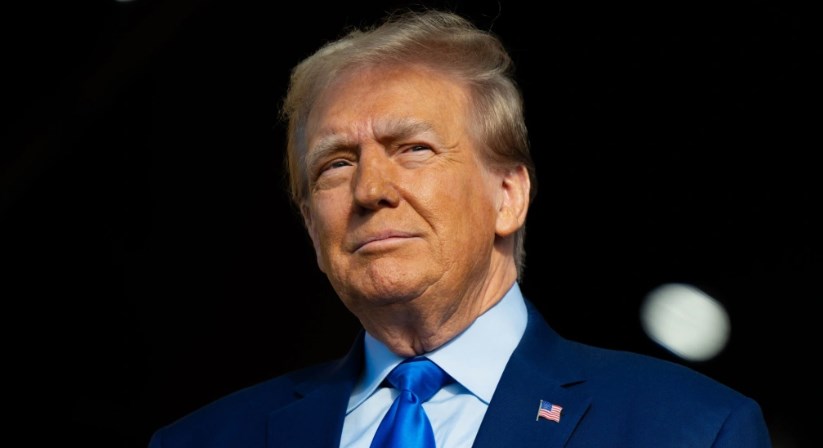
The latest polling suggests Democrats are trying to make exactly that connection. The Marist survey found that voters were more likely to view their congressional vote as a vote against Trump than a vote for him. At the same time, Trump’s job approval remained below 40%. That gives Democrats a simple message: if voters want to send a warning to the White House, electing Democratic members of Congress is the way to do it. For Republicans, the answer is more complicated. They must defend the president while also convincing voters that their candidates deserve individual support.
The Midterms Are Still Wide Open
Despite the troubling numbers for Trump and Republicans, it would be premature to declare the election finished. Polling captures a moment, not a final result. The election is still shaped by turnout, candidate quality, campaign spending, late-breaking events and the issues voters care about when they actually cast their ballots. There is also evidence that Republicans remain capable of holding together a significant portion of their traditional coalition. Trump continues to have strong support among many Republican voters, even as his standing with independents and some other groups has weakened.
Recent polling also shows that Democrats face their own challenge: dissatisfaction with Republicans does not automatically translate into excitement about Democrats. The AP-NORC findings indicate widespread frustration with both parties and skepticism that either can solve the problems voters consider most important. That means Democrats still have work to do. Trump’s approval drops as Democrats take double-digit lead in new poll
A double-digit lead can disappear if voters become unconvinced by a party’s candidates or agenda. Likewise, Republicans could recover if economic conditions improve, Trump’s approval rebounds or Democratic candidates make mistakes. But the current direction is difficult for the GOP to ignore. With the November 3 midterms approaching, Trump’s declining approval and the Democrats’ double-digit congressional advantage are creating an increasingly uncomfortable political landscape for Republicans.
The president has spent much of his political career defying expectations, so Republicans will likely argue that the polls are underestimating their coalition once again. Democrats, meanwhile, see an opportunity to turn voter frustration into congressional victories. Ultimately, the election may come down to a simple question: are Americans voting to reward Trump and his party, or are they looking for a way to push back? . Right now, the polling suggests the pushback is gaining momentum.
About the Author