Trump slams Omar after federal agents search her home – The political tension between President Donald Trump and Democratic Representative Ilhan Omar intensified on October 12, 2026, after federal agents searched the Minnesota congresswoman’s home in Washington, D.C. The operation quickly became a major political controversy, drawing sharp criticism from Democrats and renewing questions about the relationship between federal law enforcement and political disputes in the United States.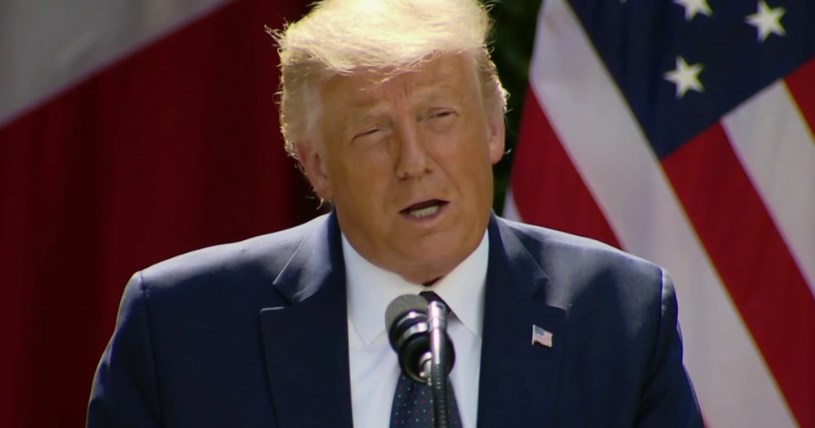
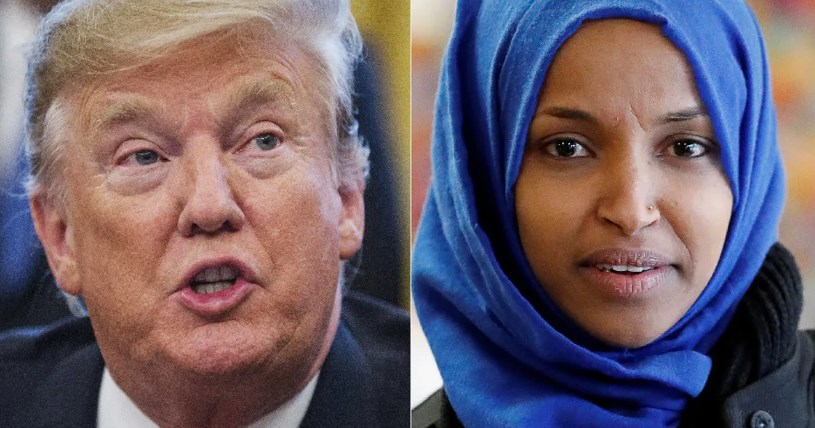
Trump responded to the search by criticizing Omar, describing her as a terrible person and calling her character into question. At the same time, he told reporters that he had nothing to do with the investigation and that decisions about the case were a matter for the Department of Justice. His comments came as Omar accused the administration of using federal agencies to target political opponents. The incident has placed renewed attention on the congresswoman, her immigration history, and the broader political conflict surrounding the administration’s immigration policies. Trump slams Omar after federal agents search her home
Federal Agents Search Omar’s Washington Home
The search took place early Monday morning, when agents from Homeland Security Investigations, the criminal investigative arm of U.S. Immigration and Customs Enforcement, carried out a search at Omar’s Washington-area residence. The Department of Justice confirmed that investigators had executed a judicially authorized search warrant as part of an ongoing federal criminal investigation. However, officials provided limited information about the precise scope of the inquiry or the evidence investigators were seeking.
According to reporting by Reuters and CBS News, the investigation concerns allegations related to Omar’s immigration paperwork. Sources familiar with the matter said investigators were examining documents associated with her childhood immigration history, including paperwork completed by her late father. Allegations involving immigration fraud and false statements have circulated among administration officials, but the claims have not been established as proven wrongdoing. Omar has repeatedly rejected accusations against her, and the search itself does not establish guilt.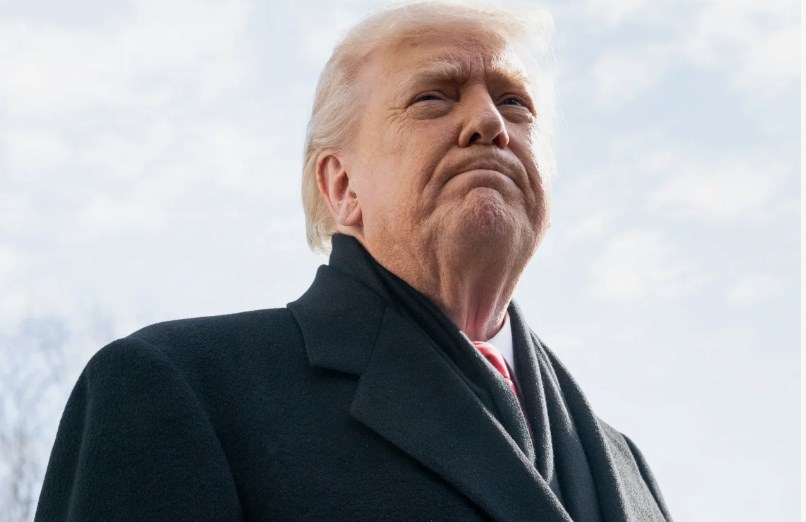
The operation attracted considerable attention because Omar is not an ordinary political figure. She represents Minnesota’s Fifth Congressional District, which includes Minneapolis, and has become one of the most recognizable progressive voices in the House of Representatives. Her outspoken criticism of Trump’s immigration policies has made her a frequent target of Republican attacks. Consequently, the search immediately raised questions about whether the investigation would be treated as a conventional criminal matter or become entangled in the country’s wider political divisions.
The timing also added to the controversy. The search occurred only weeks before the November 3 midterm elections, when Republicans and Democrats are competing for control of Congress. The Justice Department has historically sought to avoid overt investigative actions involving political candidates close to elections because such actions can create the appearance of political interference. That tradition does not automatically make a search unlawful, but it makes the circumstances particularly sensitive and increases the importance of transparency, impartiality, and respect for due process.
Trump Criticizes Omar While Denying Involvement
Trump made his position clear when reporters asked him about the investigation. He said he understood that authorities were examining Omar and described her as a person he considered dishonest and objectionable. However, he also insisted that the investigation was not his responsibility, saying the matter belonged to the Justice Department and that he had nothing to do with the search.
The president’s comments reflected the longstanding hostility between the two politicians. Trump has repeatedly criticized Omar over her political positions, her background, and her comments about American foreign and domestic policy. Omar, who was born in Somalia and became a U.S. citizen in 2000, has frequently challenged Trump’s immigration agenda and his rhetoric about immigrant communities. Their public disagreements have continued across several political cycles, making the latest incident part of a much longer conflict.
Trump has also directed criticism toward Minnesota’s Somali-American community, linking immigration and public concerns in the state to broader arguments about national security, government spending, and border enforcement. During a campaign appearance in Youngstown, Ohio, he attacked Somalia and argued that Minnesota was being damaged by the situation there. Some supporters responded with chants calling for deportations, underscoring how Omar’s case has become connected to the administration’s wider immigration message. Trump slams Omar after federal agents search her home
Despite the president’s denial of involvement, Democrats argue that his repeated public attacks on Omar make the circumstances difficult to separate from the broader political environment. Their concern is not simply that federal agents conducted a search, but that a prominent critic of the president became the subject of a highly visible investigation shortly before an election. Whether political considerations influenced the operation remains a disputed question, and the available public information does not establish that Trump personally directed the search.
Omar Says She Will Not Be Silenced
Omar responded to the operation with a forceful message on social media. She said she was safe and described the search as an attempt to target political enemies and weaponize federal law enforcement. She also argued that Trump had spent years directing false accusations and personal attacks against her, presenting the latest development as another escalation in that pattern. Trump slams Omar after federal agents search her home
Her response was consistent with her longstanding criticism of the administration. Omar has argued that political leaders should not use government authority to intimidate elected officials who disagree with them. She has also spoken about the personal consequences of inflammatory political rhetoric, including threats directed at her and her family. In the aftermath of the search, her central message was that the investigation would not prevent her from speaking publicly or continuing her work in Congress.
Omar’s office also rejected the allegations and condemned the search. Her representatives characterized the operation as an abuse of power and an extraordinary escalation in the use of federal law enforcement against a political opponent. These statements reflect the congresswoman’s position, rather than an independent legal determination about the investigation. Establishing whether any offense occurred will require evidence and a fair legal process, not political accusations from either side.
The case is especially sensitive because Omar’s immigration history has long been a subject of political debate. Critics have questioned aspects of her family’s past, while Omar has rejected allegations that she committed immigration fraud. At this stage, the publicly reported search does not amount to a finding that she violated the law. Maintaining that distinction is essential, particularly when the allegations involve a sitting member of Congress and are being discussed during a heated election campaign.
Democrats Condemn the Search and Question Its Timing
Democratic leaders in Congress reacted strongly to the search, arguing that the circumstances raised serious questions about the independence of federal law enforcement. House Democratic Leader Hakeem Jeffries, Minority Whip Katherine Clark, and Democratic Caucus Chair Pete Aguilar issued a joint statement describing the operation as deeply disturbing. They warned that the use of federal investigative powers against a member of Congress who has repeatedly criticized the president could undermine public confidence in government institutions.
Minnesota Governor Tim Walz also criticized the administration, arguing that the search represented an abuse of presidential power against a political opponent. Other Democratic lawmakers echoed those concerns, with some describing the operation as part of a broader pattern of investigations and legal actions involving figures who have challenged Trump. Their criticism has focused particularly on the proximity of the search to the midterm elections and the possibility that its political consequences could extend beyond Omar herself.
The controversy has drawn attention to longstanding Justice Department practices concerning investigations near elections. Federal officials have traditionally exercised caution when taking public investigative steps involving political candidates shortly before voters head to the polls. The purpose is to prevent law enforcement from appearing to influence an election or provide an advantage to a particular party. Although these practices are not an absolute prohibition against conducting legitimate investigations, they are intended to protect public confidence in the impartial administration of justice.
Republicans, meanwhile, have argued that allegations of wrongdoing should be investigated regardless of a politician’s position or party affiliation. Representative Nancy Mace said that if fraud were proven, Omar should face consequences under the law. That position highlights an important distinction in the debate: political office should not provide immunity from legitimate investigations, but neither should allegations be treated as established facts before the evidence has been examined. The ultimate question is whether investigators can demonstrate a legal basis for their actions and proceed without political interference.
What Happens Next for Omar and the Investigation?
For now, the investigation remains ongoing, and important details have not been made public. The Justice Department has confirmed the execution of a search warrant but has not provided a comprehensive explanation of the evidence involved, the precise allegations under investigation, or the expected timeline for the inquiry. Without those details, it remains difficult to determine what investigators may ultimately conclude or whether the case will result in criminal charges.
The distinction between a search, an allegation, and a criminal conviction is particularly important in this situation. A search warrant authorizes investigators to look for evidence within a legally defined scope, but it does not establish that the person whose home is searched committed a crime. Investigators must evaluate the evidence, follow applicable legal procedures, and determine whether there is a sufficient basis for further action. Omar, like any other American, is entitled to the protections afforded by the legal system.
The investigation also arrives at a consequential moment in Omar’s political career. She is seeking another term representing Minnesota’s Fifth Congressional District in the November 3 midterm elections. The controversy could become part of the wider political debate about immigration enforcement, presidential authority, and the independence of federal institutions. However, its eventual impact on voters remains uncertain, and the legal questions should be evaluated separately from the political arguments surrounding the case.
For the Trump administration, the challenge will be demonstrating that federal investigations are conducted according to evidence and established legal standards rather than personal or partisan considerations. For Omar, the immediate task is to respond to the investigation while continuing to defend herself publicly and through any appropriate legal channels. Both the government and the congresswoman will face scrutiny as additional information emerges.
A Political Conflict With Consequences Beyond One Investigation
The search of Omar’s home has become more than a dispute between two prominent political figures. It has raised broader questions about how the government investigates elected officials, how immigration allegations are handled, and what safeguards should exist when law enforcement actions occur close to an election. These issues are especially important in a deeply polarized political environment, where supporters of opposing parties may interpret the same event in dramatically different ways.
Trump’s criticism of Omar and his denial of involvement in the search illustrate the complicated relationship between political rhetoric and federal investigations. The president has made his negative views of the congresswoman clear, while the Justice Department has maintained that the search was part of an ongoing criminal investigation. Those facts can be reported together without assuming that the president ordered the operation or that the investigation is necessarily politically motivated.
Likewise, Omar’s accusation that the government is targeting political enemies deserves to be understood as her stated position, not as a conclusion already established by the available evidence. The concerns raised by Democratic leaders about timing and institutional independence are significant questions for public accountability. At the same time, determining whether officials acted improperly requires more information about the investigation, its authorization, and the decisions that led to the search.
Ultimately, the case will be judged not only by its immediate political consequences but also by the evidence and procedures that follow. If investigators uncover evidence of a crime, they must establish their findings through lawful processes. If the allegations cannot be substantiated, that outcome should be made clear as well. Transparency and equal treatment under the law are essential regardless of political affiliation.
As the November midterm elections approach, the confrontation between Trump and Omar is likely to remain part of the national political conversation. The search has intensified their already bitter dispute and prompted fresh debate about immigration enforcement and the limits of executive power. For now, the central facts remain straightforward: federal agents searched Omar’s home under a Justice Department-authorized warrant, Trump criticized her while denying involvement, and Omar accused the administration of political intimidation. The investigation’s eventual findings, rather than either side’s rhetoric, will be crucial to understanding what happens next.
About the Author