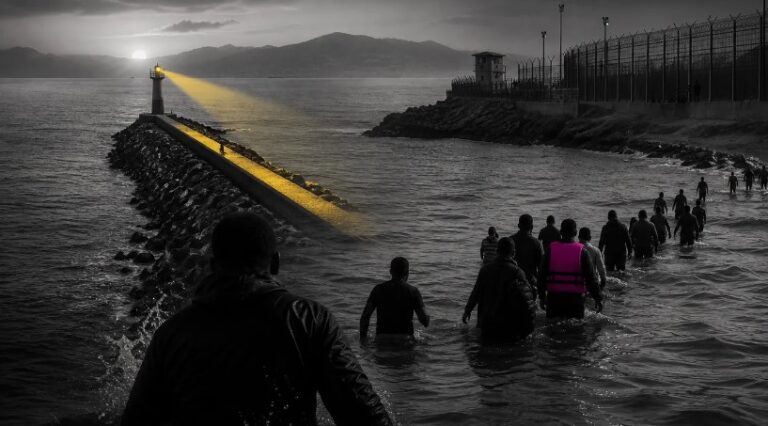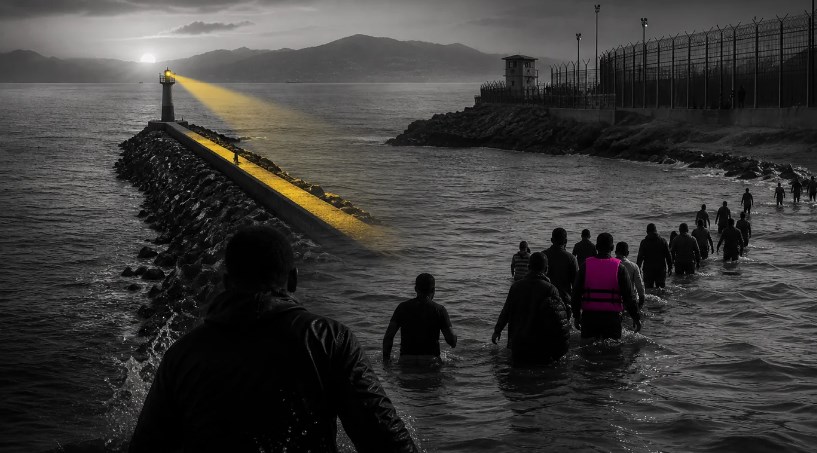
Last migrant camp dismantled in Ceuta after summer crisis – Spanish authorities have dismantled the last major migrant encampment in Ceuta, bringing an important chapter of the territory’s summer migration crisis to a close. The operation, carried out at the former Guano factory area near the coast, followed weeks of uncertainty for people who crossed from Morocco into the Spanish enclave in late July. On October 11, 2026, Spanish police began clearing the makeshift settlement at Guano beach, where around 400 migrants were still living. The operation marked the end of a prolonged period during which thousands of people had struggled to find shelter, complete registration procedures, and determine what would happen next.
The situation developed after an extraordinary wave of crossings on July 30 and 31, when more than 70,000 people entered Ceuta from Morocco, according to reports cited by Spanish media. Many returned to Morocco or moved elsewhere, but others remained in the enclave, sleeping in temporary camps and waiting for decisions about their immigration status.
The dismantling of the Guano settlement is a significant development for local authorities, who have spent months trying to manage the consequences of the influx. However, clearing a camp does not automatically resolve the difficulties faced by the people who lived there. Questions remain about accommodation, asylum applications, the treatment of minors, and the future of those who have no secure place to go. The episode also highlights the complicated relationship between Spain and Morocco, two countries whose cooperation is central to managing migration across one of Europe’s most sensitive borders.
1. Police Clear the Last Major Encampment
The operation at Guano beach began shortly after 8 a.m. on October 11. Spanish National Police led the clearance with support from other security personnel, including riot police, immigration officers, the Civil Guard, and local police. Reports indicated that up to 300 officers were involved in the wider operation.
Authorities moved migrants from the settlement to the Temporary Centre for the Reception of Foreigners, known by its Spanish acronym CATE, where officials could establish their identities and assess their individual circumstances. Some people reportedly left the area before officers could complete the process, heading toward nearby hills to avoid registration.
The camp had become one of the final visible reminders of the summer’s extraordinary border crossings. Makeshift shelters, tents, discarded belongings, and accumulated rubbish occupied the site, reflecting the difficult conditions under which people had been living for weeks. Once the area was cleared, cleaning crews began removing tents, waste, and other debris. Officials also faced the task of assessing environmental damage caused by the prolonged occupation of the coastal location.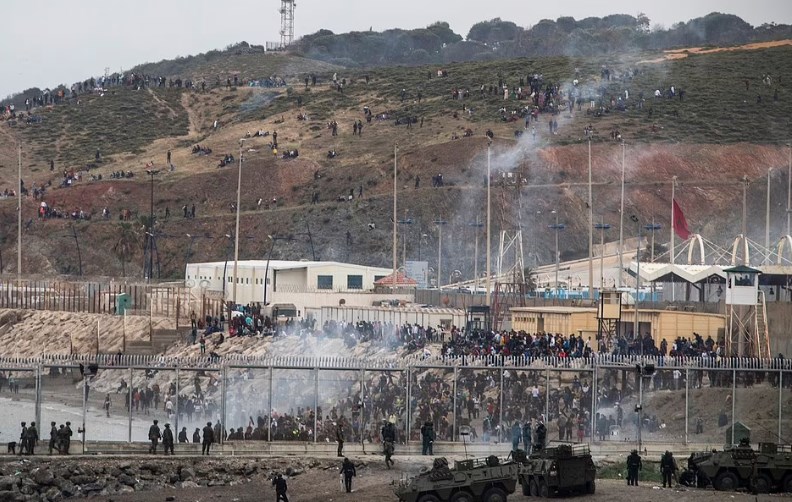
The authorities’ immediate objective was to restore the site and bring the informal settlement to an end. Yet the operation also raised broader questions about whether the people affected had access to suitable accommodation and clear information about their legal options. For many migrants, the clearance was not simply the removal of a temporary camp. It was another turning point in an uncertain journey, with some preparing to return to Morocco and others hoping to remain in Spain while their cases were considered.
The timing was also notable because Spain’s King Felipe VI and Queen Letizia were scheduled to visit Ceuta on October 13 for a tribute to people who died at sea during the mass crossing. The proximity of the royal visit added public attention to the operation, although authorities presented the clearance as part of a broader effort to address the remaining encampments. Last migrant camp dismantled in Ceuta after summer crisis
2. Hundreds Return to Morocco as Others Seek Protection
Following the clearance, more than 300 of the approximately 500 migrants removed from the Guano area reportedly chose to return voluntarily to Morocco. Spanish police sources told the EFE news agency that the returns were arranged after the individuals had been transferred to the temporary reception centre and registered. The word voluntarily matters in this context. People who agree to return may have different reasons for doing so, including family ties, uncertainty about remaining in Spain, or a belief that returning home is their most practical option. Their decisions should not be assumed to reflect the experiences or wishes of every person involved. Last migrant camp dismantled in Ceuta after summer crisis
Other migrants followed a different path. Authorities reported that approximately 70 people requested international protection, seeking consideration of their circumstances under the relevant asylum procedures. Their applications require individual assessment rather than an automatic decision based solely on their arrival during the summer crisis. Officials also identified around 30 people as minors. Their cases raise additional concerns because children and teenagers may require specialized protection, appropriate accommodation, and procedures that take their age and individual circumstances into account.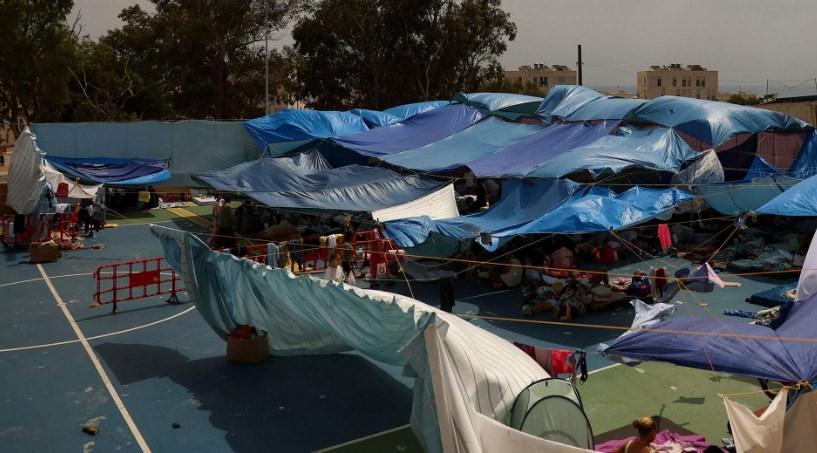
These figures illustrate why the dismantling of a camp is only one part of a much larger administrative challenge. Authorities must distinguish between people seeking asylum, those who may qualify for other forms of protection, individuals who wish to return, and those whose legal status remains unresolved. Each group faces different questions about its future. For some, returning to Morocco may offer a way to reunite with family or leave difficult living conditions behind. For others, the possibility of persecution, discrimination, or violence may make return unsafe. The priority after a large-scale clearance is therefore to ensure that people receive accurate information and that their individual circumstances are considered in accordance with the law.
3. The Human Cost of the Summer Migration Crisis
Behind the numbers are people whose experiences reveal the human consequences of the crisis. Migrants arrived in Ceuta for different reasons, and their journeys were not always driven by the same hopes or circumstances. Some sought better economic opportunities, while others described fleeing threats, persecution, discrimination, or difficult family situations. Living conditions became a serious concern as the number of arrivals exceeded the capacity of existing reception facilities. With official accommodation under pressure, some migrants slept outdoors near beaches, roads, and wooded areas. Makeshift shelters offered limited protection from the weather, while access to safe sanitation and private sleeping spaces was often inadequate.
Women and girls faced particular risks. In August, Reuters reported accounts from migrant women who described sexual harassment and fear while staying in makeshift camps near Ceuta’s reception centre. Humanitarian organizations, including Amnesty International and UNICEF, emphasized the need for safer accommodation, appropriate sanitation, and protection for vulnerable people. The broader crisis also exposed the difficulties faced by people who fear returning to their countries of origin. An Associated Press report published in October described migrants who had experienced threats or persecution linked to their identity, beliefs, or personal circumstances. Such accounts underline why migration cannot be understood exclusively as a question of border enforcement.
For people seeking international protection, the end of an encampment does not necessarily mean the end of their uncertainty. They may still need legal advice, a safe place to stay, and an opportunity to explain why they believe returning home would put them at risk. This is why the handling of the remaining migrants matters beyond the physical removal of tents. A lasting response requires authorities to combine orderly registration and border management with humane treatment, access to appropriate procedures, and special consideration for children and other vulnerable people.
4. Spain and Morocco Face Difficult Questions Over Border Management
Ceuta occupies a unique position in European migration policy. Although it is a Spanish autonomous city on the North African coast, it shares a land border with Morocco. Its geographical location makes it a key crossing point for people seeking to enter Spanish territory and, in some cases, reach other parts of Europe. Spain depends heavily on cooperation with Morocco to manage irregular migration, combat smuggling networks, and coordinate returns. However, the summer influx exposed the fragility of that arrangement when a sudden surge overwhelmed local capacity. Last migrant camp dismantled in Ceuta after summer crisis
The political disagreement has continued beyond the immediate crisis. On October 9, Morocco’s King Mohammed VI said the existing migration cooperation model with Spain had reached its limits. He argued that Morocco’s efforts to control irregular migration had produced results but called for a different approach centered on shared development, economic competitiveness, and regional stability. The king also criticized Spanish court decisions that he said complicated the return of some migrants, particularly minors and people whose protection claims were disputed. These statements reflected Morocco’s position, rather than an independently established conclusion about the legal merits of individual cases.
The dispute demonstrates that migration management cannot depend on border enforcement alone. It also involves legal obligations, diplomatic relations, employment opportunities, regional inequality, and the protection of people who may face serious dangers if returned. For Spain, the challenge is to maintain control of its borders while ensuring that asylum claims and the rights of children are handled appropriately. For Morocco, cooperation must be balanced with its own political and social priorities. Both countries also face pressure to prevent dangerous journeys and disrupt criminal networks that exploit vulnerable migrants. The dismantling of the last major camp may reduce the visible signs of the crisis, but it does not remove the underlying pressures that brought so many people to Ceuta in the first place.
5. What Happens After the Camps Are Gone?
With the Guano encampment cleared, Spanish authorities can concentrate on processing outstanding cases, arranging accommodation where necessary, and determining the next steps for people who remain in Ceuta. Those tasks will require coordination between police, immigration officials, social services, and organizations that assist migrants. The immediate challenge is ensuring that no one is left without essential support simply because a makeshift settlement has been dismantled. People who have requested international protection need their applications handled through the appropriate procedures, while minors require particular attention to their safety and welfare.
Authorities must also manage voluntary returns carefully and distinguish them from removals carried out under different legal procedures. Clear communication is essential so that migrants understand their options and the consequences of decisions affecting their future. Beyond these immediate responsibilities, Spain and Morocco face the harder task of developing a more sustainable approach to migration. Better coordination, stronger reception systems, access to legal information, and efforts to address the conditions driving dangerous journeys could help reduce the likelihood of another crisis on the same scale.
The summer events have shown how quickly a border emergency can develop when large numbers of people arrive over a short period. They have also demonstrated the limitations of relying on temporary camps and emergency clearances to manage a complex humanitarian situation. For Ceuta’s residents, dismantling the final major camp represents a return toward normality after months of disruption. For the migrants who lived there, however, the meaning of the operation depends on what comes next: whether they return safely, receive a fair assessment of their claims, or find a secure place to rebuild their lives.
Ultimately, the end of the last migrant camp is a milestone, not a complete resolution of the crisis. The tents may be gone, but the questions surrounding migration, human rights, and cooperation between Spain and Morocco remain. How both countries address those questions will help determine whether the next migration emergency can be managed more effectively and humanely.
About the Author