Trump says he still wants to visit Fort Knox to see if gold is there
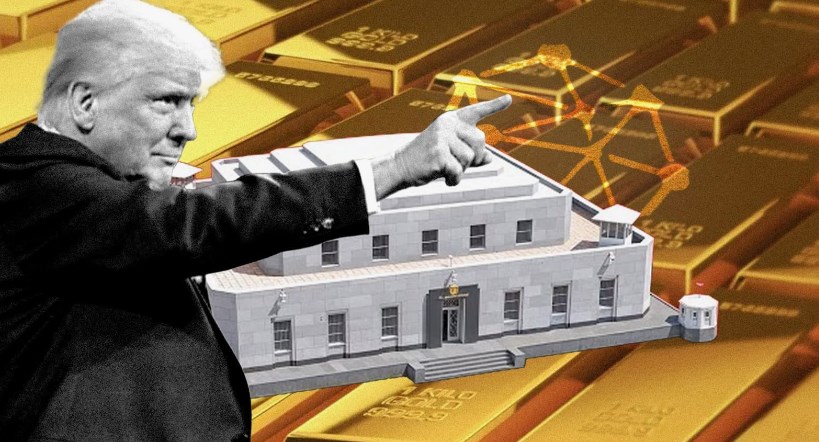
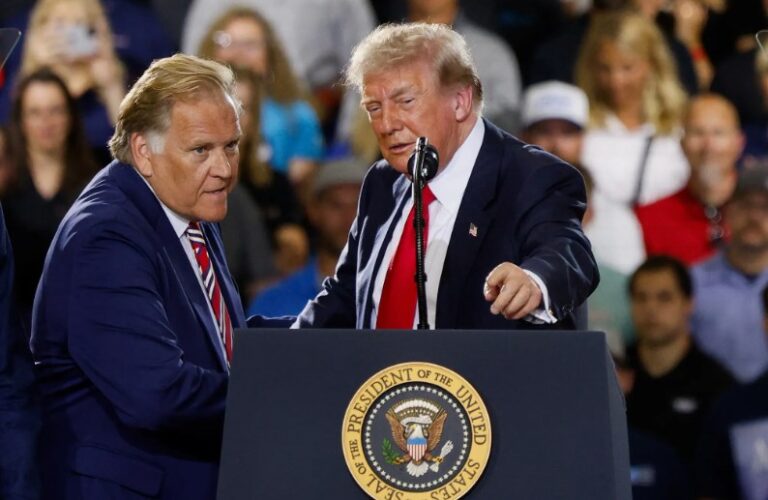
Trump says he still wants to visit Fort Knox to see if gold is there – Former President Donald Trump says he still wants to visit Fort Knox to personally verify whether the United States’ massive gold reserves are actually there — a remark that has reignited public fascination with one of America’s most secretive and heavily guarded locations. Trump’s comments, made during a recent interview and echoed in campaign discussions, tapped into decades of conspiracy theories and public curiosity surrounding the legendary Kentucky vault. While the U.S. Treasury insists the gold is secure and accounted for, Trump suggested he would still like to “see for himself,” framing the issue as one of transparency and public trust. Trump says he still wants to visit Fort Knox to see if gold is there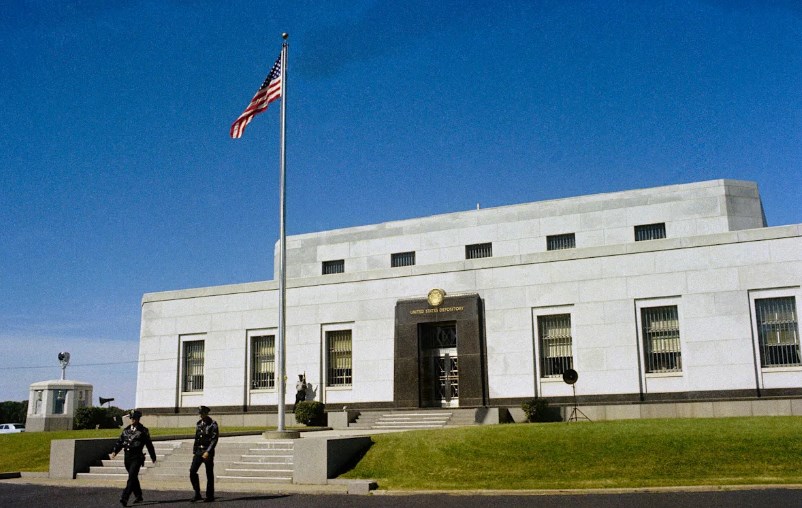
The statement immediately sparked conversation online, with supporters praising the idea as a bold move toward accountability while critics dismissed it as political theater. Regardless of political opinion, the renewed attention has once again placed Fort Knox — long shrouded in mystery — at the center of national debate. Fort Knox is officially known as the United States Bullion Depository. Located next to the U.S. Army post in Kentucky, the facility has become almost mythical in American culture. For generations, it has symbolized financial security, national strength, and secrecy. The depository is believed to hold thousands of tons of gold bullion belonging to the U.S. Treasury, making it one of the largest known gold reserves in the world.
Yet despite its fame, very few people have ever actually seen the gold inside. That secrecy is exactly what Trump appeared to focus on when discussing the possibility of visiting the facility. He questioned why Americans are expected to simply trust official assurances without direct public verification.
“We want to find out if the gold is there,” Trump reportedly said, adding that he hoped “everything’s fine with Fort Knox.”
His remarks may sound unusual to some, but skepticism about Fort Knox has existed for decades. Conspiracy theories about missing gold, empty vaults, or secret transfers have circulated since at least the 1970s. Some theories claim the gold was quietly sold off or used to manipulate global financial markets. Others believe the government intentionally keeps the facility closed to avoid scrutiny.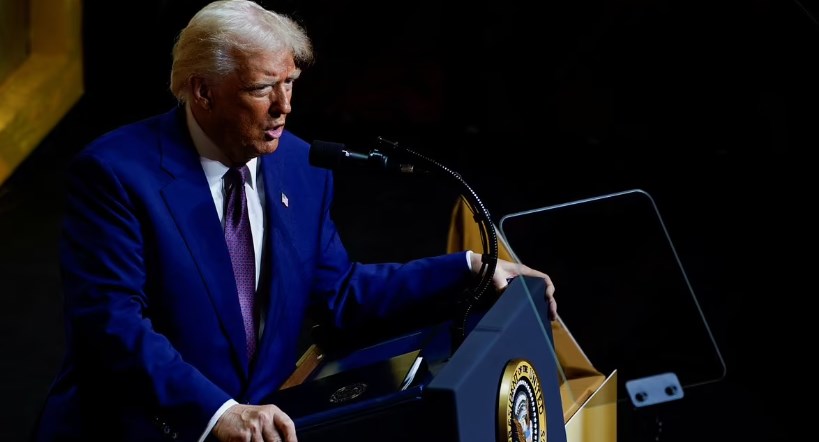
There has never been evidence proving those claims, but the mystery surrounding Fort Knox continues to fuel speculation. One reason for the ongoing intrigue is the fact that public access to the vault is virtually nonexistent. Security at the facility is legendary. The building itself is constructed with granite walls, blast-proof doors, and extensive military protection. Even the exact procedures used to secure the vault remain classified.
Very few outsiders have ever been allowed inside. In fact, one of the rare publicized inspections occurred in 1974, when a small group of journalists and members of Congress toured part of the facility after public pressure and growing rumors that the gold reserves had disappeared. The government later released photographs and reports from the visit in an attempt to reassure Americans. Still, that limited inspection did little to silence conspiracy theories permanently.
Trump’s interest in Fort Knox fits into his broader political style, which often emphasizes distrust of institutions, demands for transparency, and challenges to long-standing government narratives. Throughout his political career, he has frequently portrayed himself as someone willing to ask questions others avoid.Supporters argue that inspecting Fort Knox could strengthen public confidence if the reserves are indeed fully intact. They say there is nothing wrong with verifying the nation’s assets, especially when taxpayers ultimately own them.
Critics, however, see the proposal differently. Some economists and political analysts argue that the Treasury already conducts audits and accounting procedures regarding U.S. gold holdings. They believe Trump’s comments are designed more to generate headlines and energize supporters than to address an actual financial concern. Still, the issue resonates with many Americans because gold carries deep symbolic importance.
For centuries, gold has represented wealth, stability, and economic power. Even though the United States no longer uses the gold standard to back its currency directly, the nation’s gold reserves remain a powerful symbol of financial credibility. Fort Knox itself has become more than just a vault — it represents the idea of American security. The phrase “as secure as Fort Knox” is widely used to describe anything considered impossible to breach. Trump says he still wants to visit Fort Knox to see if gold is there
The facility has also captured the imagination of Hollywood and popular culture. It has appeared in movies, novels, documentaries, and video games, often portrayed as an impenetrable fortress hiding enormous treasure. Perhaps the most famous fictional portrayal came in the James Bond film “Goldfinger,” where villains plot to contaminate the gold supply stored inside the vault. Because of that cultural mythology, any political figure discussing Fort Knox immediately attracts public attention.
Trump’s comments also arrive at a time when economic uncertainty remains a major topic in American politics. Inflation concerns, rising national debt, and debates about the strength of the U.S. dollar have led some Americans to renew interest in hard assets like gold. In periods of financial instability, public fascination with gold reserves often grows stronger. Some conservative commentators and financial influencers have even suggested that increased transparency around Fort Knox could restore confidence in government financial management. Others argue the focus distracts from larger economic issues such as federal spending, monetary policy, and global market pressures. Trump says he still wants to visit Fort Knox to see if gold is there
Meanwhile, Treasury officials maintain that the gold reserves are secure and properly documented. According to government records, Fort Knox stores more than 147 million ounces of gold. Additional reserves are also held at other facilities in places like Denver and West Point. Experts note that even if Trump were to visit the facility, it likely would not end conspiracy theories completely. Skeptics who distrust government institutions often remain unconvinced regardless of official inspections or statements.
Still, the idea of a high-profile visit by a former president would undoubtedly generate enormous media coverage. Images of Trump touring the heavily guarded vaults would dominate headlines and social media discussions, further blending politics, spectacle, and public curiosity. Whether the visit ever actually happens remains uncertain. There has been no official announcement regarding a planned inspection, and access to the facility is tightly controlled. Any such visit would likely involve significant coordination between the Treasury Department, the U.S. Mint, and military officials.
But Trump’s remarks have already succeeded in doing one thing: bringing Fort Knox back into the national conversation. For many Americans, the mystery surrounding the gold vault remains strangely compelling. In an age where information is instantly accessible and transparency is increasingly demanded, the existence of a nearly untouchable government facility full of hidden treasure feels almost out of another era.
That combination of secrecy, symbolism, and political drama is precisely why Fort Knox continues to fascinate the public decades after it first became famous. And now, with Trump once again raising questions about what lies behind its massive steel doors, the legend of Fort Knox has returned to the spotlight — reminding Americans that sometimes the most enduring national stories are the ones wrapped in mystery. Trump says he still wants to visit Fort Knox to see if gold is there
About the Author