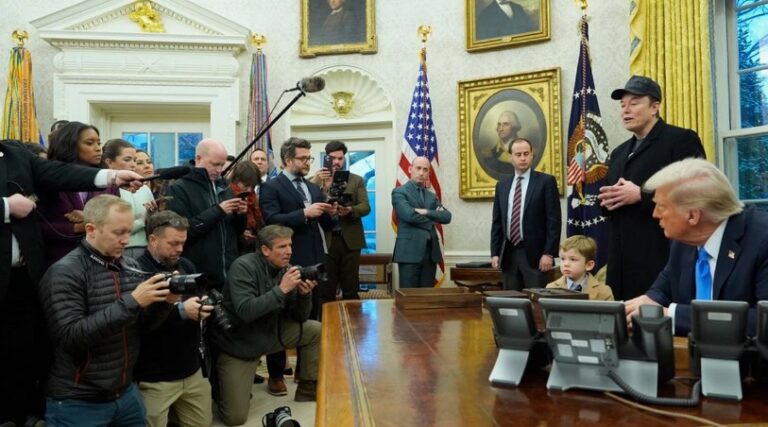
Trump confronts reporter in tense Oval Office exchange – A tense exchange between President Donald Trump and a White House reporter has drawn fresh attention to the increasingly confrontational relationship between the administration and the news media. During an Oval Office appearance on October 20, 2026, Trump repeatedly challenged Andrew Feinberg, The Independent’s White House correspondent, after the journalist raised questions about a new government whistleblower program and other issues involving the president’s plans.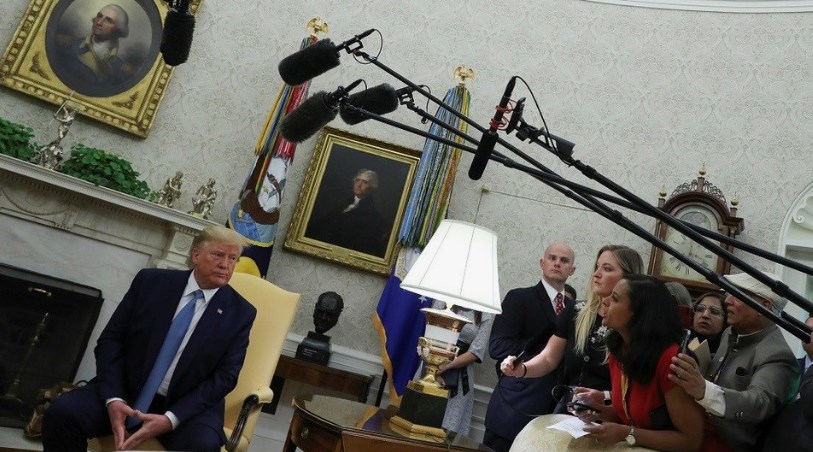
What began as a routine opportunity for reporters to question the president quickly turned personal. Trump interrupted Feinberg, warned him to be careful, and later questioned whether something was wrong with him. The confrontation unfolded in front of cameras, allowing viewers to see the interaction for themselves and prompting widespread discussion about the way public officials respond to difficult questions.
The incident occurred as Trump and Vice President JD Vance were promoting a new initiative designed to encourage people to report suspected government fraud. Instead of remaining focused exclusively on the policy, however, the exchange became a dispute over the reporter’s questions and the president’s reaction to them. The episode has since become another flashpoint in the broader debate over political accountability, media access, and the role of journalists in a democratic society.
A Policy Announcement Takes an Unexpected Turn
The Oval Office event was intended to highlight a new government program that would reward people who report suspected fraud involving public funds. The administration presented the initiative as an effort to identify wrongdoing and protect taxpayer money.
During the question-and-answer session, Feinberg challenged the rationale behind the proposed rewards. He asked why the administration’s program offered a commission of around 1% when the existing False Claims Act can provide eligible whistleblowers with substantially larger awards, generally ranging from 10% to 30% of certain recoveries under applicable conditions.
The question raised a practical issue: if an established law already offers financial incentives for reporting fraud, what additional benefit would the administration’s new program provide? It was a question about how the proposal would work, whether it would offer meaningful advantages, and how the government intended to distinguish it from existing mechanisms.
Trump responded defensively, emphasizing the amount of money involved rather than directly resolving the comparison. Vice President Vance also intervened, arguing that Feinberg’s question was misleading because the False Claims Act does not cover every form of government fraud.
That distinction is relevant. Different reporting systems can address different kinds of misconduct, and a new initiative might have a purpose even if an established law already exists. Nevertheless, questions about eligibility, reward calculations, and the relationship between the two programs remain important when evaluating whether the new policy offers a genuine improvement. Rather than allowing the discussion to remain a technical examination of the proposal, the conversation became increasingly heated as the journalist continued asking questions.
Trump Tells the Reporter to Be Careful
The confrontation escalated when Trump directed his attention toward Feinberg and questioned who he was. The president told the journalist, “I don’t know who the hell you are, but you better be careful,” according to video and reports of the exchange. The remark immediately changed the atmosphere of the interaction. What had begun as a disagreement over government policy now appeared to be a personal confrontation between the president and a reporter carrying out his job.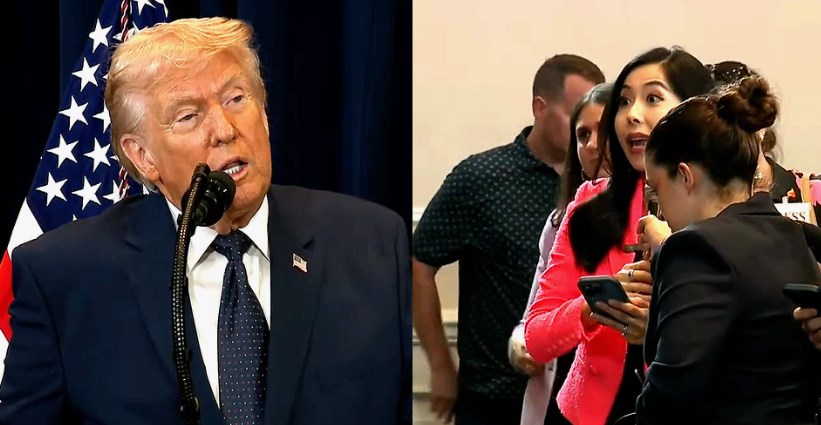
Feinberg later responded publicly, explaining that he had already identified himself to Trump less than five minutes before the exchange. His response raised questions about why the president appeared not to recognize the journalist after their earlier interaction. The moment spread across social media, where viewers debated the president’s tone and the significance of his warning. Some interpreted it as another example of Trump’s combative approach to the press, while others argued that the administration was entitled to challenge journalists when officials believed questions were misleading or unfair.
Still, there is an important difference between disputing a question and warning the person asking it. Presidents regularly face uncomfortable inquiries about their policies, decisions, and public statements. A reporter’s role is not simply to repeat official talking points but to seek clarification, test claims, and bring unanswered questions to the public’s attention. The exchange therefore attracted attention beyond the personalities involved. It became a discussion about the standards people should expect when elected officials are questioned by the press. Trump confronts reporter in tense Oval Office exchange
The Tension Continues Over a Washington Golf Course
The disagreement did not end with the whistleblower program. Feinberg later attempted to ask Trump about plans involving East Potomac Park and a golf course in Washington, D.C. Trump interrupted the journalist and repeatedly ordered him to be quiet. As Feinberg continued trying to ask his question, the president became more confrontational, asking, “What’s wrong with you? Are you a sick person?”
Feinberg replied that, as far as he knew, he was not. Trump then continued by saying he believed something was wrong with the reporter. The exchange was striking because the journalist’s questions concerned matters that could be examined through ordinary public accountability. The proposed changes to a public golf facility raised questions about government decision-making, the use of public land, and the administration’s plans for a prominent Washington location. Trump confronts reporter in tense Oval Office exchange
For reporters covering the White House, such subjects are part of the job. Their responsibility includes asking about government initiatives as well as decisions involving the president’s own public plans. The confrontation also demonstrated how quickly a press event can move away from substantive policy discussion when an official responds to questioning with personal criticism. Instead of providing additional details about the golf course plans, the exchange became dominated by the disagreement itself. Video of the incident offered the public an opportunity to assess the interaction directly. Viewers could hear the questions, observe the interruptions, and form their own judgments about the tone of the conversation.
JD Vance Joins the Dispute Online
The controversy continued after the Oval Office appearance ended. Vice President Vance shared footage of the confrontation on social media and described Feinberg as an “imbecile” journalist who had been reprimanded for misbehaving. The post intensified criticism from those who believed senior administration officials were attacking a reporter rather than addressing his questions. Feinberg responded directly to Vance, challenging him to identify the journalist openly if he intended to insult him. Trump confronts reporter in tense Oval Office exchange
The exchange demonstrated how political disagreements increasingly continue beyond official events. Social media allows government officials to circulate selected clips, offer their own interpretations, and communicate directly with supporters. It also gives journalists and members of the public an opportunity to respond immediately. However, the rapid spread of short videos can sometimes reduce complicated policy discussions to brief moments of confrontation. In this case, the insults attracted substantial attention, while the original questions about whistleblower rewards and the golf course received less attention.
Those underlying issues remain important regardless of how people feel about the individuals involved. The effectiveness of an anti-fraud program depends on its rules, oversight, eligibility requirements, and ability to produce reliable information. Likewise, plans affecting public property deserve clear explanations of their costs, purposes, and consequences. Political disagreements should not prevent those questions from receiving serious consideration.
What the Incident Means for Press Freedom
The confrontation comes amid broader tensions between Trump’s administration and several news organizations. Trump has repeatedly criticized journalists and outlets whose reporting he considers unfair, while disputes over White House access have raised additional questions about how the administration manages its relationship with the press. Supporters of the president argue that journalists should be challenged when their questions contain inaccurate assumptions or fail to acknowledge relevant facts. That argument has merit in principle: reporters are not beyond criticism, and public officials should be able to correct misleading claims.
However, criticism of journalism is different from using the authority and visibility of the presidency to intimidate reporters or discourage legitimate scrutiny. A free press depends on journalists being able to ask questions without fear that disagreement will automatically lead to personal retaliation or exclusion from public briefings. The Oval Office exchange does not, by itself, settle the larger debate about press freedom. It does, however, illustrate why the relationship between government officials and journalists matters. When questions are answered with insults instead of explanations, the public may learn less about the policies being discussed.
Ultimately, the most important issue is not whether Trump and Feinberg like or respect one another. It is whether reporters can continue examining government decisions and whether officials are willing to explain their actions to the people they serve. The October 20 confrontation has put that question back in the spotlight. The new whistleblower program still needs to be judged on its effectiveness, while plans involving Washington’s golf course deserve answers of their own. Those issues should not disappear behind a dispute over personalities.
For the White House, the episode is another reminder that public appearances can become defining political moments. For journalists, it reinforces the importance of persistent questioning. And for the public, it offers a clear example of why accountability requires more than official announcements: it also requires a willingness to answer difficult questions.
About the Author