Trump administration ends Miami Catholic Charities funding. Here’s why – The decision by the Trump administration to discontinue federal support for Miami Catholic Charities marks a turning point in the relationship between government policy and faith-based social services. The move did not happen in isolation; it was part of a greater shift in immigration policy, federal budget priorities, and disagreements over how humanitarian relief should be delivered. While the news was phrased in administrative terms, its real-world impact stretched far beyond policy documents, affecting disadvantaged families, nonprofit workers, and the larger South Florida community.
Miami Catholic Charities had long acted as a cornerstone of support for immigrants and low-income individuals in the region. For decades, the organization provided a range of services—legal assistance, housing support, food distribution, and refugee resettlement initiatives. Much of this work was sponsored, at least in part, through federal funding. These contributions helped the organization to develop its operations and fulfill the needs of a growing population, particularly migrants arriving from Latin America and the Caribbean. When the federal government removed its financial backing, it disturbed a system that had quietly become important to thousands of lives.
The Trump administration explained the move by referring to changes in immigration enforcement and funding priorities. Officials suggested that federal resources should be put toward stricter border control and enforcement procedures rather than programs that, in their view, could encourage migration. There was also greater scrutiny over how donations were being used by organizations working with migrants, particularly those offering housing or legal support. The government emphasized accountability and consistency with its broader immigration agenda, warning that organizations would need to adapt to new expectations if they wished to continue getting financing.
Critics, however, perceived the action differently. Many claimed that eliminating funds to a well-established humanitarian organization did not solve underlying immigration difficulties but instead made them more difficult to handle. Without sufficient support systems, newly arrived migrants could experience homelessness, hunger, and legal confusion, perhaps leading to higher burden on local governments and emergency services. Opponents of the judgment maintained that organizations like Miami Catholic Charities performed a stabilizing function, helping persons assimilate more seamlessly and reducing long-term social costs.
The impact on the ground was instantaneous. Programs that relied significantly on federal support were compelled to scale back or shut down entirely. Staff cutbacks became necessary in some sectors, and waiting lines for assistance got longer. Families who had depended on these assistance suddenly found themselves with fewer options. For many, the group had provided a first point of contact in a new and foreign country—a location where they could get assistance, language support, and basic requirements. Losing that support generated a ripple effect of uncertainty and pain. Trump administration ends Miami Catholic Charities funding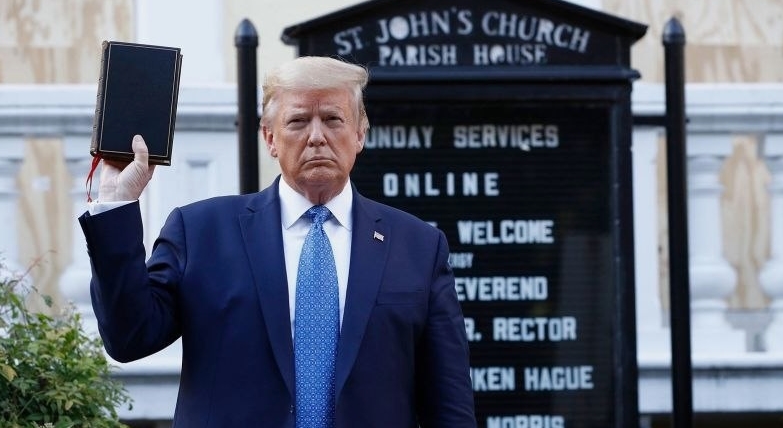
Beyond the practical effects, the funding loss also generated a broader discourse about the role of faith-based groups in public service. For years, such NGOs had cooperated with the federal government to distribute help efficiently, frequently reaching populations that government agencies failed to serve directly. The move to withdraw financing generated doubts about whether these collaborations were being reevaluated or possibly phased out. Supporters of faith-based projects said that these organizations add compassion, cultural knowledge, and community trust to their work—qualities that are difficult to recreate through bureaucratic processes alone.
At the same time, the administration’s approach reflected a conceptual shift in how social services should be structured. There was a strong emphasis on limiting federal engagement in particular types of aid and pushing local or private solutions instead. Proponents hoped this strategy may lead to more efficiency and creativity, while critics warned that it might leave gaps in coverage, especially in places with low resources. Miami, with its distinctive demographics and high levels of immigration, became a focal point for this discussion.
Local officials and community advocates were quick to respond. Some advocated for additional state and municipal help to bridge the financing gap, while others resorted to private contributors and philanthropic groups. Fundraising efforts intensified, and partnerships with other NGOs were sought as a method to preserve services. While these efforts helped minimize some of the harm, they did not fully replace the volume and stability of federal assistance. The event underscored the problems of relying on a patchwork of financing sources to sustain key services.
For the persons directly affected, the policy adjustment was less about politics and more about survival. Stories arose of families trying to find homes, children missing out on educational support, and asylum seekers navigating intricate legal processes without advice. These personal stories underlined the human dimension of policy decisions, reminding onlookers that behind every spending line item are real individuals with real needs. Trump administration ends Miami Catholic Charities funding
The debate also has consequences outside Miami. Similar organizations across the country watched intently, fearful that they would face similar cuts. The ruling suggested a broader trend that could transform the landscape of nonprofit activity in the United States. Organizations began reassessing their funding methods, diversifying their revenue streams, and planning for any changes in federal support. In this way, the impact of the ruling spread well beyond a single city.
In the long term, the fight over funding for organizations like Miami Catholic Charities reflects bigger problems about national identity, duty, and priorities. How should a country balance enforcement with compassion? What role should the federal government play in aiding vulnerable populations? And how can communities ensure that important services stay available, especially in times of political change? These questions do not have easy solutions, but they are crucial to understanding the significance of the decision.
Ultimately, the cessation of federal financing for Miami Catholic Charities was more than a fiscal adjustment—it was a reflection of evolving beliefs and objectives at the national level. While the government characterized it as an essential step in enacting its objectives, the repercussions exposed the complexity of those choices. As communities continue to struggle with the repercussions, the story serves as a reminder that policy decisions are never just abstract concepts; they influence people, communities, and the fabric of society itself. Trump administration ends Miami Catholic Charities funding
About the Author