
Samsung’s hinge rethink hints at thinner TriFold – Samsung is discreetly reengineering one of the most essential aspects of its foldable lineup—the hinge—and the repercussions could be far wider than a simple durability upgrade. A small shift in design philosophy suggests that the next generation of foldable devices from Samsung—including potential tri-fold designs, as well as the Galaxy Z Fold and Galaxy Z Flip series—may become substantially thinner, lighter, and more sophisticated than ever before.
For years, the hinge has been both the defining innovation and the fundamental restriction of foldable devices. It dictates not only how the gadget opens and closes, but also how thick it feels in the hand, how noticeable the crease appears on the display, and how durable the entire structure is over time. Samsung, a pioneer in the folding area, has continually iterated on hinge design—from the early, relatively bulky mechanisms of the first Galaxy Fold to the more sophisticated “Hideaway Hinge” featured in later generations. Now, it appears the corporation is preparing another leap forward.
A Shift Toward Slimmer Engineering
Recent industry insights imply that Samsung’s engineers are working on decreasing internal space within the hinge assembly. This may sound like a simple change, but in practice, it’s a profound rethink. Traditional foldable hinges require several interlocking components, gears, and support structures to maintain stability and assure a smooth folding operation. These components unavoidably add thickness.
Samsung’s new strategy tries to streamline these mechanics, either by combining fewer moving parts or using newer materials that preserve strength while reducing mass. The result? Devices that fold flatter and consume less space when closed. This could ultimately answer one of the most prominent critiques about foldables: their chunkiness compared to regular smartphones.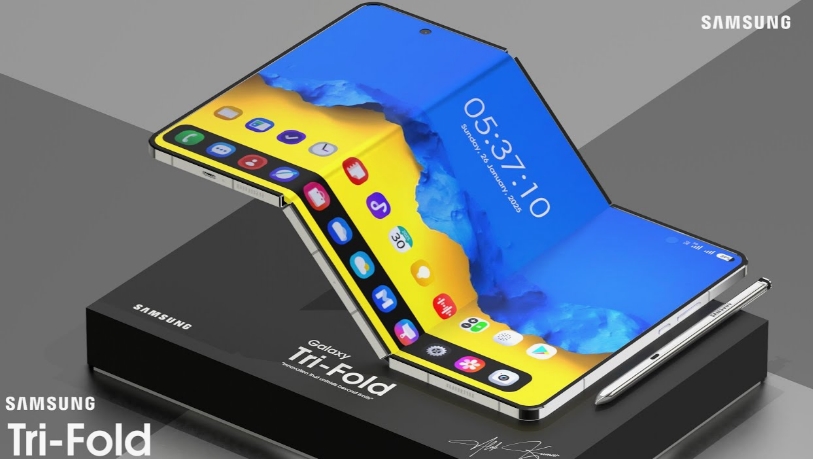
The Tri-Fold Possibility
Perhaps the most exciting aspect of this hinge innovation is its potential application in a tri-fold gadget. Unlike current foldables that bend along a single axis, a tri-fold phone would feature two hinges, allowing it to fold into several configurations—essentially converting from a phone into a tablet and potentially even a compact workstation.
Samsung has displayed prototypes of such gadgets in the past, but bringing them to market has proven tough. The intricacy of controlling two hinges without substantially increasing thickness or reducing durability has been a key hurdle. A smaller, more efficient hinge system could be the missing ingredient that makes tri-fold phones possible for mass manufacturing.
If Samsung succeeds, it could redefine what a mobile device can be. Imagine carrying a gadget that fits in your pocket but unfolds into a near full-sized tablet with minimal creasing and a smooth profile. That’s the promise a revised hinge system brings closer to reality.
Impact on Galaxy Z Fold Series
The Galaxy Z Fold range has always targeted power users—those who desire a device that can double as a smartphone and a productivity tool. However, one constant issue has been its thickness when folded. Even with advancements over the years, it still feels substantially bulkier than typical flagship phones.
With a thinner hinge, future Fold models could close more tightly, eliminating the gap between the two half of the screen. This not only improves looks but also promotes longevity by limiting dust intrusion. A smaller shape would also make the gadget more easy to carry and use one-handed.
Additionally, a revised hinge could help lessen the visibility of the screen crease—a persistent concern for foldables. By providing a more progressive bend radius, the display may fold more naturally, resulting in a smoother surface when unfurled. This would considerably increase the user experience, especially for tasks like reading, drawing, or watching movies.
Benefits for Galaxy Z Flip Devices
While the Fold series focuses on efficiency, the Galaxy Z Flip line stresses style and portability. Its compact clamshell shape has been a hit among users who desire a smaller footprint. However, even the Flip may benefit from a thinner hinge.
A smaller hinge would allow the device to become even more pocket-friendly, potentially rivaling the thickness of typical smartphones when folded. It could help enhance balance and minimize the “top-heavy” feel some users experience when the phone is open.
Moreover, a redesigned hinge might enable new use cases. For example, smoother multi-angle placement could boost hands-free photography or video calls. Samsung has already leaned into “Flex Mode,” where the phone may stay partially open at different angles. A more precise hinge could make this function much more versatile and reliable.
Materials and Durability Innovations
Achieving a smaller hinge without sacrificing durability demands improvements in materials science. Samsung is apparently studying the use of stronger, lighter metals and potentially even carbon-based composites. These materials can resist numerous folding cycles while maintaining structural integrity. Samsung’s hinge rethink hints at thinner TriFold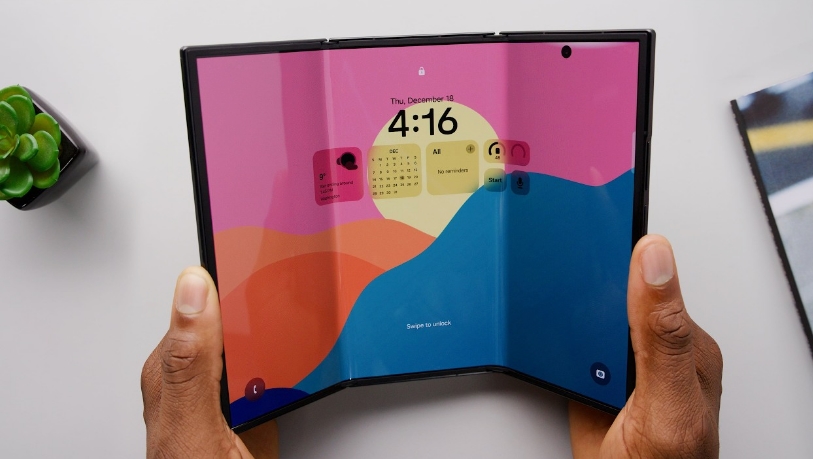
Durability is a significant consideration for consumers contemplating foldable gadgets. Early models received skepticism because to concerns about wear and tear. Samsung has worked hard to overcome these shortcomings, offering water resistance and improving overall build quality. The next generation of hinges must continue this trend, proving that smaller doesn’t necessarily weaker.
In fact, a more efficient hinge design could actually improve durability. By minimizing the number of moving parts and optimizing stress distribution, the mechanism may incur reduced wear over time.
Competitive Pressure and Industry Trends
Samsung’s hinge rethink doesn’t happen in a vacuum. Competitors in the foldable space—particularly Chinese manufacturers—have been pushing hard toward thinner and lighter designs. Some recent devices have already attained extremely thin profiles, placing pressure on Samsung to maintain its leadership position.
By focusing on hinge innovation, Samsung is removing one of the final big impediments to general acceptance of foldables. If the business can offer devices that are as small and comfy as standard smartphones, the popularity of foldables might extend considerably.
What This Means for Consumers
For ordinary consumers, these technical breakthroughs translate into concrete benefits. A slimmer foldable phone is easier to carry, more pleasant to use, and visually more appealing. Reduced crease visibility and better durability boost the whole experience, making foldables feel less like experimental toys and more like polished, luxury products. Samsung’s hinge rethink hints at thinner TriFold
The idea of tri-fold devices adds another element of intrigue. While such gadgets may first target niche markets, they could eventually become a new category altogether—blurring the boundary between phones, tablets, and even computers.
Looking Ahead
Samsung’s continuous investment in hinge technology demonstrates its commitment to the foldable future. The company isn’t just iterating—it’s reconsidering the principles of how these devices are made. This kind of innovation is what drives the industry ahead.
If the speculations and early signals prove right, the next generation of Samsung foldables could mark a turning point. Thinner, lighter, more robust, and perhaps more adaptable than ever, they may finally deliver on the long-promised ideal of foldable technology. In the end, the hinge—once a limitation—could become the key to unlocking the full potential of foldable smartphones. And if Samsung gets it right, the ripple effects will be felt across the whole smartphone market. Samsung’s hinge rethink hints at thinner TriFold
About the Author