Review Insta360 Luna Ultra and Luna Pro – Creating professional-looking videos no longer requires carrying a large camera, multiple lenses, and a complicated stabilization system. Compact gimbal cameras have made it easier for vloggers, travelers, journalists, and social media creators to capture smooth footage without bringing an entire filmmaking setup. With the Insta360 Luna Ultra and Luna Pro, Insta360 is taking that idea further by combining advanced imaging technology, intelligent subject tracking, and a portable design intended for everyday use.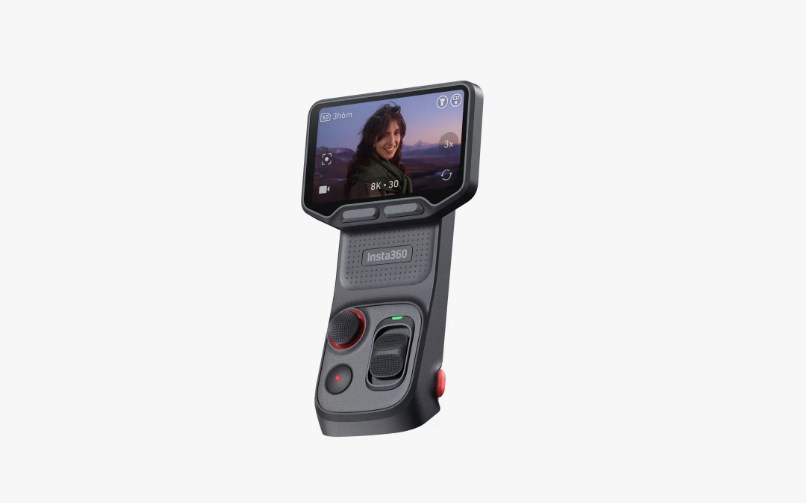
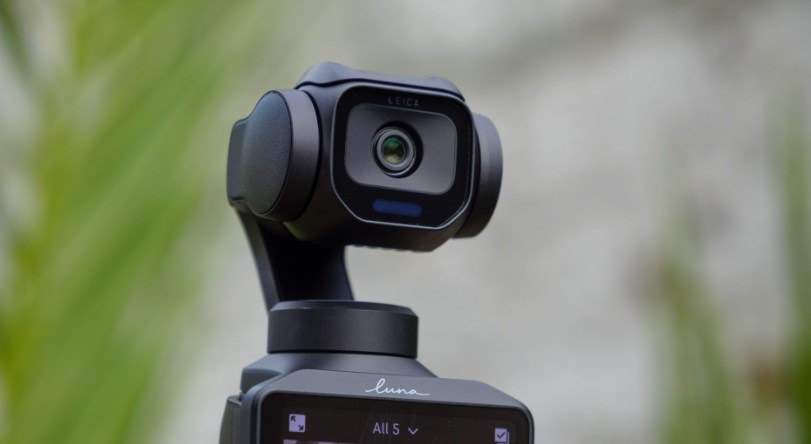
Developed in collaboration with Leica, both cameras focus on delivering high-quality video in a compact package. They share a powerful main camera, a three-axis mechanical gimbal, and a detachable touchscreen that makes recording yourself considerably easier. However, the two models are not identical. The Luna Ultra includes an additional telephoto camera for greater zoom flexibility, while the Luna Pro offers many of the same core features at a lower price. The result is a camera lineup designed to appeal to different budgets and filming styles. Review Insta360 Luna Ultra and Luna Pro
Design and Build Quality: Small Cameras With Big Ambitions
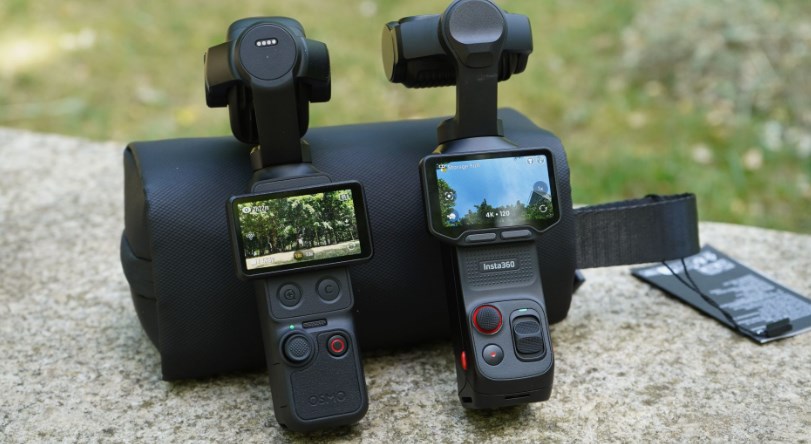
At first glance, the Luna Ultra and Luna Pro resemble the compact handheld cameras that have become popular among travel vloggers and independent filmmakers. Their camera modules sit on a motorized three-axis gimbal, which helps compensate for hand movements while recording. Instead of relying entirely on electronic stabilization, the cameras physically adjust their orientation to keep footage steady. This makes them particularly useful when walking through crowded streets, filming travel experiences, or recording moving subjects. Review Insta360 Luna Ultra and Luna Pro
One of the most interesting features is the detachable two-inch OLED touchscreen. Rather than forcing creators to stand behind the camera to check their framing, Insta360 allows the screen to function as a remote monitoring and control unit. This is especially practical for people who frequently record themselves without assistance. You can position the camera on a small tripod, step into the frame, and monitor the composition from a distance. According to Insta360, the wireless connection can reach approximately 20 meters under suitable conditions.
The Luna Pro is the simpler and lighter option because it removes the Ultra’s secondary telephoto camera. That difference makes the Pro more appealing to creators who want a straightforward camera for daily recording. The Ultra, meanwhile, provides greater versatility for situations where moving closer to a subject is difficult. Both models remain portable enough for travel, although the motorized gimbal means they require more careful handling than an ordinary smartphone.
Camera Performance: Detailed Footage and Leica-Inspired Colors
Image quality is the main reason to consider either Luna camera. Both feature a one-inch, 8K-capable image sensor paired with a Leica Summicron lens offering an f/1.8 aperture and a 20mm-equivalent focal length. The combination is designed to capture detailed footage, accommodate a relatively wide field of view, and provide more flexibility in challenging lighting conditions than many smaller action cameras.
The cameras support 8K video recording at up to 30 frames per second with Dolby Vision, along with 4K recording at up to 120 frames per second for slow-motion footage. They also support 10-bit I-Log recording, which gives experienced editors greater flexibility when adjusting contrast, color, and highlights during post-production. For creators who want polished footage without spending hours editing, the standard color profiles offer a quicker route to shareable results.
Low-light performance is another important part of the package. Insta360 incorporates dedicated imaging processors and a PureVideo mode intended to reduce visible noise while improving brightness and detail. These features can help when recording indoors, during evening walks, or in other situations where lighting is less than ideal. Naturally, results still depend on the environment, movement, and camera settings, so neither model should be expected to eliminate every limitation associated with low-light recording. Review Insta360 Luna Ultra and Luna Pro
The default color treatment may not appeal to everyone. Some users prefer vivid colors straight out of the camera, while others want a more natural appearance that can be adjusted later. The Leica-inspired color profiles and I-Log option provide useful alternatives, allowing creators to choose between convenience and more hands-on control. Overall, the imaging system makes both Luna models attractive choices for people who want to improve their video quality without moving to a much larger camera.
Luna Ultra vs. Luna Pro: Is the Extra Camera Worth It?
The biggest difference between the two models is the Luna Ultra’s additional telephoto camera. It uses a smaller 1/1.3-inch sensor and an f/2.0 lens, giving users access to longer focal lengths without relying exclusively on digital cropping. This is useful for filming performers on a stage, capturing details in distant architecture, or recording subjects that cannot easily be approached.
The Ultra’s zoom capabilities also give it an advantage when creating varied footage. A travel video, for example, can combine wide environmental shots with tighter compositions of landmarks, street performers, or small details. Having these options available in one compact device reduces the need to carry separate equipment. The telephoto camera can also support close-up creative work, making the Ultra more adaptable for creators who regularly experiment with different perspectives. Review Insta360 Luna Ultra and Luna Pro
The Luna Pro takes a more practical approach. It retains the primary one-inch sensor, Leica lens, detachable display, intelligent tracking, and advanced recording options, but removes the dedicated telephoto camera. It still provides enhanced digital zoom and high-resolution cropping options, although these are not a complete substitute for a separate optical zoom lens. For everyday vlogging, interviews, family videos, and travel diaries, the Pro has most of the important tools already covered.
Pricing reinforces that distinction. At the time of the October 2026 review, the Luna Pro is listed in the United States at approximately $599.99, while the Luna Ultra costs around $769.99. That $170 difference is meaningful for creators working with a limited budget. Unless optical zoom is an important part of your workflow, the Pro is likely to provide better overall value. Those who regularly record distant subjects may find the Ultra’s extra flexibility worth paying for.
Stabilization and AI Features: Made for Solo Filmmakers
A camera can have an impressive sensor, but shaky footage can quickly undermine an otherwise excellent video. This is where the Luna series makes a strong impression. Its three-axis gimbal helps maintain a stable frame while the user walks, pans across a scene, or follows moving subjects. For solo creators, the benefit is straightforward: less time correcting camera shake and more time concentrating on the story being told.
Insta360 also includes Deep Track 5.0, an AI-powered tracking system designed to keep selected subjects in the frame. This can be particularly helpful for fitness instructors, travel vloggers, product reviewers, and creators who need to demonstrate something while moving around. Combined with the detachable touchscreen, the tracking system reduces the need for another person to operate the camera. However, complicated movements, crowded backgrounds, and subjects disappearing behind obstacles can still challenge automated tracking.
The Luna cameras also offer features intended to make the editing process more convenient. Their combination of advanced recording formats, built-in timecode, and wireless monitoring gives creators options that extend beyond casual video recording. These capabilities will not replace the judgment of an experienced filmmaker, but they can make a small production easier to manage. Review Insta360 Luna Ultra and Luna Pro
There is a learning curve, though. The compact touchscreen can make certain advanced settings feel cramped, especially for users who regularly adjust several parameters while recording. Beginners may find the automatic modes more comfortable, while experienced creators will probably appreciate the additional control once they become familiar with the interface.
Battery Life and Everyday Usability
Battery performance is another important consideration for a portable camera. Insta360 advertises up to four hours of runtime for the Luna series under specified conditions. Actual recording time depends on resolution, frame rate, screen use, tracking, wireless connectivity, and temperature. Shooting demanding 8K footage continuously will not necessarily deliver the same results as recording shorter clips with less intensive settings.
The main drawback is that the internal battery is not replaceable. For a casual creator, this may not be a serious problem, but it becomes more inconvenient during full-day travel, events, or professional assignments. Instead of swapping in a fresh battery, users must recharge the camera or connect a suitable external power source. Carrying a power bank can help, although charging while filming may make the compact setup less convenient. Review Insta360 Luna Ultra and Luna Pro
Storage is more flexible. Both cameras provide 47GB of internal storage and support microSD cards, with compatibility advertised for cards up to 2TB. That gives users room to manage large video files without depending entirely on internal memory. Nevertheless, recording at high resolutions can consume storage quickly, so carrying additional capacity and regularly backing up important footage remains sensible.
For creators who record short clips throughout the day, the Luna cameras should be relatively easy to incorporate into a normal routine. Those planning long interviews, extended live events, or continuous recording sessions should pay closer attention to battery management and storage requirements before leaving home.
Verdict: Which Insta360 Luna Camera Should You Buy?
The Insta360 Luna Ultra and Luna Pro demonstrate how much capability can fit into a compact gimbal camera. Their combination of a large sensor, Leica-developed optics, mechanical stabilization, AI tracking, and a detachable touchscreen makes them compelling options for creators who want more control than a smartphone can conveniently provide.
The Luna Ultra is the better choice for people who regularly need optical zoom. Its additional telephoto camera provides greater framing flexibility for concerts, travel documentaries, events, and distant subjects. Meanwhile, the Luna Pro delivers the core experience for less money. Its single-camera design is sufficient for most vlogging, interviews, everyday storytelling, and social media production.
Neither model is perfect. The small touchscreen can make advanced controls fiddly, and the non-replaceable battery limits convenience during extended shoots. Buyers should also consider whether they genuinely need dedicated camera hardware rather than relying on a capable smartphone.
For most people, the Insta360 Luna Pro is the more sensible purchase because it combines strong imaging features with a lower entry price. The Luna Ultra is worth the upgrade when its additional telephoto camera will be used regularly. Ultimately, both cameras offer a practical way to capture steadier, more polished videos without carrying a bulky filmmaking setup.
About the Author