HUAWEI Mate 90 Pro Max supports this massive lens attachment
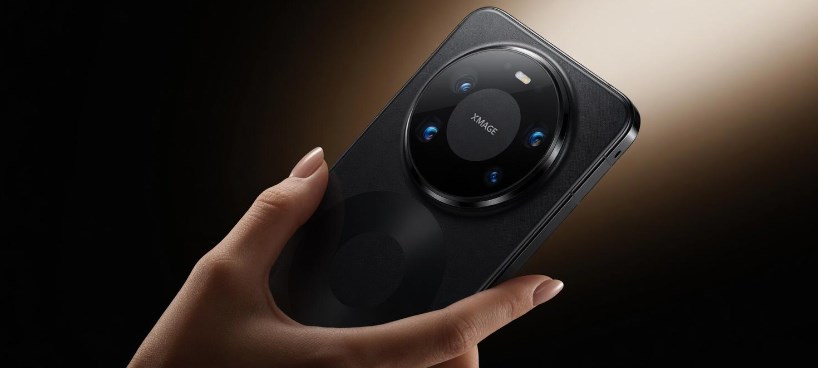
HUAWEI Mate 90 Pro Max supports this massive lens attachment – The smartphone camera race has reached a point where manufacturers are no longer satisfied with simply adding another sensor or increasing megapixel counts. HUAWEI appears ready to take a much more unusual approach with the upcoming Mate 90 Pro Max: give the phone access to a massive external camera module with its own 1-inch sensor and optical zoom system.
Recent leaks show the HUAWEI Mate 90 Pro Max paired with what is reportedly the Ruiying Z10 external camera. Unlike traditional clip-on lenses that simply magnify the image produced by a phone’s existing camera, this accessory is described as a genuine standalone camera module. It reportedly has its own image sensor and optical system, essentially turning the smartphone into a sophisticated viewfinder, controller, and processing platform.
That distinction makes the accessory particularly interesting. If the reports are accurate, HUAWEI is not merely trying to improve smartphone zoom. It is experimenting with a hybrid concept that sits somewhere between a conventional smartphone and a compact digital camera.
A Lens Attachment That Is Actually a Camera
At first glance, the enormous attachment might look like an oversized telephoto lens. However, reports indicate that the Ruiying Z10 is considerably more sophisticated than that. The module is said to contain its own 1-inch image sensor, meaning the imaging process does not depend entirely on one of the Mate 90 Pro Max’s built-in cameras.
That is an important difference. Traditional smartphone lens accessories generally work by placing additional optics in front of an existing camera. The phone’s original sensor remains responsible for capturing the photograph. With the reported HUAWEI system, the external unit reportedly captures the image itself while the phone provides the display, controls, connectivity, and computational processing.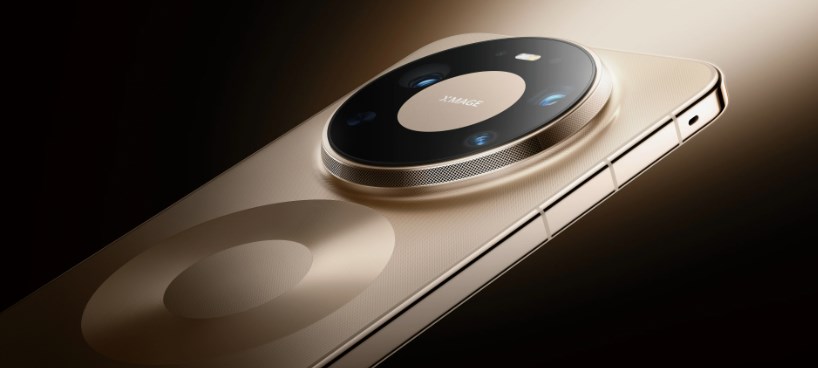
This approach is not completely new. Sony previously experimented with standalone QX-series cameras that used smartphones as displays and control interfaces. HUAWEI’s reported implementation, however, could bring the idea back in a much more powerful form, particularly if the rumored optical specifications prove accurate. For photographers, the attraction is obvious. A large external camera module allows manufacturers to escape some of the physical limitations created by the increasingly thin bodies of modern smartphones.
The Ruiying Z10 Could Bring 10x Optical Zoom
The most eye-catching part of the reported Ruiying Z10 is its zoom range. Leaks indicate that the module could provide a 24mm to 240mm equivalent focal range, effectively offering continuous optical zoom from approximately 1x through 10x. Its reported physical focal length is around 9.1mm to 91mm.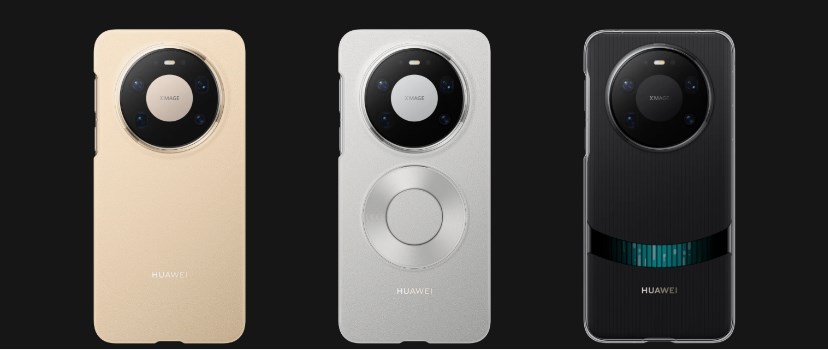
That is very different from digital zoom. Rather than simply enlarging pixels captured by a smaller telephoto sensor, a genuine optical zoom system changes the focal length through its physical lens elements. The result can potentially preserve considerably more detail as the photographer moves from wide-angle compositions toward distant subjects.
The accessory is also reported to feature a variable f/2.0–f/4.5 aperture. That gives the system additional flexibility in different lighting conditions, although the actual image quality will ultimately depend on the sensor, optics, stabilization, processing, and software integration. Huawei reportedly calls the system the Ruiying Z10, and leaked packaging has shown the 24–240mm range and 10x zoom description. Still, these details remain based on leaks rather than a complete official specification sheet.
Why the 1-Inch Sensor Matters
The 1-inch sensor is arguably more important than the 10x number itself. Smartphone manufacturers have made enormous progress with computational photography, but physical sensor size continues to matter. A larger sensor can provide more room for collecting light and can potentially deliver improved dynamic range, cleaner images in difficult lighting, and more natural-looking depth effects. Of course, sensor size alone does not guarantee superior photographs, but combining a large sensor with a dedicated optical system gives the external module considerably more hardware to work with. HUAWEI Mate 90 Pro Max supports this massive lens attachment
This could be especially useful for portraits, wildlife, travel photography, concerts, sporting events, and other situations where subjects are far away. Instead of forcing users to rely exclusively on a small internal telephoto camera, the Mate 90 Pro Max could effectively become the control center for a much larger imaging system. There is also an important practical trade-off. The bigger the camera becomes, the less it resembles an ordinary smartphone accessory. The leaked module is visibly substantial, meaning portability will inevitably be different from simply carrying the phone by itself.
The Mate 90 Pro Max Still Has Serious Cameras Without It
Interestingly, the external camera would reportedly complement rather than replace the Mate 90 Pro Max’s internal camera system. Current leaks point to a 200-megapixel periscope telephoto camera alongside a 50-megapixel main camera with a variable aperture. The phone itself is also rumored to feature a large 6.9-inch display, while other reports have mentioned a 6,800mAh battery and 100W wired charging.
That means users would theoretically have two different photography systems available. The integrated cameras would remain convenient for everyday snapshots, quick portraits, social media, and situations where carrying the external module would be unnecessary. HUAWEI Mate 90 Pro Max supports this massive lens attachment
The external Ruiying Z10, meanwhile, could become the specialist tool for situations where optical reach and larger-sensor performance matter more than convenience. That could make the Mate 90 Pro Max an unusually flexible photography platform. It would not force every user to carry the bulky accessory all the time. Instead, photographers could attach it when they specifically need more serious camera hardware.
Turning the Smartphone Into a Camera Controller
One of the most interesting aspects of this concept is how the phone itself could remain central to the photography experience. According to reports, the external camera would use the Mate 90 Pro Max’s display as its viewfinder. That means the huge screen becomes an interface for composing photographs, adjusting settings, reviewing images, and potentially controlling the optical zoom.
This arrangement makes sense because modern smartphones already have extremely capable displays and powerful processors. Rather than putting another screen, battery, and complex user interface onto the external camera, HUAWEI can potentially use resources that already exist inside the phone.
The concept could also make advanced photography more approachable. Users would not necessarily need to learn the controls of a traditional standalone camera. They could interact with the accessory through a familiar smartphone interface. Whether HUAWEI has managed to make the connection seamless remains unknown, but the concept itself is compelling.
A Huge Accessory With a Huge Trade-Off
There is no escaping the biggest issue: size. The whole appeal of a smartphone is that one small device can replace several pieces of technology. Adding a large camera module reverses that philosophy to some extent. The Mate 90 Pro Max may be slim enough to carry comfortably, but attaching a substantial optical system will make the package much larger and heavier. For casual photography, the accessory could therefore be excessive. A phone’s built-in cameras are still likely to be the more convenient option for everyday shooting. HUAWEI Mate 90 Pro Max supports this massive lens attachment
For enthusiasts, however, the calculation could be different. Someone who normally carries a dedicated compact camera or telephoto setup might appreciate having a modular system that combines a smartphone and serious optics. The success of the idea will ultimately depend on how easily the module attaches, how quickly it communicates with the phone, how well stabilization works, how long the combined system lasts on battery, and—most importantly—how good the resulting photographs actually are.
HUAWEI Is Pushing Smartphone Photography in a Different Direction
The Mate 90 Pro Max’s reported external camera attachment demonstrates how smartphone photography continues to evolve. Instead of endlessly squeezing larger sensors and more complicated lenses into a thin phone chassis, HUAWEI appears to be exploring a modular alternative. The reported Ruiying Z10 is particularly ambitious because it combines a 1-inch sensor, a 24–240mm equivalent range, 10x optical zoom, and a variable aperture in a dedicated external package.
However, it is important to keep expectations realistic. HUAWEI has not officially confirmed all of these specifications or the accessory’s availability, and reports currently come from leaks and demonstrations rather than a complete official product announcement. The reported Mate 90 series is expected to be introduced in China around the end of September or October 1, 2026, depending on the specific report, so an official announcement should provide much clearer information about the phone, the external camera, pricing, compatibility, and availability.
If the leaks prove accurate, though, the HUAWEI Mate 90 Pro Max could offer something that few smartphones have attempted at this scale: a phone that can transform into a serious optical camera system when you need it. Instead of treating the smartphone as a replacement for a camera, HUAWEI may be trying to make the smartphone the brain behind one. HUAWEI Mate 90 Pro Max supports this massive lens attachment
About the Author