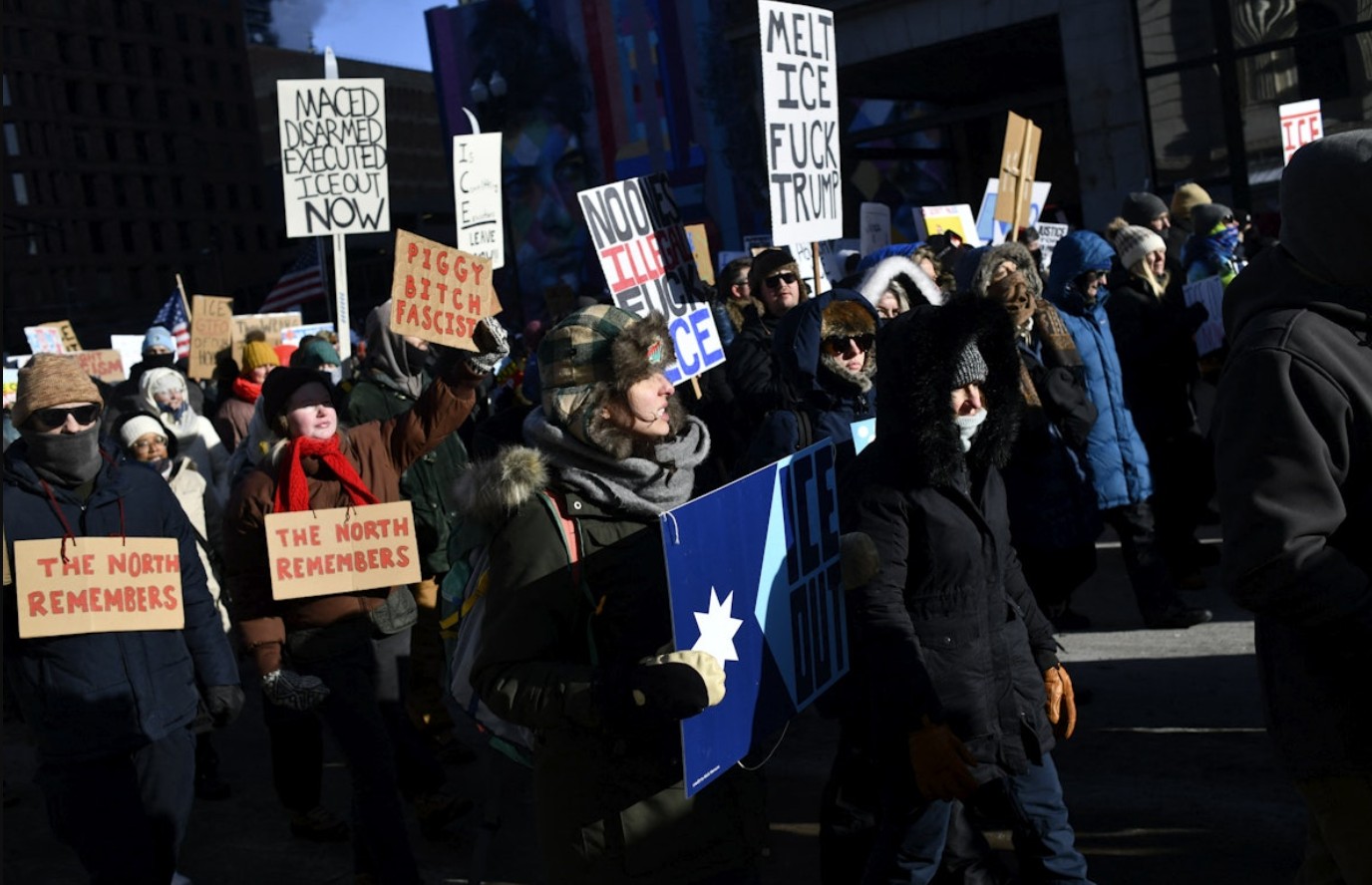
DHS Requests Signal Group Chats from Protesters – According to recent court documents, the Department of Homeland Security is looking for local “rapid response” Signal group chats as it defends itself in a lawsuit alleging it violated protesters’ First Amendment rights. Protesters’ attorneys contend that the action itself violates the First Amendment.
Earlier this year, Hilton v. Noem was filed in federal court in Maine. The plaintiffs in the case claim that by monitoring their conduct, DHS violated their First Amendment rights. For instance, one of the plaintiffs claims that while she was watching Immigration and Customs Enforcement operations, DHS officials scanned her face and obtained her car plate information, informing her that they would add her to a “nice little database.”
The documents claim that when immigration enforcement activities increased in their communities, Maine people started banding together. In order to communicate the locations and times of DHS operations, group discussions were started on Signal.
The government was given access to discovery as part of the litigation. In a statement, Genevieve Nadeau, a special counsel and program lead for Protect Democracy’s Civil Society Defense as well as one of the protesters’ lawyers, stated that the government wanted a number of things. These included a list of every protest that each of the named defendants attended, any correspondence that reflected the named plaintiffs’ “beliefs and opinions regarding law enforcement personnel, operations, tactics, and activity” (including comments or “likes”), and any correspondence pertaining to “opportunities to observe and/or record ICE activity in Maine, from January 20, 2025, to the present.”
In a letter to the Department of Justice in June, the protesters’ lawyers claimed that they were purposefully excluding all community group Signal discussions that would have otherwise been deemed relevant to the government’s requests.
Smaller Signal group chats were turned over to the court by the attorneys, but they stated in the letter that they had redacted communications that showed the priorities of a Signal community group chat or might reveal any tactics or strategies employed by one, as well as the contact details of individuals who were not plaintiffs in the case.
Additionally, government attorneys attempted to question plaintiffs about the community Signal group chats during their deposition. The letter claims that among of the inquiries they posed included who the chat organizers were, whether participants were from outside of Maine, and whether public officials or unidentified political organizations were taking part in the talks.
According to Nadeau, “the government wants access to private Signal chats that communities in Maine and across the nation are using to coordinate lawful responses to dangerous abuses of power playing out on the streets where they live and work.” “We’re requesting that the court reject that access and put an end to the government’s attempt to violate the fundamental First Amendment right to participate in collective action, which is so essential to a robust democracy.”
A request for comment was not answered by DHS or the Department of Justice, which is involved in the lawsuit.
According to Adam Steinbaugh, a senior lawyer at FIRE, a nonprofit civil liberties organization, “you shouldn’t have to give up that First Amendment right to expressive association if you need to sue to protect your First Amendment rights.”
Those who criticize the administration’s immigration policies have been relentlessly pursued by DHS. ICE’s internal watchdog has looked into over 100 cases of what it claims are “incidents of doxing and threats” against ICE employees, and the government has tried to expose critics, including one Canadian, by subpoenaing tech companies to obtain their names and other identifying information.
About the Author