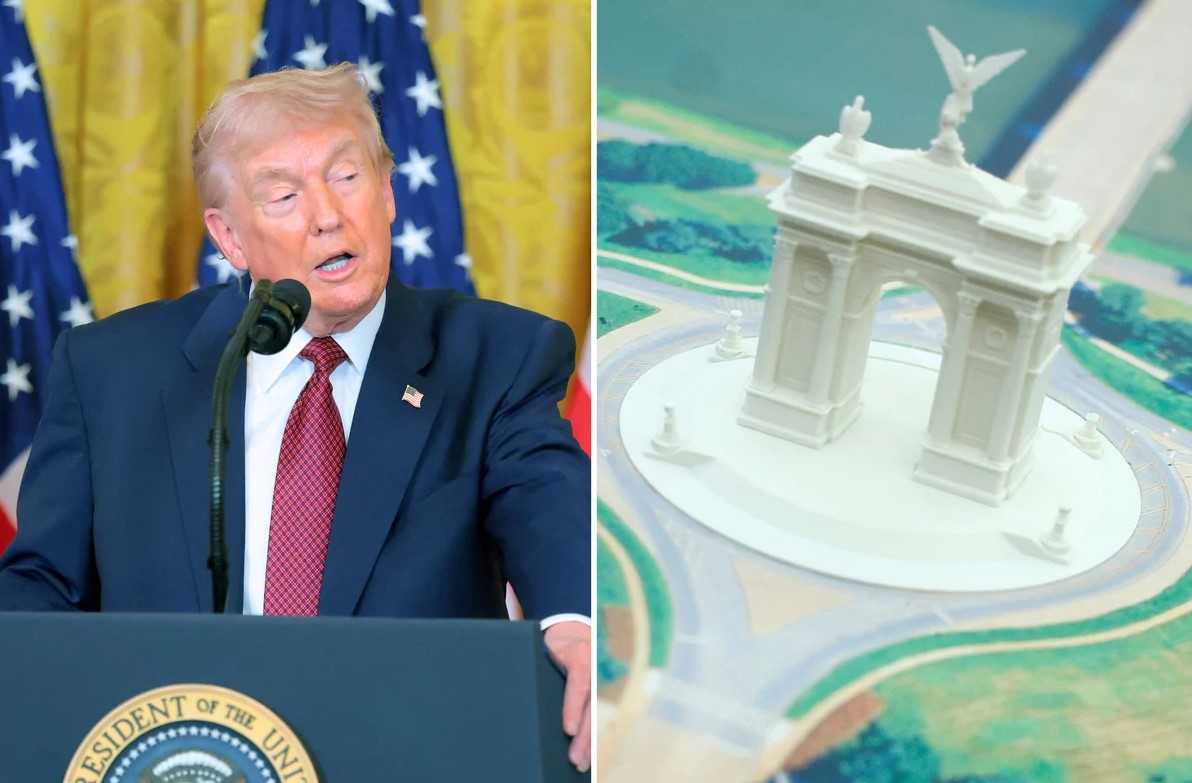
Despite damage to other landmarks, the Park Service is in favor of Trump’s massive arch. – The National Park Service is in favor of President Donald Trump’s plans to construct a giant arch, even though it has determined that doing so would detract from the vistas of other monuments and historic sites in Washington.
According to a story published on August 28, the planned archway, known as the “Triumphal Arch,” would “celebrate 250 years of American independence byhonoring America’s founding principles.” However, the Park Service would make every effort to mitigate or minimize the impact.
It would be “consistent with the avenue’s established role as a ceremonial gateway and ‘Avenue of Heroes’ celebrating valor, sacrifice, and American heritage,” according to the report, to build the 250-foot arch where Arlington Memorial Bridge and George Washington Memorial Parkway converge in front of the entrance to Arlington National Cemetery.
The Triumphal Arch: What is it?
The arch is intended to be located across the Potomac River from the Lincoln Memorial, close to the entrance to Arlington Cemetery. The Park Service rejected suggestions for a smaller construction despite worries about its intended height of 250 feet, which would surpass the Lincoln Memorial and nearly match the Capitol building’s height of 288 feet. According to the story, the 250 feet symbolize America’s 250th anniversary.
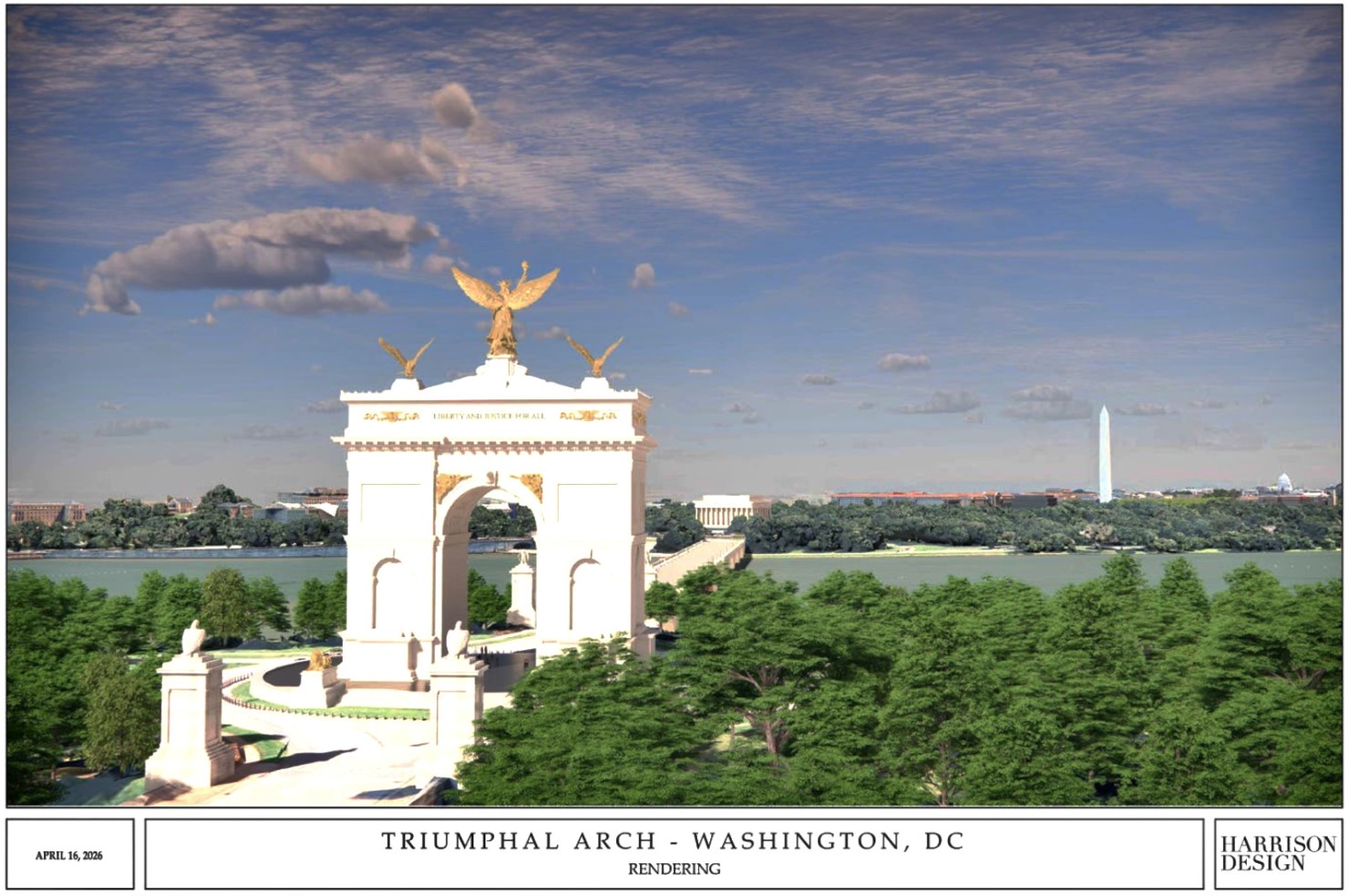
The arch will be a granite-covered reinforced concrete structure with two eagles and a central winged figure. According to the report, tourists would be able to see nearby sights from an observation platform.
One of Trump’s many initiatives to make his stamp on Washington’s landscape is the arch. These include the construction of a new ballroom linked to the White House, a granite helipad outside the executive mansion, and the contentious renovation of the Reflecting Pool at the Lincoln Memorial. Despite damage to other landmarks, the Park Service is in favor of Trump’s massive arch.
What effects will this have on other monuments and sites?
Numerous locations will be negatively impacted, according to the Park Service assessment. Rather than having an effect on the structures themselves, the effects are primarily related to interfering with views of or from the places.
A project is considered to have adverse consequences if it could “alter, directly or indirectly, any of the characteristics of a historic property … in a manner that would diminish the integrity of the property’s location, design, setting, materials, workmanship, feeling, or association,” according to the study.
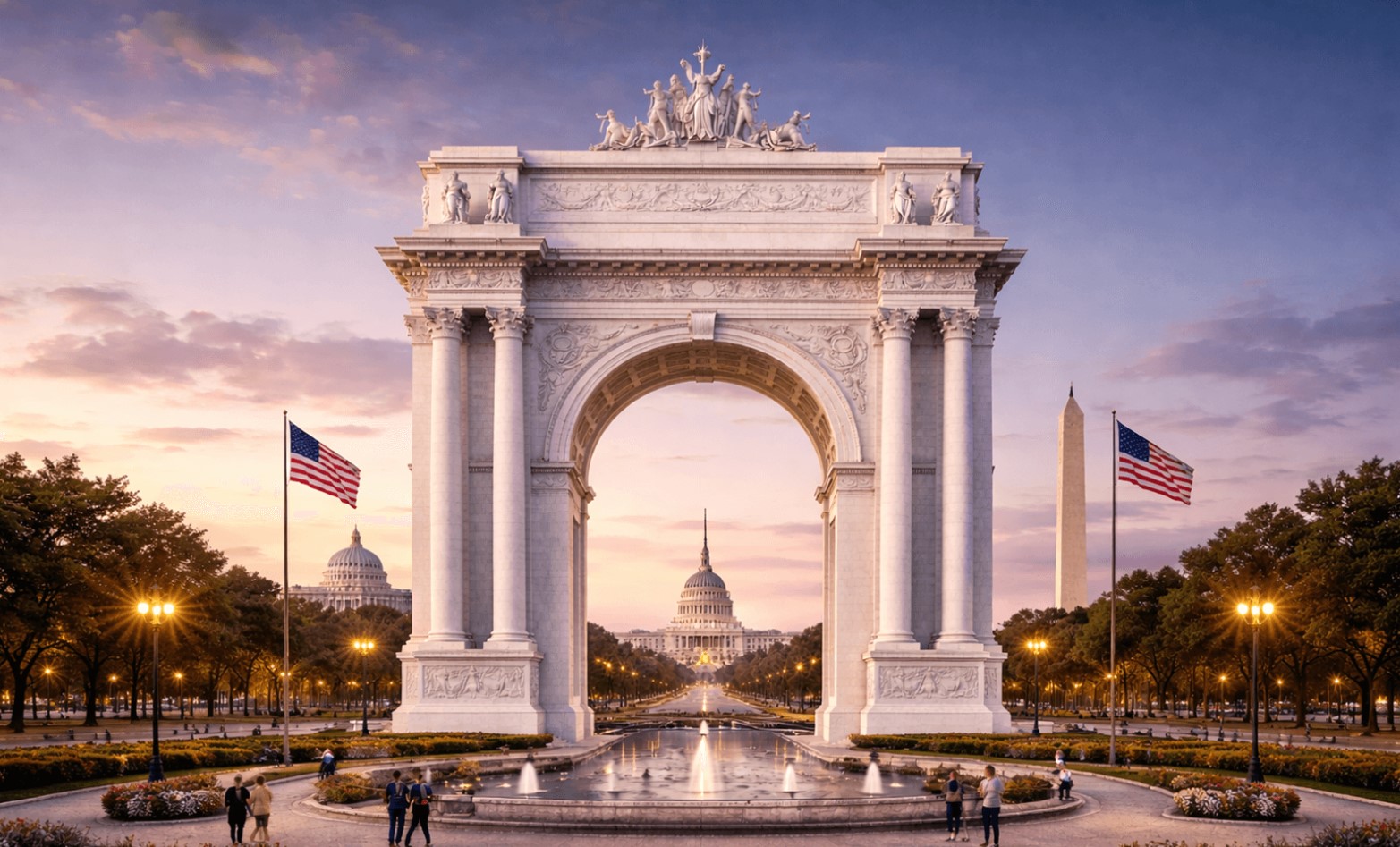
According to the assessment, Memorial Circle, Arlington Memorial Bridge, Memorial Avenue, Arlington National Cemetery, Arlington House, and the Lincoln Memorial corridor will be the most affected properties. Impacts would also be felt at dozens of other historical sites or monuments.
Alternative ideas that would have moved or scaled down the arch were rejected by the Park Service. For instance, reducing the arch’s size would obstruct rather than frame views of the Lincoln Memorial. According to the research, moving it would be pointless because the arch was designed with that placement in mind.
However, it stated that it will try to lessen or eliminate the adverse effects. It intends to make instructional materials for tourists, restore the other buildings along Memorial Avenue and the bridge, and minimize the disturbance of the arch’s construction.Because Memorial Circle is a part of a very sensitive historic and memorial environment, the NPS acknowledges that the chosen location contributes to the project’s negative effects, according to the Park Service. “However, the same characteristics that make Memorial Circle sensitive from a preservation perspective are also the characteristics that make it the historically appropriate location for the undertaking.” Despite damage to other landmarks, the Park Service is in favor of Trump’s massive arch.
About the Author