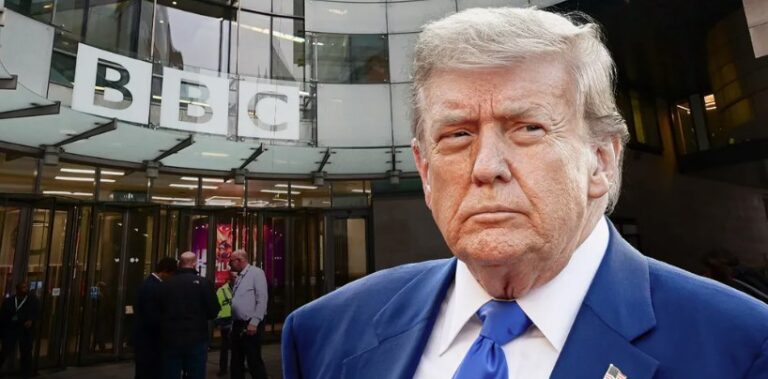
US judge refuses to dismiss Trump’s defamation suit against the BBC – A major legal battle between US President Donald Trump and the British Broadcasting Corporation (BBC) has taken another important turn after a federal judge refused to dismiss Trump’s defamation lawsuit against the broadcaster. The decision allows the high-profile case, which involves a disputed edit of Trump’s January 6, 2021, speech, to move forward in court. The lawsuit seeks at least $10 billion in damages and has attracted considerable attention because of the questions it raises about journalism, political reporting, and the responsibilities of major news organizations.
The ruling, delivered by US District Judge Jeffrey Kuntz in Florida, represents a significant development for both sides. Although the judge did not determine that the BBC had defamed Trump, he concluded that the president had presented enough arguments for his claim to proceed. The decision means the broadcaster must continue defending itself against allegations that its documentary presented a misleading version of Trump’s remarks before the attack on the US Capitol.
For Trump, the ruling is an important procedural victory in his ongoing disputes with major media organizations. For the BBC, it means a controversial editorial decision that it previously apologized for will remain at the center of a potentially expensive legal fight.
How the Dispute Between Trump and the BBC Began
The disagreement began with a BBC documentary titled Trump: A Second Chance?, which was broadcast as part of the broadcaster’s Panorama program shortly before the 2024 US presidential election. The documentary examined Trump’s political career, his influence within the Republican Party, and his return to the presidential campaign.
However, one particular section quickly became the center of controversy. The documentary included an edited version of Trump’s January 6, 2021, speech, delivered to supporters in Washington, DC, before they marched toward the US Capitol.
According to Trump’s legal team, the BBC combined two separate portions of the speech that were delivered approximately 55 minutes apart. The edited clip brought together Trump’s statement about walking toward the Capitol with another comment in which he said that supporters needed to fight.
The lawsuit argues that the editing created a misleading impression that Trump directly encouraged his supporters to use violence against the Capitol. His lawyers also claimed that the documentary left out important context, including his remarks calling for peaceful protest.
The BBC later acknowledged that the editing was misleading and apologized for the way the speech had been presented. However, the broadcaster rejected the suggestion that its mistake amounted to defamation.
That distinction is important because making an editorial mistake does not automatically mean a news organization is legally responsible for defamation. Trump’s legal team must demonstrate that the broadcaster crossed the legal threshold required to establish liability.
Why the Federal Judge Allowed the Lawsuit to Continue
Judge Jeffrey Kuntz’s decision focused on whether Trump’s allegations were sufficient to allow the defamation claim to move forward. At this stage, the court was not deciding whether the president had actually been defamed or whether the BBC would eventually be required to pay damages.
Instead, the judge considered whether the claims presented in Trump’s lawsuit were legally plausible.
One of the most important issues was the way the BBC combined statements from different moments in Trump’s speech. The judge questioned the broadcaster’s argument that the editing was simply a normal way of shortening a lengthy political address for television.
According to the ruling, the significant time difference between the two statements could support an inference that the broadcaster knew, or should have known, that the resulting clip did not accurately represent what Trump said.
The judge indicated that the editing went beyond simply removing unnecessary portions of a speech. By combining statements separated by nearly an hour, the documentary potentially created a different impression of Trump’s original remarks.
This does not establish that the BBC acted with the required level of intent. However, it gives Trump’s legal team an opportunity to pursue that argument as the case develops.
The court also found that Trump had sufficiently alleged reputational harm connected to the documentary’s release shortly before the 2024 election. Importantly, the judge dismissed Trump’s separate claim under Florida’s Deceptive and Unfair Trade Practices Act. Therefore, the lawsuit will continue with the defamation allegations rather than every legal claim originally included in the complaint.
BBC Defends Its Journalism and Rejects the Defamation Allegations
The BBC has responded to the ruling by expressing disappointment while maintaining that it will continue defending itself through the legal process. The broadcaster previously apologized for the misleading edit and acknowledged that the documentary should not have presented Trump’s remarks in that way. However, it strongly disagrees that the editing provides a legal basis for a defamation lawsuit.
For the BBC, the central issue is the difference between an acknowledged editorial failure and a legally actionable attempt to damage someone’s reputation.
News organizations regularly edit lengthy speeches, interviews, and public appearances to create shorter programs that audiences can easily understand. However, journalists are also expected to preserve the meaning of the original statements.
When an edit changes the apparent meaning of someone’s words, it can create serious questions about editorial judgment and professional responsibility.
The controversy has already had consequences within the BBC. The broadcaster faced considerable internal and public criticism after details of the editing controversy emerged. Its director general, Tim Davie, and its head of news, Deborah Turness, resigned in November 2025 following the wider controversy.
The BBC now faces the challenge of defending its reporting practices while dealing with the financial and reputational consequences of the lawsuit.
Its position remains that the documentary’s editing mistake does not prove that it deliberately defamed the president.
Trump’s $10 Billion Demand Raises the Stakes
One of the most striking aspects of the case is the amount of money Trump is seeking. His lawsuit requests at least $10 billion in damages, making it one of the most expensive defamation disputes involving a major international broadcaster.
Trump has repeatedly criticized media organizations that publish reporting he considers unfair or inaccurate. His legal action against the BBC fits into a broader pattern of disputes involving news outlets and journalists.
Following the latest decision, Trump celebrated the ruling on his Truth Social platform, describing it as a major victory against what he called fake news.
The president also indicated that he intended to continue fighting organizations that he believes mislead the American public.
Nevertheless, winning the right to proceed with a lawsuit is not the same as winning the case itself.Trump will still need to provide evidence supporting his allegations, including that the BBC acted with actual malice and that he suffered legally recognizable damages
For public figures in the United States, proving actual malice is particularly challenging. It generally requires showing that a publisher knew a statement was false or acted with reckless disregard for whether it was true. Simply demonstrating that a report contained an error is not enough. The court has also indicated that Trump must establish actual damages connected to the documentary. That requirement could become another important issue as both sides present their evidence. US judge refuses to dismiss Trump’s defamation suit against the BBC
What Happens Next in the Legal Battle?
With the dismissal request rejected, the case is expected to move into further legal proceedings. Both sides will have opportunities to gather evidence, question witnesses, and develop their arguments before any potential trial.
Another important issue involves Trump’s participation in the legal process. A separate Florida court ruling in October ordered the president to sit for a deposition with BBC lawyers by December 11, 2026.
A deposition is an important part of the discovery process in which a person answers questions under oath outside the courtroom.
Trump’s legal team previously indicated that he could not attend an earlier scheduled deposition because of other matters of national importance. According to reports, his lawyers subsequently indicated that he would be available during the second or third week of January.
The BBC has raised concerns about delays in questioning Trump, particularly because he is the person bringing the lawsuit.
The broadcaster has also sought financial information from Trump as part of its effort to examine his claims of financial and professional harm.
Those records could become relevant because the president is seeking an extraordinary amount of compensation. The BBC’s legal team wants to examine whether the documentary actually caused the damages Trump describes. The discovery process could therefore become an important part of determining whether the lawsuit has enough evidence to reach a successful conclusion.
A Bigger Debate About Media Freedom and Political Accountability
Beyond the immediate disagreement between Trump and the BBC, the case raises broader questions about the relationship between political leaders and the media. Journalists have an important responsibility to report accurately, particularly when covering elections and major political events. Editing can make complicated information easier to understand, but it should never change the meaning of a person’s statements.
The BBC’s admission that the clip was misleading demonstrates why editorial standards matter. Audiences depend on news organizations to provide accurate information, especially when reporting could influence public opinion. At the same time, defamation laws exist to protect individuals from knowingly false or seriously misleading statements that damage their reputations. Those protections must be balanced against the importance of allowing journalists to investigate public officials and report on matters of public interest.
If powerful political figures can successfully use enormous defamation claims to discourage critical reporting, media organizations may become more cautious about covering controversial subjects. On the other hand, broadcasters cannot simply dismiss legitimate concerns about inaccurate reporting by describing them as ordinary editorial decisions.
The outcome of this lawsuit could therefore attract attention far beyond the United States and Britain.
For international news organizations, the case is a reminder that reporting decisions made for one audience can create legal consequences in another country, particularly when covering influential political figures. US judge refuses to dismiss Trump’s defamation suit against the BBC
Conclusion
The decision by a US federal judge to refuse to dismiss Trump’s defamation lawsuit against the BBC marks another important chapter in the growing dispute between the president and the media. Although Trump has secured permission for his defamation claim to continue, the ruling does not establish that the BBC is guilty of defamation or that the president will receive the $10 billion he is seeking.
The broadcaster has acknowledged that the documentary contained a misleading edit but continues to reject the legal allegations. Both sides will now have to navigate further proceedings, including evidence gathering and questions surrounding the alleged damage to Trump’s reputation. US judge refuses to dismiss Trump’s defamation suit against the BBC
Ultimately, the case will be about more than a few seconds of edited television footage. It will examine how journalists handle politically sensitive material, what responsibilities broadcasters have when editing public speeches, and how far defamation law can protect public figures without restricting press freedom.
As the legal battle continues, the attention will remain on whether Trump can prove his allegations and whether the BBC can successfully defend its editorial decisions. The final outcome could have lasting implications for political reporting, international journalism, and the relationship between government leaders and the news organizations responsible for holding them accountable.
About the Author