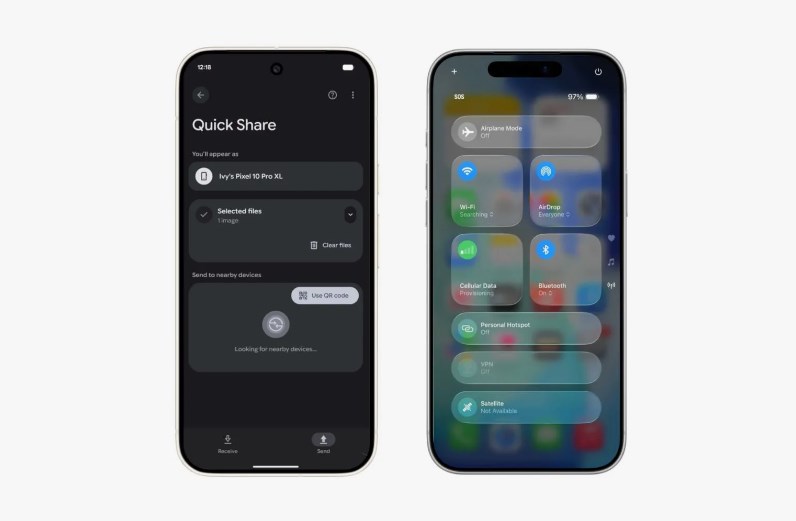
Android and iPhone apps to get built-in Quick Share support in 2027 – Sharing photos, videos, and documents between smartphones could become much easier in 2027 as Google prepares to bring its Quick Share technology directly into third-party Android and iPhone applications. The upcoming change is expected to make wireless file transfers more convenient by allowing developers to integrate Quick Share into their apps instead of requiring users to open a separate system sharing menu.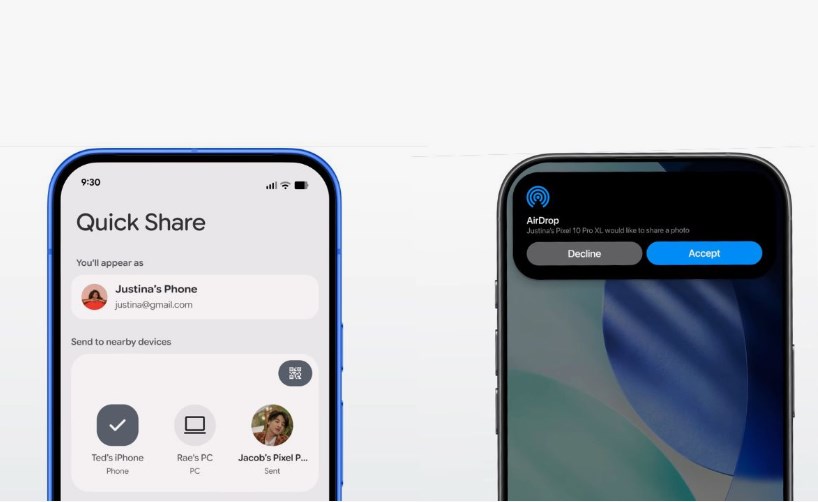
The announcement is an important step in Google’s efforts to make Android and Apple’s iOS work better together. For years, transferring files between the two platforms has often required extra steps, third-party applications, messaging services, or cloud storage. Although these methods work, they are not always convenient, especially when users want to send large videos or original-quality photographs.
With the upcoming Quick Share software development kit (SDK), Google wants to make sharing feel like a natural part of the applications people already use. Whether someone owns an Android smartphone or an iPhone, developers will have an opportunity to provide a more consistent file-sharing experience.
Google introduced the development at Android Dev Summit 2026, confirming that the Quick Share SDK for Android and iOS is planned for release during the first half of 2027. While the feature will not immediately appear in every application, it could eventually change how people exchange files between different mobile platforms.
Google Plans to Bring Quick Share Directly Into Third-Party Apps
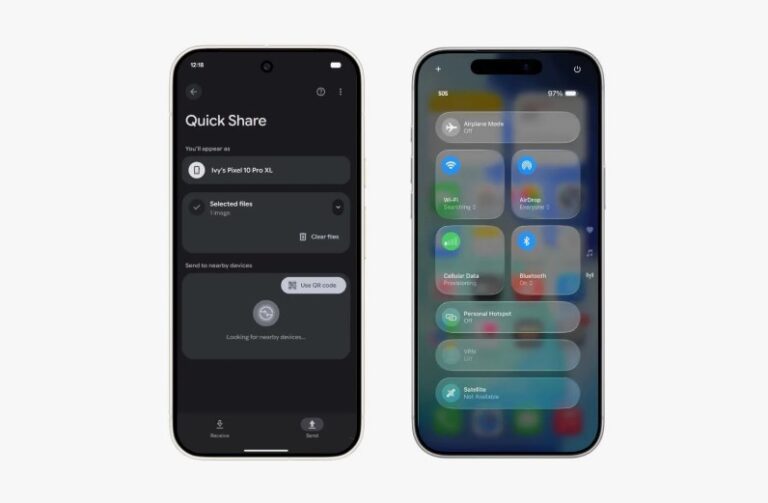
Quick Share has become one of Android’s most useful tools for transferring files between nearby devices. It allows users to send photographs, videos, documents, and other content without relying on traditional messaging services. However, the current process can involve several steps. Users typically need to select a file, open the Android sharing menu, choose Quick Share, and then wait for the nearby device to appear. Depending on the application and device, this can require leaving the original app and navigating through another interface.
Google’s upcoming SDK is designed to simplify that experience. Instead of relying on the standard system share sheet, developers will be able to integrate Quick Share directly into their applications. When users select the sharing option, a compact panel will appear at the bottom of the screen, allowing them to preview the files and select a nearby recipient.
This approach should make file transfers feel faster and more integrated. Users will not need to navigate through multiple screens just to send a photograph or document.
The development is particularly interesting because Google is preparing support for both Android and iOS applications. This means iPhone developers will also have the opportunity to integrate Google’s file-sharing technology into their software.
How the New Quick Share SDK Will Work
The new SDK will give developers the tools needed to add peer-to-peer file transfers to their applications. Rather than building an entirely separate file-sharing system, developers can use Google’s existing technology. When someone chooses Quick Share inside a supported application, a bottom-sheet interface will appear. This panel will display a preview of the content being transferred and provide access to nearby compatible devices.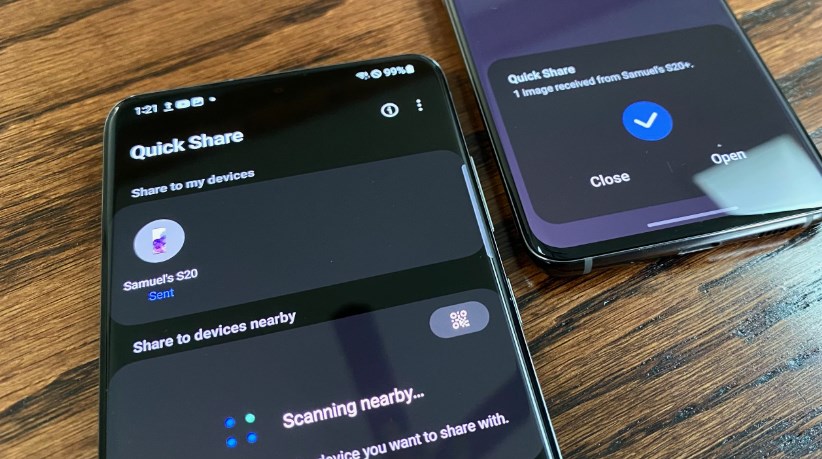
The experience is intended to be straightforward, reducing the number of actions required to complete a transfer. For example, imagine taking several high-resolution photographs with an iPhone and wanting to send them to a friend using an Android smartphone. Instead of opening another application or uploading the images to cloud storage, a supported app could allow the transfer to happen directly through its built-in Quick Share option.
The same concept could work in the opposite direction, making it easier for Android users to share files with people using Apple devices. Google is also highlighting Tap to Share functionality as part of the new development. This feature is intended to make sharing between nearby devices even more convenient. The goal is to reduce unnecessary steps and make cross-platform sharing feel less complicated.
End-to-End Encryption Will Help Protect Shared Files
Security is another important part of Google’s Quick Share expansion. Sharing personal photographs, business documents, and private files requires a reliable connection that protects information from unauthorized access.
Google says transfers through the new SDK will use end-to-end encryption between the participating devices. This means the files are protected while moving between the two devices over their local network.
The technology is designed to establish the necessary local connection automatically. It can handle hotspot creation when required and use Wi-Fi Direct on supported devices to transfer content.
This is important because users do not necessarily want personal files uploaded to an external server whenever they share something with another person.
By relying on local connections, Quick Share can reduce the need for cloud-based file transfers. Developers will also avoid having to maintain expensive server infrastructure specifically for moving files between users.
For people who regularly exchange sensitive documents or private photographs, this approach could offer a more convenient alternative to conventional online sharing services.
However, users should still pay attention to recipient selection and device permissions before sending personal information.
Original Photo and Video Quality Will Be Preserved
One of the biggest advantages of Quick Share is its ability to transfer files without requiring compression.
Many messaging applications automatically reduce the quality of photographs and videos to make uploads faster and decrease data usage. While this can be useful for everyday conversations, it is frustrating for people who want to preserve original image quality.
Photographers, content creators, and smartphone enthusiasts often need to send large files without losing important details.
Google says its Quick Share SDK will allow photos and videos to be transferred without compression. This means the receiving device can obtain the original files rather than smaller versions created for messaging.
For example, someone recording a high-resolution video on an Android smartphone could share it with an iPhone user without first uploading it to a cloud service or sending it through a messaging application that reduces quality.
The same benefit could make the technology attractive to people working with large documents, creative projects, and professional media files.
Transfer speeds will depend on the devices and local wireless connection, but using Wi-Fi Direct should help deliver efficient transfers on supported hardware.
Quick Share Will Work Without an Internet Connection
Another useful feature is offline sharing. Google says the new technology will support file transfers without requiring a cellular network.
This could be particularly helpful when users are traveling, attending outdoor events, or working in locations where mobile connectivity is limited.
Traditional cloud-based sharing usually requires an internet connection because files must be uploaded to a server before another person can download them.
Quick Share takes a different approach by allowing nearby devices to communicate directly.
For instance, friends attending a concert could exchange photographs even if mobile networks are crowded. Similarly, colleagues working in an area with poor internet coverage could transfer documents without depending on an online storage service.
The absence of a cellular connection requirement also means users can avoid consuming mobile data for these local transfers.
This makes Quick Share a potentially practical option for people who frequently exchange large files.
What the Update Means for iPhone and Android Users
The introduction of an iOS SDK is arguably the most important part of Google’s announcement.
Android and iPhone users have traditionally relied on different file-sharing ecosystems. Apple’s AirDrop provides a convenient solution for people using Apple devices, while Quick Share serves a similar purpose within the Android environment.
Google has already made progress toward connecting these systems. Quick Share gained compatibility with Apple’s AirDrop on supported Android devices, beginning with the Pixel 10 family in November 2025.
Google subsequently worked to expand compatibility with other Android manufacturers, including Samsung, OPPO, OnePlus, vivo, Xiaomi, and HONOR.
The upcoming SDK takes that development further by allowing individual applications to integrate the technology directly.
This could eventually make the difference between Android and iOS less noticeable when sharing files.
However, there is an important limitation: Google is providing the development tools, not automatically updating every application. Individual developers must choose to integrate Quick Share into their software. As a result, users may need to wait for updates to their favorite applications before the feature becomes available.
When Will Built-In Quick Share Support Arrive?
Google has announced plans to release the Quick Share SDK during the first half of 2027. This gives developers an opportunity to prepare their applications and begin integrating the technology once the development tools become available. There is currently no confirmed release date for widespread consumer availability, and Google has not provided a definitive list of applications that will support the feature at launch. Popular messaging, photography, and file-management applications could be natural candidates for integration, but their participation will depend on individual developers.
Users should also understand that the announcement does not mean every Android and iPhone will immediately receive identical functionality. Device compatibility, application updates, and software requirements will all play a role in determining the final experience. For now, existing Quick Share and AirDrop compatibility remains the available option on supported devices.
Conclusion
Google’s plan to bring built-in Quick Share support to Android and iPhone applications in 2027 could represent a meaningful improvement for cross-platform communication. By introducing dedicated SDKs for Android and iOS, the company is giving developers a way to integrate wireless file sharing directly into their applications. Features such as end-to-end encryption, uncompressed transfers, offline functionality, and Wi-Fi Direct connectivity could make the experience more convenient for everyday users.
The biggest benefit is simplicity. People should not have to worry about which smartphone their friends or colleagues own just to exchange photographs, videos, and documents. Although widespread adoption will depend on developers adding the feature to their applications, Google’s announcement signals a broader move toward reducing the barriers between Android and Apple’s ecosystem. If the rollout goes as planned, 2027 could be an important year for smartphone file sharing, making the process faster, more secure, and considerably less frustrating for Android and iPhone owners.
About the Author