Supreme Court once again blocks Trump-backed House map in Missouri – Missouri’s congressional redistricting battle has taken another dramatic turn, with the U.S. Supreme Court once again blocking a Republican-backed House map supported by President Donald Trump. The court’s latest action on Friday, September 25, halted an appeals court decision that would have brought the new map back for the November midterm elections.
The decision is the third time the Supreme Court has intervened against efforts to use the new Missouri congressional boundaries. For voters, the ruling brings at least some clarity after weeks of competing court orders, shifting district lines and uncertainty over which candidates will appear in which districts. The November election is now expected to proceed using the congressional map Missouri used in the 2022 and 2024 elections.
At the center of the dispute is a new congressional map that Missouri Republicans approved last year after Trump encouraged Republican-led states to redraw House districts in the middle of the decade. In Missouri, the revised map dramatically changed a Kansas City-area district represented by Democratic Rep. Emanuel Cleaver. Republicans said the new boundaries could help them win seven of Missouri’s eight House seats, compared with six under the previous arrangement.
Supreme Court Steps In Again
The Supreme Court’s latest decision came after the 8th U.S. Circuit Court of Appeals ruled Monday that Missouri should use the new Republican-drawn map in November. The appeals court had concluded that switching congressional districts between the August primary and November general election could raise constitutional problems because candidates had already been nominated under the new boundaries.
The appeals court ordered a federal district judge to issue a permanent injunction requiring Missouri to use the newer map. However, the judges delayed the effect of their decision until September 28, giving opponents time to seek emergency intervention from the Supreme Court. That appeal quickly reached the high court, which ultimately stopped the appeals court ruling from taking effect.
The Supreme Court did not provide an explanation for its latest order. Instead, the justices halted the appeals court ruling and allowed the Missouri Supreme Court’s earlier decision to remain in place. That state ruling said a citizen referendum petition had suspended the new congressional map until Missouri voters could decide whether to approve it.
The result is that Missouri will use the older congressional boundaries for the November election, unless there is another legal development. The latest ruling also represents another step in a case that has already produced multiple conflicting decisions in state and federal courts. Supreme Court once again blocks Trump
Why the Missouri Map Matters
The dispute is about much more than lines on a map. Congressional district boundaries determine which communities are grouped together and which voters choose each House representative. The Republican-backed map made one of the most significant changes in the Kansas City region. Cleaver’s 5th Congressional District was substantially altered, with portions of Kansas City moved into neighboring districts represented by Republicans. The remaining portion of the district was extended eastward into more rural areas.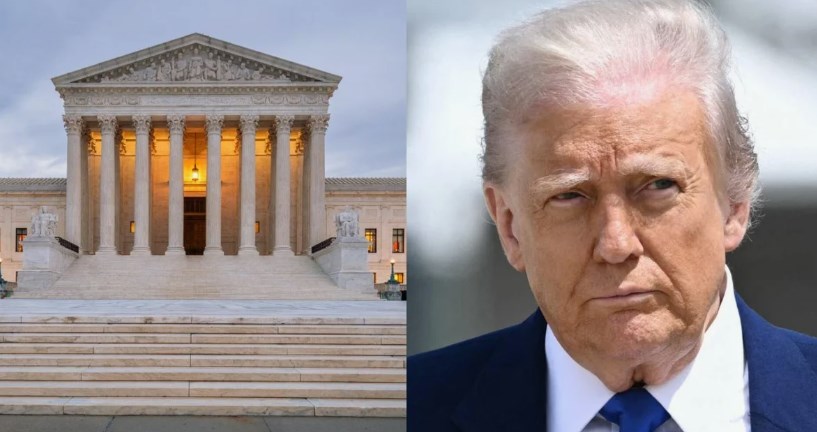
According to an Associated Press analysis, roughly 59% of potential voters in the revised 5th District were new to the district. The changes also affected voters in several other Missouri congressional districts.
Republicans currently hold six of Missouri’s eight House seats. The revised map was designed to create conditions under which Republicans could potentially capture a seventh seat. Cleaver, a longtime Democratic member of Congress, remained a central figure in the dispute because his district was changed so extensively.
There is also an unusual complication: Cleaver was unopposed in the Democratic primary, while Republican state Sen. Rick Brattin won a six-way Republican primary under the revised district boundaries. Both candidates remain the nominees even though the boundaries are now reverting to the previous map for the general election.
A Legal Fight That Keeps Changing Direction
The Missouri redistricting dispute has lasted for more than a year and has generated at least 16 lawsuits in state and federal courts. It has become one of the most complicated redistricting battles of the 2026 election cycle. Missouri lawmakers approved the new map in September 2025. Opponents later collected petition signatures seeking a statewide referendum on the boundaries. The petition became a major part of the legal dispute.
Republican Secretary of State Denny Hoskins rejected the referendum petition on August 4, 2026, the same day Missouri held its primary elections under the new congressional map. Hoskins argued that referendum petitions could not be used for congressional redistricting. The Missouri Supreme Court subsequently disagreed, ruling on September 3 that the petition was valid and that the new map could not be used for the November election unless voters approved it.
The U.S. Supreme Court initially allowed that state court ruling to stand. Then, only minutes after a Supreme Court decision on September 8, U.S. District Judge Stephen Clark issued a conflicting order directing Missouri to use the newer map. Supreme Court once again blocks Trump
The Supreme Court intervened again on September 10, blocking Clark’s order. The legal battle nevertheless continued, eventually reaching the 8th Circuit, which sided with supporters of the new map. That decision produced the latest appeal to the Supreme Court — and Friday’s order blocking the new map for a third time.
Voters Face an Unusual Election Situation
The legal uncertainty has created a practical problem for Missouri election officials. More than 1 million potential voters — nearly one-quarter of the state’s electorate — were moved between districts under the new map. That means many people who voted in the August primary did so under different congressional boundaries from those now expected to be used in November. Absentee voting has already begun. Local election officials have been working with the older congressional boundaries and preparing ballots under tight deadlines.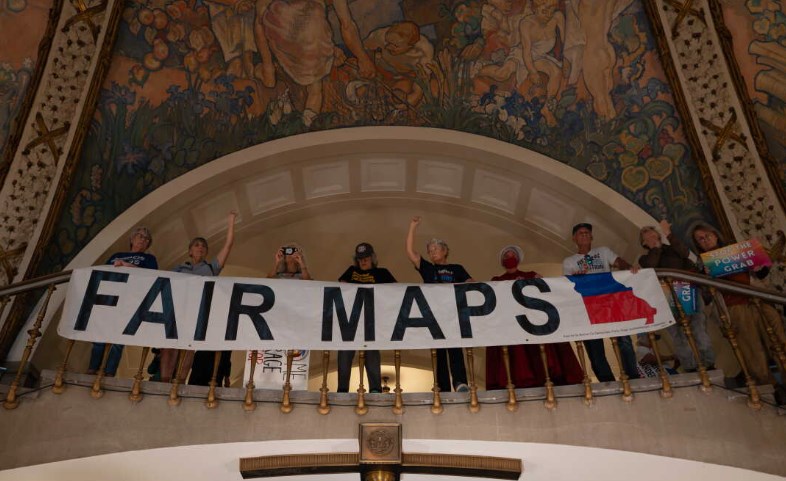
Election officials warned that changing district boundaries again at this stage would be extremely difficult and expensive. Some officials told the federal appeals court that ballots were already being printed using the 2022 map and that federal deadlines for sending absentee ballots to overseas and military voters were approaching. That practical reality has become an important part of the debate. Regardless of the political arguments surrounding the map, election administrators must know which districts are legally valid before ballots can be distributed.
There is another lawsuit involving the 5th Congressional District. Two Republican candidates who lost the primary, along with members of the district’s Republican committee, have asked a Missouri court to invalidate the August primary for that district and require political parties to nominate candidates again. That case does not seek to restore the Trump-backed map, but it adds another layer of uncertainty to an already complicated election process.
What Happens Next?
For now, the Supreme Court’s September 25 action leaves Missouri positioned to conduct its November congressional elections using the districts approved in 2022. Those are the same boundaries used in the 2024 election. Supreme Court once again blocks Trump
The newer map is not necessarily gone forever. Missouri voters are scheduled to have a referendum on whether to approve or reject the new congressional boundaries. The outcome of that vote could determine whether the map eventually becomes part of Missouri’s congressional system.
For the November 2026 election, however, the immediate question has been resolved by the Supreme Court’s latest intervention. The Republican-backed map will not be used, and election officials are proceeding with the older districts.
The Missouri dispute also illustrates how complicated mid-decade redistricting can become when state constitutional procedures, federal election law and competing court orders collide. What began as an effort to redraw eight congressional districts has evolved into a prolonged legal battle involving state officials, candidates, voters and multiple courts.
With absentee voting already underway, the latest Supreme Court decision provides a clearer path toward November. But the broader debate over Missouri’s congressional boundaries is not necessarily finished. The referendum and remaining litigation could determine what the state’s House map looks like beyond the 2026 election.
About the Author