Trump explores federal government acquiring shares in AI companies – As artificial intelligence rapidly reshapes industries, economies, and national security strategies around the world, the United States is facing a new and unusual policy debate: Should the federal government own stakes in leading AI companies?
That question has gained attention after reports that former President Donald Trump and several advisers have discussed the possibility of the federal government acquiring shares in major artificial intelligence firms. The idea represents a significant departure from traditional American economic policy and highlights growing concerns about maintaining U.S. leadership in one of the most transformative technologies of the century.
The discussions come at a time when AI development has become a strategic competition involving governments, technology giants, and international rivals. With companies investing billions of dollars into advanced AI systems and infrastructure, policymakers are increasingly looking for ways to ensure that the benefits of these technologies align with national interests.
A New Approach to AI Strategy
For decades, the U.S. government has supported technological innovation primarily through research grants, defense contracts, tax incentives, and regulatory frameworks. Direct ownership stakes in private technology companies have been relatively rare outside of extraordinary circumstances such as financial crises or government bailouts. The concept being explored by Trump advisers would take a different approach. Instead of simply funding research or creating incentives, the federal government could potentially become a shareholder in strategically important AI companies.
Supporters of the idea argue that artificial intelligence is becoming as critical to national power as railroads, electricity, telecommunications, or the internet were in previous eras. They contend that if AI is destined to drive economic growth, military capability, healthcare innovation, and scientific discovery, the government should have a more direct role in ensuring America benefits from its success. Advocates also suggest that government ownership could generate returns for taxpayers if AI companies continue to grow rapidly in value.
Why AI Has Become a National Priority
Artificial intelligence is no longer viewed as simply another technology sector. Many experts now describe it as foundational infrastructure that will influence nearly every aspect of modern society. AI systems are already helping businesses automate tasks, improve productivity, analyze massive datasets, and create new products. Advanced models can write software, generate content, assist scientific research, and support decision-making processes across industries. Trump explores federal government acquiring shares in AI companies
The economic implications are enormous. Analysts estimate that AI could add trillions of dollars to global economic output over the coming decades. Beyond economics, AI is increasingly tied to national security. Military planners see AI as essential for intelligence gathering, logistics, autonomous systems, cybersecurity, and battlefield decision support. Governments around the world are investing heavily in AI capabilities, creating what many describe as a technological arms race.
China, in particular, has made AI development a national priority. U.S. policymakers from both political parties have expressed concern that falling behind in AI could weaken America’s global position. Against that backdrop, some Trump allies believe stronger government involvement may be necessary to ensure the United States maintains a competitive advantage.
Potential Benefits of Government Ownership
Supporters of the proposal point to several potential advantages. One argument is that federal ownership could provide taxpayers with a share of the economic value generated by AI breakthroughs. Instead of benefits flowing exclusively to private investors, some profits could return to the public. Another potential benefit is strategic oversight. As a shareholder, the government might gain greater visibility into the development of critical technologies. While it would not necessarily control company operations, ownership could create additional channels for cooperation on issues involving national security and infrastructure.
Some proponents compare the idea to sovereign wealth funds used in countries such as Norway and Singapore. These funds invest in companies and assets around the world to generate long-term returns and strengthen national financial positions. Others argue that AI is becoming so central to economic growth that governments should treat it similarly to critical infrastructure projects. In this view, public investment would help ensure that national interests remain protected as the technology evolves.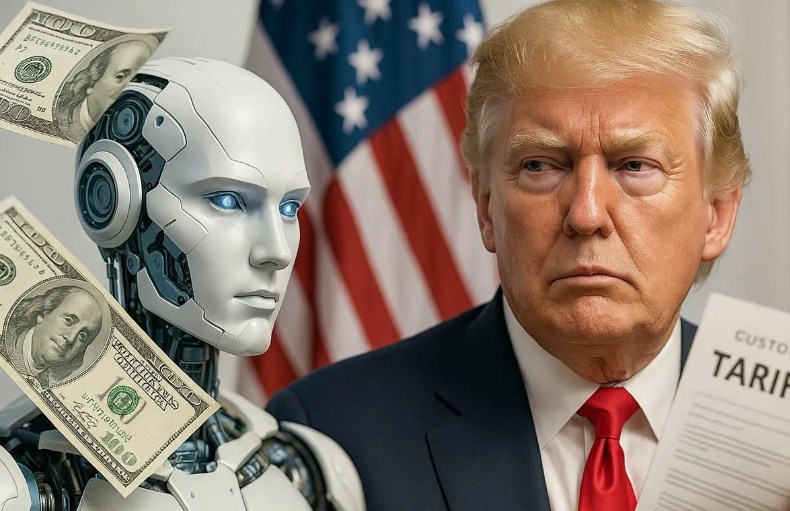
There is also the possibility that government participation could encourage longer-term thinking. Public markets often pressure companies to focus on quarterly results, while government investors might prioritize strategic goals that unfold over years or decades.
Concerns and Criticism
Despite these arguments, the proposal has sparked significant debate among economists, investors, and policy experts. Critics warn that government ownership of private companies could blur the line between public policy and business interests. They argue that political considerations might begin influencing investment decisions, potentially distorting market competition. Trump explores federal government acquiring shares in AI companies
Some experts fear that government stakes could create conflicts of interest. Regulators are expected to oversee industries impartially, but that task becomes more complicated if the government also has a financial interest in the success of specific companies. There are also concerns about selecting winners and losers. The AI sector is highly competitive, with startups and established firms racing to develop new technologies. If the government invests in certain companies, critics say it could inadvertently disadvantage others.
Free-market advocates are particularly skeptical. They argue that America’s technology leadership has historically been driven by private entrepreneurship and market competition rather than direct government ownership. Another challenge involves valuation. Leading AI companies are already worth hundreds of billions—or even trillions—of dollars. Acquiring meaningful ownership stakes could require enormous public investment, raising questions about costs and risks for taxpayers.
The Political Dimension
The discussion also reflects a broader shift in how policymakers view industrial policy. In recent years, both Republicans and Democrats have shown greater willingness to support government involvement in strategically important sectors. Federal investments in semiconductor manufacturing, clean energy, and infrastructure have demonstrated a growing bipartisan interest in strengthening domestic capabilities.
Trump’s reported interest in AI ownership aligns with a broader emphasis on economic nationalism and technological competitiveness. Throughout his political career, he has frequently argued that the United States should take stronger measures to protect industries considered vital to national interests. While details remain limited, the conversations suggest that AI could become a major issue in future economic and national security debates. Trump explores federal government acquiring shares in AI companies
What Happens Next?
At this stage, the concept remains exploratory rather than a formal policy proposal. There is no indication that a specific acquisition plan has been finalized or submitted for legislative approval. However, the fact that such discussions are occurring highlights how dramatically perceptions of artificial intelligence have changed. AI is no longer viewed solely as a commercial opportunity; it is increasingly seen as a strategic asset with implications for economic growth, national security, and global influence.
Whether or not the federal government ultimately acquires shares in AI companies, the conversation itself reflects the growing recognition that artificial intelligence may shape the next era of American power and prosperity. As governments around the world search for ways to secure their positions in the AI age, policymakers face difficult questions about balancing innovation, competition, public benefit, and national security. The answers could help determine not only the future of the technology industry but also the broader direction of the global economy for decades to come. Trump explores federal government acquiring shares in AI companies
About the Author