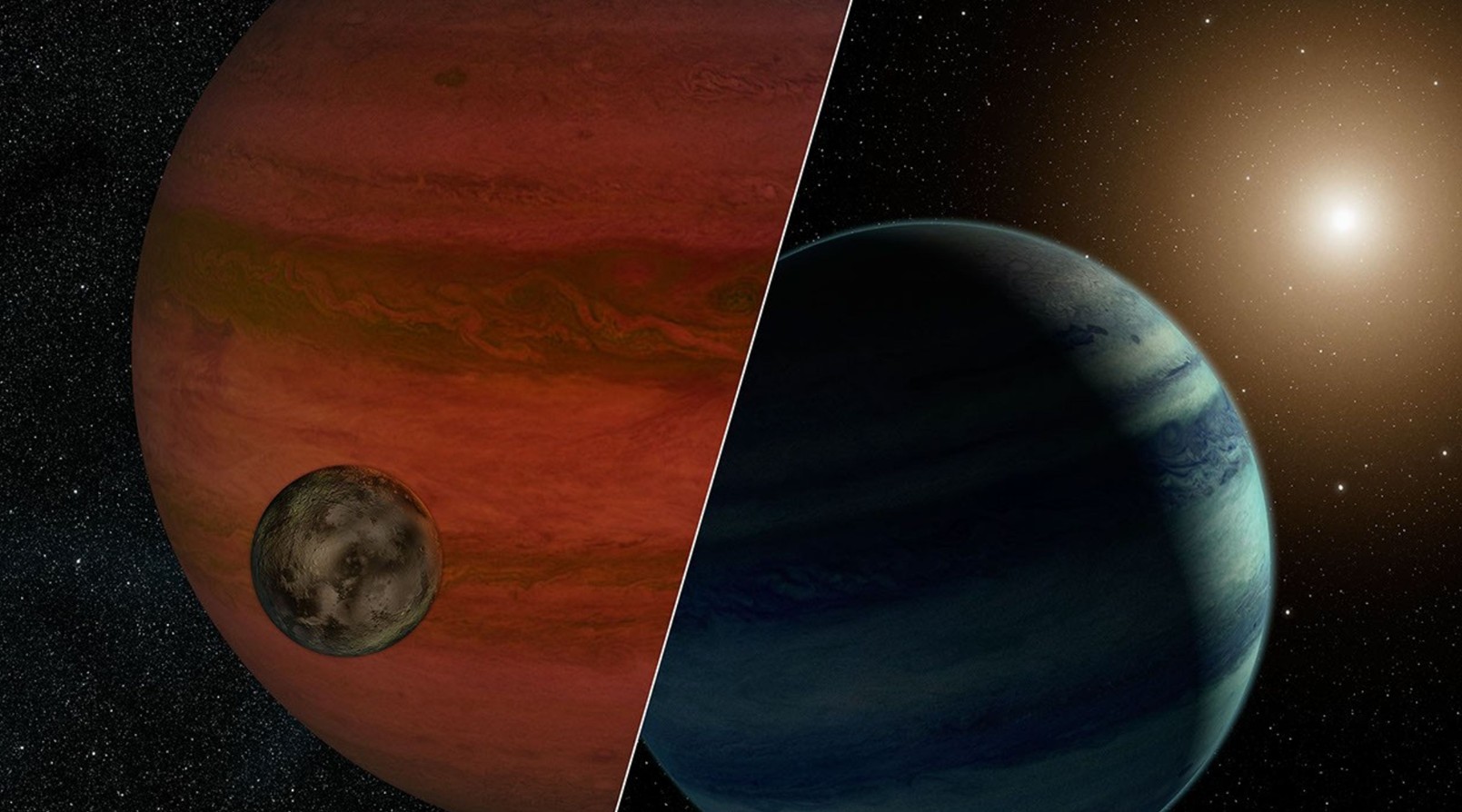
The first potential exomoon has arrived, making our Moon appear absurdly small. – More than 6,000 planets outside of our immediate vicinity have already been found. However, it has proven much more difficult to locate a moon around one of those far-off worlds. The term “moon” is stretched practically beyond recognition by this specific object, yet astronomers may finally have something that resembles the genuine thing.
Researchers found compelling evidence for a moon-like object in the CD-35 2722 system using the Very Large Telescope of the European Southern Observatory in Chile. It may be the first naturally occurring satellite outside of our solar system to be reliably discovered, although further observations are still required to validate the finding. However, there is still one minor issue. It looks like this moon is enormous.
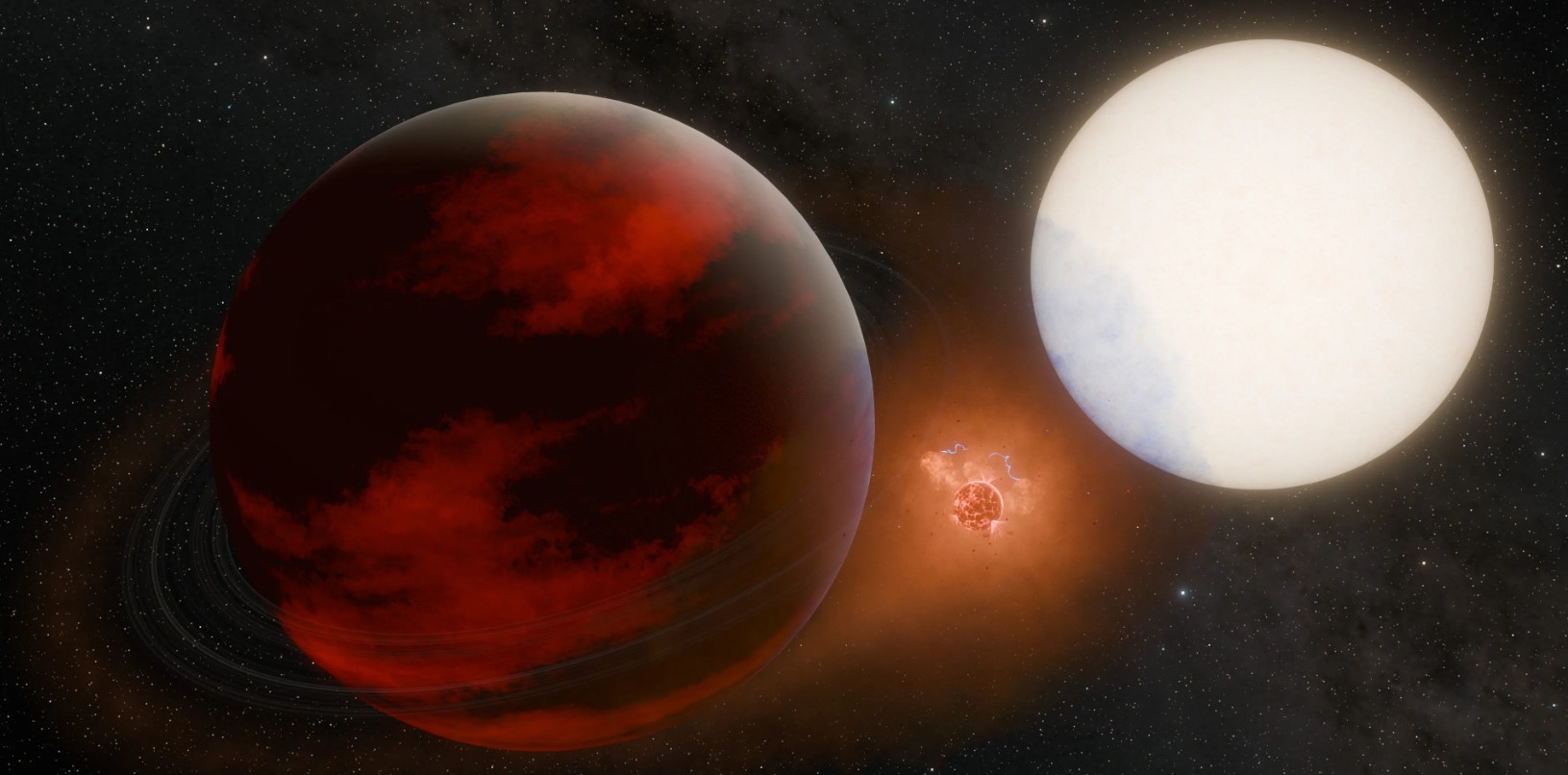
It becomes difficult to refer to this as a moon.
The system already appears to be very different from ours. With a mass of about half that of the Sun, CD-35 2722 is a youthful star. CD-35 2722 B, a brown dwarf with about 37 times Jupiter’s mass, is in orbit around it. The gray area between the biggest planets and the tiniest stars is where brown dwarfs are located. That brown dwarf is then circled by the recently discovered item.
A minimum mass of about 0.9 Jupiter masses and an orbital period of about 170 days are estimated by researchers. For the time being, “exosatellite” is a safer name due to its position in this cosmic hierarchy. Exomoon classification is particularly difficult when the host is a brown dwarf because there is currently no officially recognized definition of an exomoon.
How astronomers found it using an antiquated method of planet hunting
Using radial velocity measurements with the CRIRES+ instrument on the VLT, the team found the object. The technique, which famously assisted in the discovery of the first exoplanet around a Sun-like star, monitors for minute gravitational wobbles brought on by an invisible orbiting body. Instead, scientists used the method directly on a brown dwarf.
The technology should soon be able to be applied to smaller satellites and less big hosts, according to researchers, thanks to advancements in instrumentation. The planned 39-meter Extremely Large Telescope from ESO should significantly advance that search. For the time being, CD-35 2722 has provided scientists with an object large enough to mimic a planet, orbiting a star or planet.
About the Author