What did Trump say about the FAA ground stop? Watch his response – When the Federal Aviation Administration (FAA) ordered an unprecedented nationwide ground stop on Friday, November 13, 2026—bringing commercial air travel across the United States to its sharpest halt since September 11, 2001—hundreds of thousands of travelers were suddenly left stranded in airport terminals. Over the next three days, more than 17,000 flights were canceled and tens of thousands more were delayed as airlines scrambled to reset schedules.
Amid the travel chaos, many Americans waited to hear directly from the White House. After remaining publicly silent throughout Friday afternoon and Saturday while Cabinet officials led press briefings, President Donald Trump finally weighed in—first via social media on Sunday morning and then in front of reporters on the South Lawn on Monday, November 16, 2026. His message was unmistakable: he accepted zero personal blame for the breakdown, praised his administration’s emergency handling of the crisis, and used the disruption to demand billions of dollars from Congress to overhaul America’s aging air traffic control network. What did Trump say about the FAA ground stop
Breaking Two Days of Silence on Social Media
During the height of Friday’s four-hour airspace freeze—which began just before 4:00 p.m. ET after routine telecommunications maintenance by federal contractor L3Harris accidentally overloaded aging air traffic control lines—Transportation Secretary Sean Duffy and Homeland Security Secretary Markwayne Mullin served as the public faces of the administration. Behind the scenes, White House aides confirmed that Trump had been briefed during an economic policy meeting and began calling congressional leaders to discuss aviation funding.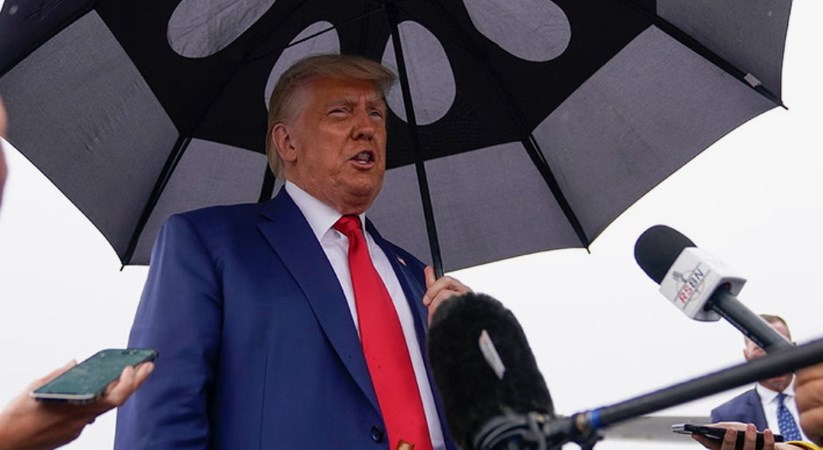
Publicly, however, the president did not address the travel meltdown until Sunday morning, November 15, when he posted a forceful statement on Truth Social. Rather than apologizing for the weekend travel nightmare, Trump framed the outage as proof that decades-old aviation infrastructure had reached a breaking point:
-
Calling Out 50-Year-Old Technology: Trump wrote that much of the nation’s air traffic control system is half a century old, calling the situation “RIDICULOUS!”
-
Rejecting Incremental Fixes: He argued that his administration had already started upgrading the system, but insisted the modernization effort could not be accomplished in “drips and drabs”.
-
Promising a Total Overhaul: Pressing lawmakers to approve substantial new funding immediately, Trump vowed that with full congressional backing, the United States would build “the BEST SYSTEM anywhere in the World”.
“I Don’t Take Any Responsibility”: Watch What Trump Told Reporters
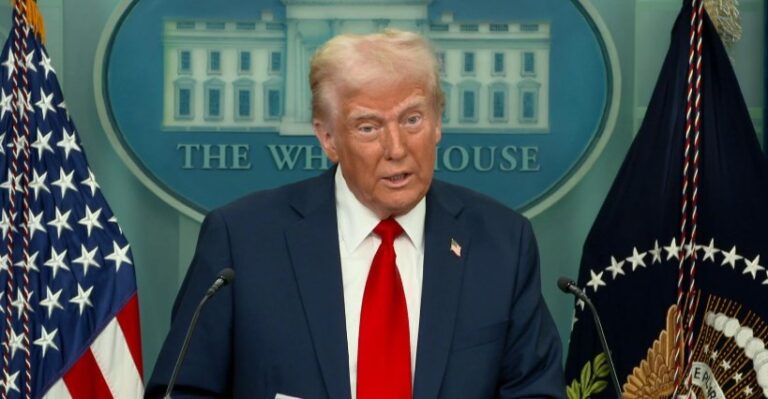
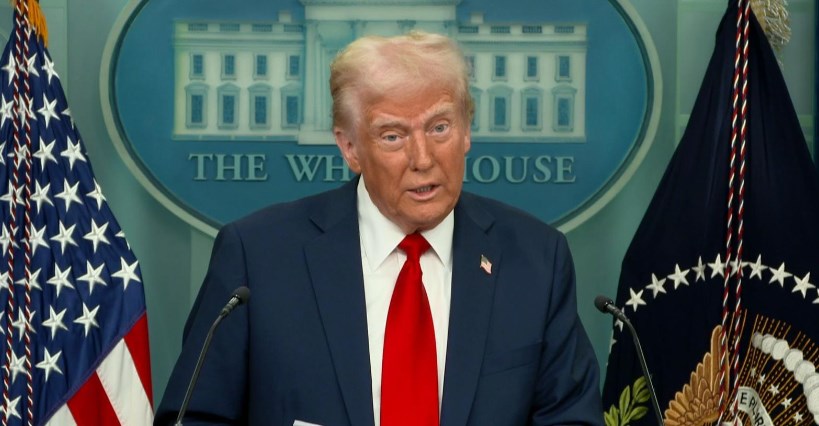
Trump expanded on his remarks in person on Monday morning, November 16, speaking to reporters outside the White House just before boarding Marine One to begin his diplomatic trip to Asia. In video clips of the exchange—which quickly circulated across news broadcasts—reporters pressed the president on whether his administration bore responsibility for the system failure.
Trump pushed back flatly, distancing himself and his Cabinet from the technical breakdown while emphasizing that no lives were lost:
“I don’t take any responsibility,” Trump told reporters on the White House lawn. “They did a great job. Secretary Duffy — they acted incredibly. Everybody was safe, nobody was hurt, no crashes, no nothing.”
Describing the root cause in colorful, everyday terms, the president painted the outage as the inevitable collapse of obsolete hardware rather than an administrative misstep. “Essentially, what you saw on Friday was very, very old equipment that had a heart attack,” he said, reiterating his full support for Transportation Secretary Sean Duffy and placing blame squarely on past administrations—specifically pointing to the Biden administration—for leaving outdated telecommunications equipment in place. You can watch the full exchange in Trump on FAA ground stop: ‘I don’t take any responsibility’ to see the president’s exact remarks before his departure.
The Political Clash Over Aviation Funding and Staffing
While Trump’s remarks sought to rally bipartisan urgency around modernizing the skies, his refusal to accept responsibility immediately sparked sharp debate on Capitol Hill. Transportation Secretary Sean Duffy has ramped up his request to Congress, asking lawmakers to approve $50 billion by the end of the year—up from an earlier $30 billion target—to completely replace copper-wire networks, outdated radar systems, and legacy air traffic control hardware. That request comes on top of the $12.5 billion down payment included in the Republican tax-and-spending package passed the previous year.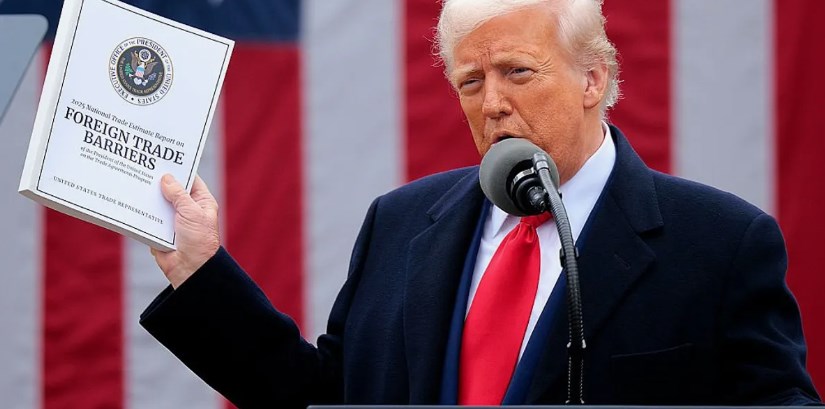
Democrats, however, have pushed back against both the administration’s narrative and its price tag. Critics on Capitol Hill pointed out that shortly after returning to office in January 2025, Trump signed an executive order freezing remaining funds from a $25 billion Biden-era aviation infrastructure appropriation, while early workforce reductions led by the Department of Government Efficiency (DOGE) resulted in hundreds of FAA departures and buyouts. Incoming Democratic leaders—who are preparing to take control of the House in January following the November midterm elections—have signaled that they will demand thorough oversight and clear answers about the root cause of the outage before signing off on tens of billions of dollars in additional spending. What did Trump say about the FAA ground stop
What Happens Next for Travelers and the FAA
For everyday flyers heading into the busy Thanksgiving and winter holiday travel seasons, the immediate crisis has passed. FAA officials stated that the specific routing glitch caused by the copper-to-fiber transition has been isolated and resolved, and the agency has assembled a specialized “tiger team” of engineers to audit ongoing upgrades and prevent another cascading failure.
Still, Donald Trump’s blunt response ensures that the November 2026 ground stop will remain far more than a passing travel headache. By drawing a hard line between his team’s crisis response and decades-old infrastructure neglect, the president has turned a chaotic Friday afternoon in the skies into one of Washington’s biggest legislative battles heading into the new year. What did Trump say about the FAA ground stop
About the Author