Trump’s low approval rating stays steady, new poll shows. Here’s why
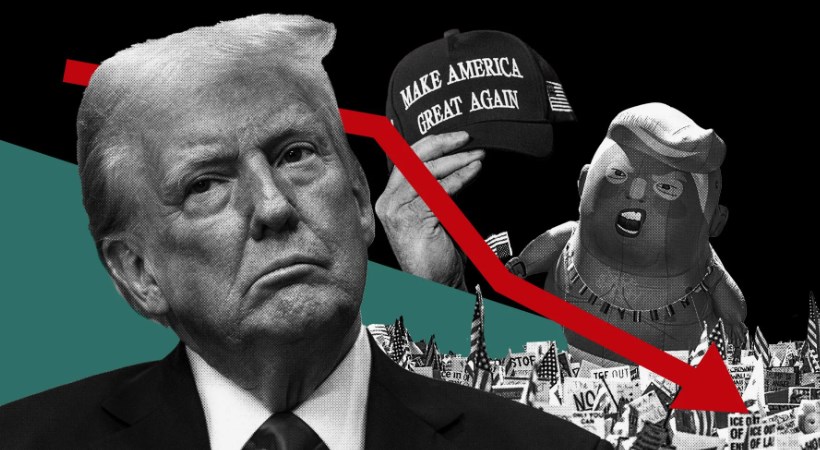
Trump’s low approval rating stays steady, new poll shows. Here’s why – Recent national polling suggests that Donald Trump continues to face a stubbornly low approval rating that has barely shifted in recent weeks. While fluctuations are common in political surveys, analysts note that the latest results show something more unusual: a steady plateau rather than the sharp rises or drops that often follow major political events.
The findings, drawn from a new wave of voter surveys conducted across multiple demographics, point to a political landscape that has become deeply entrenched. Supporters remain firmly supportive, critics remain firmly opposed, and the middle ground appears increasingly thin. That stability—rather than movement—has become the defining feature of Trump’s current approval picture.
But why does his approval rating remain so steady, even when news cycles are volatile and political debates intensify? The answer lies in a mix of polarization, voter psychology, economic perceptions, and the long shadow of his political brand.
A deeply polarized political environment
One of the strongest explanations is the continued polarization of American politics. Over the past decade, approval ratings for major political figures have become less sensitive to day-to-day developments and more anchored to party identity.
In Trump’s case, public opinion is particularly hardened. His supporters tend to evaluate him through a lens of policy alignment, leadership style, and cultural representation, while his opponents often view him through consistent criticism of his rhetoric and governance approach. As a result, new information rarely changes minds at scale.
This creates a “locked-in” effect. Even when polls show dissatisfaction among independents or swing voters, those shifts are often too small to move the overall approval number significantly. Instead, they show up as minor adjustments within margin-of-error ranges.
The role of political identity
Trump remains one of the most polarizing figures in modern U.S. politics. That polarization has evolved into a form of political identity rather than simple policy disagreement. For many voters, approval or disapproval is not just about current performance—it is about a broader worldview. This means that even significant political developments may not produce large swings in approval, because the underlying attitudes are already firmly established.
Political scientists often describe this phenomenon as “affective polarization,” where voters respond emotionally to political figures rather than evaluating them solely on outcomes. In such an environment, approval ratings tend to stabilize at high and low extremes, leaving less room for movement in the middle.
Economic sentiment and perception gaps
Economic conditions also play a major role in shaping approval ratings, but not always in straightforward ways. While macroeconomic indicators such as inflation, employment, and growth influence public opinion, voters often interpret these signals differently depending on political affiliation.
Supporters of Trump may credit or blame broader structural issues rather than individual leadership decisions, while opponents may attribute negative economic experiences more directly to policy choices associated with him. This perception gap creates a situation where economic shifts do not necessarily translate into approval changes. Even when voters express concern about costs of living or financial stability, those concerns do not always result in a reassessment of presidential performance. Trump’s low approval rating stays steady
The “known quantity” effect
Another reason for the stability in Trump’s approval rating is that he is already a well-defined political figure in the public mind. Unlike newer politicians who may experience rapid shifts in public perception as they are introduced to voters, Trump’s image has been shaped over many years of constant media coverage, elections, and public appearances.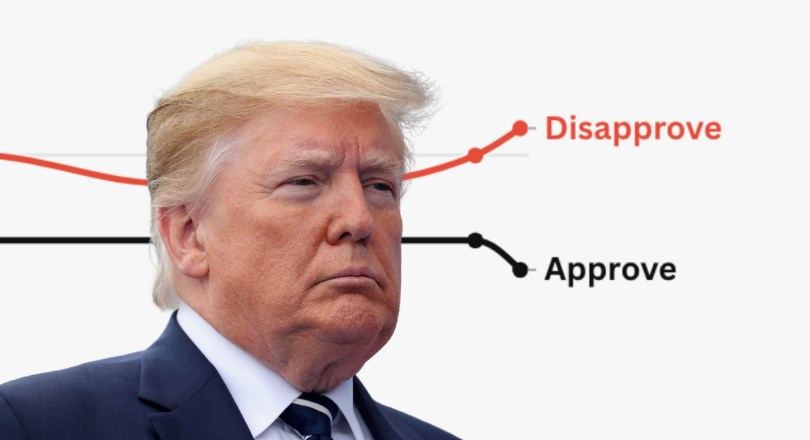
Because of this, voters are less likely to revise their opinions. Political scientists sometimes call this the “frozen perception” effect—once voters feel they understand a figure, they become less responsive to new information. This can lead to a plateau effect in polling: approval ratings stop moving not because public interest has faded, but because opinions have already solidified.
Media saturation and attention fatigue
Another contributing factor is media saturation. Trump remains one of the most frequently covered figures in global politics, and this constant visibility can produce paradoxical effects. On one hand, high visibility keeps him relevant in public discourse. On the other hand, it can lead to attention fatigue among some voters. When individuals feel they are repeatedly exposed to the same political narratives, they may become less reactive to new developments. This doesn’t necessarily change opinions, but it can reduce volatility in polling. People maintain their existing views without significant reassessment, contributing to steady approval ratings over time.
Limited persuasion in the middle
The group most likely to influence movement in approval ratings is typically independent or swing voters. However, recent polling suggests that this group is also increasingly stable in its views of Trump. Many independents have already formed relatively firm opinions based on years of political experience, meaning there are fewer undecided or persuadable voters left to shift the numbers meaningfully. As a result, even when there is dissatisfaction or approval among this group, it tends to be balanced out by equal and opposite sentiment from other segments of the electorate.
The psychology of political consistency
Human psychology also plays a role in reinforcing steady approval ratings. Once individuals publicly align themselves with a political opinion, they are more likely to maintain consistency over time. Changing one’s view of a major political figure can feel like a reversal of identity, which people often resist.
This means that even when new information arises, voters may reinterpret it in ways that align with their existing beliefs rather than changing their stance entirely. In Trump’s case, this effect is amplified by his long-standing presence in public life and the intensity of opinions surrounding him. Trump’s low approval rating stays steady
What “steady but low” really means
A key detail in the latest polling is not just that Trump’s approval rating is steady—it is that it remains low by historical standards for major national political figures. However, “low” does not necessarily imply instability or vulnerability in the short term.
Instead, it suggests a deeply divided electorate where both approval and disapproval are structurally entrenched. In such conditions, political movement tends to happen slowly, if at all. This creates a paradox: even significant political events may not dramatically alter approval numbers, because the underlying divisions in public opinion are already fully formed.
Looking ahead
Going forward, analysts expect Trump’s approval rating to remain sensitive to major national events but largely resistant to minor developments. Economic shifts, policy announcements, or political controversies may cause temporary movement, but sustained change would likely require a broader realignment in voter attitudes.
For now, the steady nature of his approval rating reflects a political environment defined less by persuasion and more by consolidation. Voters know where they stand, and they are not moving easily. In that sense, the latest poll does not just measure approval—it measures the stability of modern political identity itself. Trump’s low approval rating stays steady
About the Author