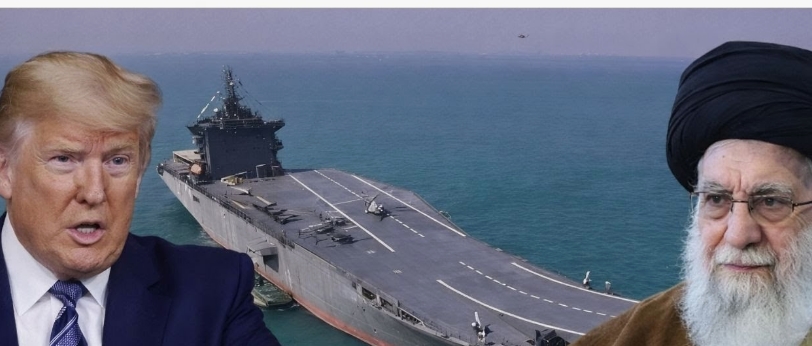
Trump says US is ‘ready to go militarily’ if Iran talks fail – As diplomatic efforts teeter on the point of collapse, U.S. President Donald Trump has made one of his starkest warnings yet: the United States is fully prepared to take military action against Iran if existing negotiations fail. His warning, given during a tenuous ceasefire and rising regional instability, highlights just how close the two countries may be to another conflict—one that might resonate far beyond the Middle East.
A Ceasefire Hanging on a Thread
The current situation unfolds against the backdrop of a brief ceasefire between the United States and Iran, a halt that was always considered as fragile. With its expiration looming, uncertainty has risen. Trump has made it apparent that he has no interest in extending the truce, portraying the U.S. military as “ready to go” should talks fall down.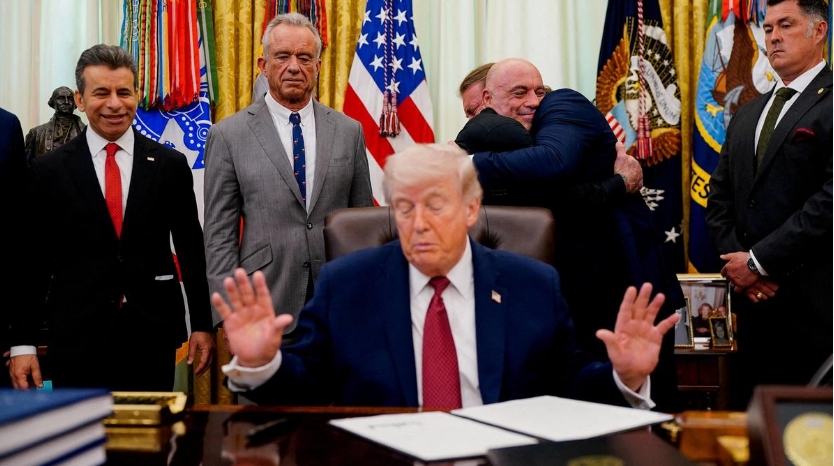
This is not only rhetorical posturing. The U.S. has continued to impose pressure on Iran even during negotiations, including implementing a naval blockade and detaining vessels suspected of breaking sanctions. Such efforts have enraged Tehran, which claims they undermine trust and violate the spirit—if not the letter—of the ceasefire accord. The consequence is a tense standoff where both parties are nominally at peace, while behaving as if conflict could resume at any time.
Trump’s “Ready to Go” Doctrine
Trump’s approach balances negotiation with overt military coercion. He has frequently characterized diplomacy as a final opportunity for Iran, warning that failure to reach an agreement would lead to rapid and severe action. In his own words, the United States is “ready to go military” if talks do not generate results. Trump says US is ‘ready to go militarily’ if Iran talks fail
Behind this terminology lies a strategy built in leverage. Trump believes that exhibiting overwhelming military readiness will compel Iran into concessions—particularly on its nuclear goals and regional actions. He has also argued that earlier U.S. strikes had degraded Iran’s military infrastructure, putting Tehran in a weaker position at the negotiating table. However, detractors worry that such forceful rhetoric risks backfiring. Instead of driving Iran toward compromise, it may stiffen resistance and diminish the likelihood of real discussion.
Iran’s Defiant Response
Iran, for its part, has not replied with submission. Instead, its officials have issued warnings of their own, signaling preparedness to escalate if attacked. Iranian leaders have said they are prepared to unveil “new cards on the battlefield,” a statement usually taken as a threat to employ previously unseen military assets or techniques.
Tehran has also insisted on its right to maintain portions of its nuclear program, a crucial sticking point in discussions. For Iranian officials, this problem is related not only to national security but also to sovereignty and national pride. The potential that Iran may refuse to attend or fully engage in discussions further complicates matters. Officials have identified persistent U.S. military pressure—including the blockade—as a major hurdle to productive negotiations.
A Strategic Flashpoint: The Strait of Hormuz
At the center of the dilemma lies one of the world’s most vital chokepoints: the Strait of Hormuz. This tiny channel handles a major part of global oil supplies, making it crucial to the international economy. Iran’s control over access to the strait—and its purported efforts to block or influence shipping—has heightened tensions substantially.
The United States, determined to secure free passage, has responded with naval deployments and enforcement activities. Any escalation in this region may disrupt global energy supply, sending oil prices rising and unleashing economic upheaval globally. Markets have already showed symptoms of volatility in response to the protracted conflict. Trump says US is ‘ready to go militarily’ if Iran talks fail
Military Build-Up and the Risk of War
While both parties openly declare a preference for diplomacy, actions on the ground reflect a more nuanced narrative. The U.S. has allegedly increased troop deployments in the region, prompting fears that preparations for a wider battle may already be starting.
Military strategists worry that even a modest battle might develop into a bigger war. Iran’s defensive strategy—built on decades of planning—includes both conventional forces and asymmetric methods such as proxy warfare and guerrilla operations.
For the United States, a renewed battle may require not only airstrikes but perhaps ground troops, a scenario Trump has previously been reluctant to support. Yet the rising military presence shows that such options are being evaluated.
Diplomatic Efforts on Shaky Ground
Talks mediated by international parties, including efforts in Pakistan, were designed to de-escalate the conflict and find common ground. But progress has been gradual, and the atmosphere remains plagued with mistrust. One of the key issues is the enormous disparity between U.S. demands and Iranian expectations.
Washington seeks tight limits—or possibly elimination—of Iran’s nuclear capabilities, while Tehran insists on maintaining its rights under international agreements. Recent developments, including military activity during the ceasefire, have only exacerbated suspicion on both sides. Diplomats now face the enormous challenge of repairing trust while racing against the clock.
Global Implications
The stakes reach far beyond Washington and Tehran. A renewed U.S.–Iran clash would have major ramifications for global security, energy markets, and international relationships. Countries depending on Middle Eastern oil would be particularly vulnerable, while regional powers may be pushed into the fight.
The prospect of proxy warfare growing across the region is also enormous, potentially destabilizing already fragile regimes. Financial markets have reacted cautiously to each new announcement, indicating fears that the situation could soon deteriorate. Even the threat of conflict has been enough to induce swings in oil prices and investor sentiment. Trump says US is ‘ready to go militarily’ if Iran talks fail
A Moment of Decision
As the ceasefire deadline approaches, the world watches attentively. Trump’s warning that the U.S. is “ready to go militarily” is not just a statement—it is a signal that time for diplomacy may be running out. Yet, despite the strong rhetoric, there is a tiny window for a peaceful resolution. Both parties understand the horrific costs of conflict, and there are still efforts underway to overcome their differences. Whether their attempts will succeed is questionable. What is obvious, however, is that the next measures made by Washington and Tehran might define the direction of the region—and potentially the world—for years to come. Trump says US is ‘ready to go militarily’ if Iran talks fail
About the Author