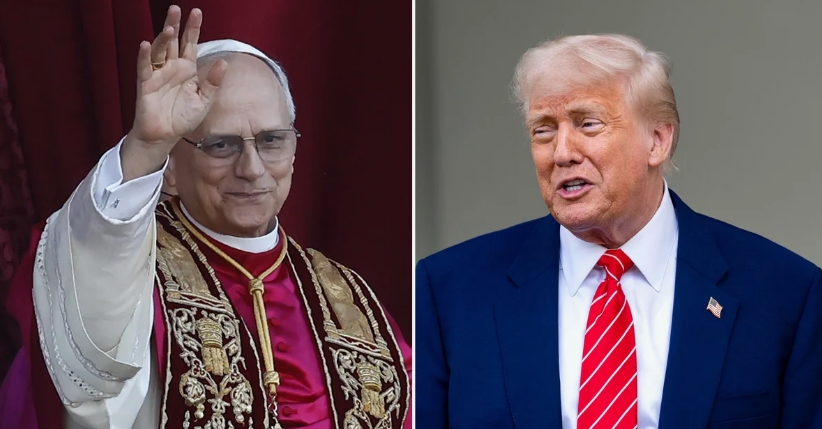
Trump’s dispute with Pope Leo XIV could hurt Republicans in midterms – American politics has never been short on odd disputes, but a public spat between Donald Trump and Pope Leo XIV has introduced a new and possibly crucial dynamic—one that could affect voter opinion as Republicans approach toward the upcoming midterm elections.
At first glance, a conflict between a former U.S. president and the head of the Catholic Church can seem symbolic or removed from everyday policy concerns. But in a country where religion, identity, and politics are strongly linked, such a clash can carry actual electoral consequences—especially for a party that relies largely on faith-based votes.
The Roots of the Dispute
The friction apparently derives from contrasting perspectives on immigration, social justice, and the moral responsibility of governments. Pope Leo XIV has maintained a firm stance emphasizing compassion for migrants, economic fairness, and the protection of vulnerable populations. His rhetoric mirrors long-standing Catholic social teaching, placing human dignity and societal responsibility at the heart of political discourse.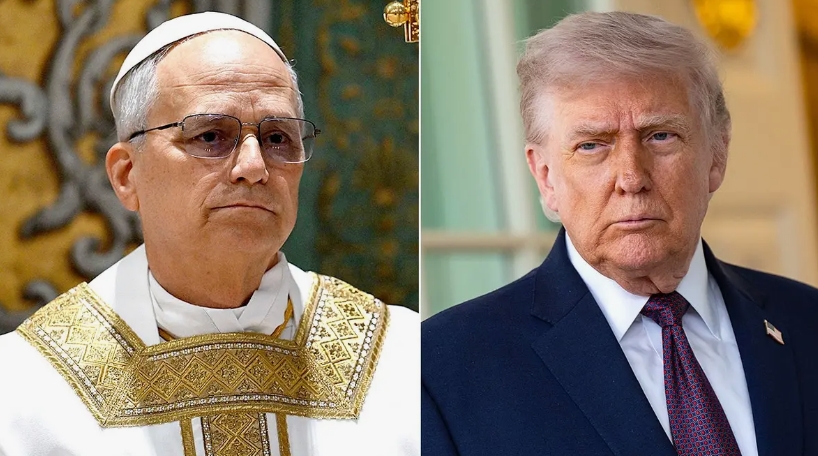
Trump, on the other hand, has doubled down on his tough approach to immigration and national sovereignty—positions that remain core to his political image. In speeches and public pronouncements, he has condemned what he considers as the Vatican’s intervention in political concerns, portraying his policies as important for national security and economic stability. What might have once been a discreet ideological divide has now spilled into the public arena, with both personalities drawing clear lines that offer little opportunity for compromise.
Why It Matters Politically
For Republicans, the stakes are bigger than they would originally appear. Catholic voters represent a major and frequently crucial constituency in American elections. Historically, they have been swing voters—sometimes leaning Democratic, other times Republican, depending on the causes and politicians.
Trump’s relationship with religious voters, particularly evangelical Christians, has been strong. However, Catholic voters are more diverse in their political priorities. While many accord with conservative views on matters like abortion, others are equally inspired by social justice concerns like as poverty, healthcare, and immigration—areas where the Pope’s message resonates powerfully.
A conspicuous disagreement with the Pope risks alienating moderate and independent Catholic voters who would otherwise support Republican candidates. Even among conservative Catholics, the optics of challenging a religious leader could induce discomfort or hesitancy.
The Optics Problem
Politics is not simply about policy—it’s about perception. And the sight of a political leader publicly battling with a global religious icon carries symbolic weight. For some people, Trump’s willingness to question the Pope may bolster his image as a disruptor who refuses to bend to authority. This might excite his core support, which generally regards establishment leaders with mistrust.
But for others, the debate may come out as pointless or even insulting. The Catholic Church, with its centuries-old tradition and global power, commands a level of veneration that transcends politics. Criticizing its leader—especially in a personal or confrontational tone—can be perceived as crossing a line. This perceived issue might become particularly troublesome in suburban districts and swing states, where elections are often won by narrow margins and where voters tend to value stability and civility over controversy.
A Divided Republican Coalition
The Republican Party is not a monolith, and this dispute shows some of its internal conflicts. On one side are populist voters who ardently support Trump’s nationalist agenda. On the other are more conventional conservatives who favor institutional respect, religious beliefs, and a broader moral framework.
For Republican candidates running in competitive districts, managing this split could prove challenging. Aligning too closely with Trump’s rhetoric risks alienating moderate voters, while distancing themselves from him could damage support among the party’s base. The added dimension of a religious dispute complicates this balancing job. Candidates may find themselves having to answer inquiries not just about policy, but about their موقف (position) on a very sensitive moral and cultural issue.
Democratic Opportunities
Democrats, meantime, may see this as an opening. By presenting the argument as an example of divisiveness or a lack of compassion, they can appeal to those who value unity and moral leadership. In particular, Democratic candidates should emphasize congruence with the Pope’s discourse on social justice, positioning themselves as more in line with the broader ethical concerns of many Catholic voters. This method could be especially effective in locations with large Catholic populations. However, Democrats will need to tread carefully. Over-politicizing the Pope’s words could backfire, especially among those who prefer to keep religion separate from partisan politics. Trump’s dispute with Pope Leo XIV could hurt Republicans in midterms
Historical Context
This is not the first time a U.S. political figure has clashed with the Vatican, but the current issue stands out for its exposure and timing. With midterm elections approaching, even seemingly unimportant concerns can take on heightened importance.
Historically, religion has played a modest but substantial impact in molding voter behavior. From fights over abortion to conversations about economic fairness, faith-based ideas often impact how voters receive political statements. What makes this moment remarkable is the directness of the conflict. Instead of abstract debates, voters are witnessing a personal and public exchange—one that invites them to take sides, knowingly or not. Trump’s dispute with Pope Leo XIV could hurt Republicans in midterms
The Road to the Midterms
As the election cycle progresses, the impact of this issue will likely depend on how it evolves. If hostilities escalate, the topic could become a frequent theme in media coverage, compounding its influence on public opinion. Republicans may attempt to turn the attention back to key topics like the economy, inflation, and national security—areas where they generally score well. But the continuance of the debate could make it impossible to totally move on.
For Trump, the calculation may be different. His political strategy has often centered on confrontation and sharp contrasts. Engaging in a quarrel with a figure as renowned as the Pope keeps him at the center of public attention, maintaining his image as a dominant force in American politics.
Final Thoughts
The clash between Donald Trump and Pope Leo XIV is more than simply a headline—it’s a reflection of deeper issues within American culture. It highlights the connection of politics, religion, and identity, and underscores how swiftly these variables may influence election dynamics.
For Republicans, the issue rests in handling the aftermath without dividing their coalition. For Democrats, the opportunity rests in appealing to voters who may feel concerned about the tone and substance of the fight. Ultimately, the midterm elections will tell whether this debate is a passing controversy or a real turning moment. But one thing is clear: in today’s political scene, even a conflict that begins outside the usual arena can have far-reaching implications if it takes the public stage. Trump’s dispute with Pope Leo XIV could hurt Republicans in midterms
About the Author