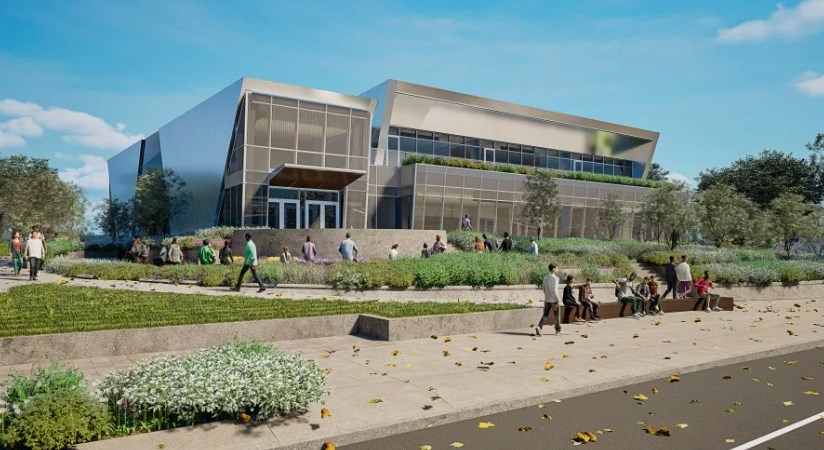
At first glance, visitors approaching the site will notice that the architecture doesn’t try to dominate the landscape. Instead, it rises from it. The campus is anchored by a tall, geometric museum tower wrapped in stone panels etched with a soft, textured pattern meant to evoke storytelling carved into history. Nearby, green space stretches outward, blending gardens, walking paths, and public gathering areas that feel more like a neighborhood park than a fenced institutional complex. That intentional blending is part of the design philosophy: the center is not meant to be a monument you simply look at, but a place you move through, return to, and use.
Inside the Museum: A Walk Through a Presidency
Stepping inside the museum building, visitors are guided through a chronological but emotionally layered journey. Instead of a linear timeline alone, exhibits are structured around themes—identity, leadership, crisis, hope, and civic participation. Obama Presidential Center set to open
The early galleries explore Barack Obama’s upbringing, from his childhood in Hawaii and Indonesia to his formative years as a student. Rather than static displays, these sections rely heavily on immersive media: audio recordings, family photographs, handwritten notes, and interactive storytelling stations where visitors can explore different paths of his early life depending on key decisions and influences.
As visitors move forward, the tone shifts into the political awakening years—community organizing in Chicago, law school, and his entry into public service in Illinois. Here, the design of the museum becomes more layered and dense, reflecting the complexity of urban politics and civic engagement.
One of the most talked-about features is the re-creation of portions of the 2008 and 2012 presidential campaigns. Instead of simply displaying memorabilia, the center uses projection mapping and interactive displays that simulate the intensity of a campaign trail: rally footage, speech drafts, voter outreach strategies, and behind-the-scenes decision-making. It’s not designed to glamorize politics, but to expose its machinery.
The Oval Office Experience and Decision Rooms
A centerpiece inside the museum is the “Decision Room,” a space that recreates the feel of high-stakes presidential briefings. Visitors can sit at digital interfaces that simulate scenarios the administration faced—economic downturns, healthcare reform negotiations, and international crises. These experiences are not meant to simplify complex policy decisions but to highlight how layered and constrained leadership can be. The goal is reflection: what factors matter when decisions affect millions?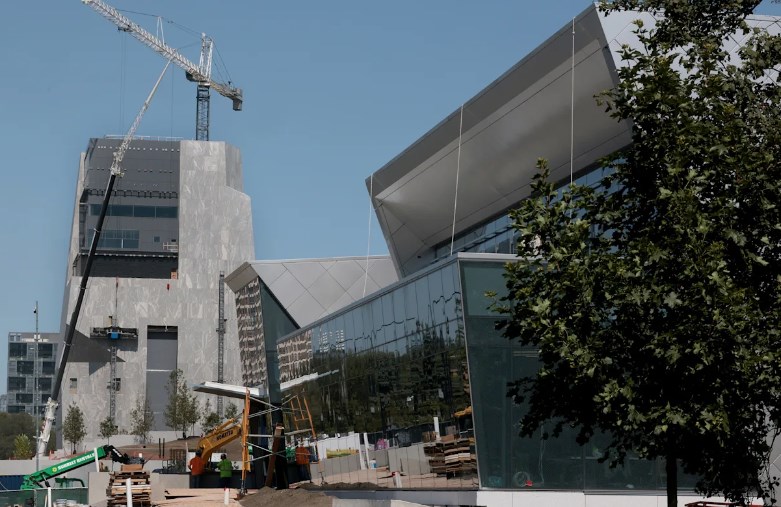
Nearby, a stylized interpretation of the Oval Office offers a quieter moment. It is not an exact replica but a symbolic reconstruction, emphasizing atmosphere over accuracy. The lighting is warm, the space minimal, almost intentionally subdued to contrast with the intensity of the Decision Room.
Beyond Politics: Culture, Community, and Identity
While much of the museum focuses on presidential history, the Obama Presidential Center is equally committed to culture and community storytelling. Rotating exhibits highlight art, music, activism, and youth leadership from Chicago’s South Side and beyond. This includes installations from local artists, digital storytelling walls where residents can contribute personal histories, and performance spaces designed for lectures, concerts, and civic forums.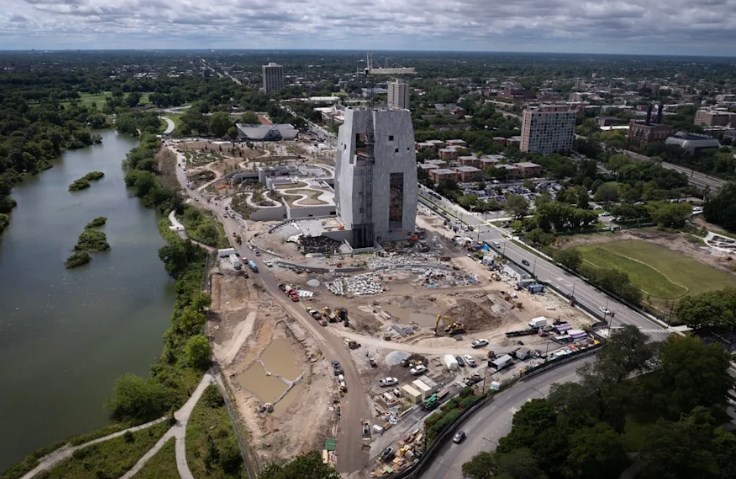
The center also includes a major branch of the Chicago Public Library system, reinforcing its role as an educational hub rather than a static museum. Students can study, researchers can access archives, and families can attend workshops that range from coding to creative writing. Outside, the landscape itself is part of the experience. Gardens are planted with native Midwestern species, designed to change with the seasons. Walking trails connect different sections of the campus, encouraging visitors to slow down and experience the space as a living environment rather than a single destination.
A Community Anchor, Not Just a Landmark
A defining feature of the Obama Presidential Center is its relationship with its surroundings. Located in Jackson Park on Chicago’s South Side, it sits in a historically significant but often underinvested area. The project has been closely watched for its potential economic and cultural impact.
Rather than isolating itself as a tourist destination, the center is designed to integrate with nearby neighborhoods through job creation, public programming, and accessible open space. Community rooms and event spaces are intended for local use as much as for visiting audiences. This approach reflects a broader shift in how presidential libraries are conceived—not just as repositories of political legacy, but as civic institutions that continue to evolve.
The Design Language: Symbolism in Form
Architecturally, the complex uses a mix of stone, glass, and landscaped geometry to communicate openness and permanence at the same time. The museum tower rises like a sculpted monolith, but its base opens outward into public space. The library and forum buildings are lower and more horizontal, suggesting accessibility rather than authority. Obama Presidential Center set to open
The symbolism is deliberate. The design does not attempt to replicate governmental power structures, but instead reframes them as shared spaces of inquiry. Inside, natural light plays a major role. Skylights and floor-to-ceiling glass panels bring in shifting daylight, subtly changing the mood of exhibits throughout the day. Even the circulation paths—ramps, staircases, and open corridors—are designed to encourage wandering rather than strict navigation.
A Presidential Legacy Reframed
Presidential centers often function as final chapters in political narratives, but this one feels more like an open draft. It doesn’t aim to resolve the legacy of Barack Obama into a single interpretation. Instead, it presents it as something still being debated, examined, and reinterpreted. That approach is intentional. The center invites disagreement as much as admiration, reflection as much as celebration. It acknowledges that history is not fixed—it is continuously rewritten by those who engage with it.
In that sense, the Obama Presidential Center is less about looking back and more about asking forward-facing questions: What does leadership look like in a changing world? How do communities shape national identity? And how should history be preserved without being frozen?
Opening Day and What Comes After
When the center officially opens, the initial attention will likely focus on its architecture, its exhibits, and its symbolic weight. But its long-term success will depend on something quieter: whether people return. If it becomes what its designers hope—a place where students study after school, where families gather on weekends, where visitors stumble into conversations about civic life—then it will have achieved something beyond memorialization.
It will have become part of the city’s daily rhythm. And in doing so, it will reflect not just the presidency it represents, but the ongoing story of the community around it—especially Chicago itself, a city that has long shaped and been shaped by the political and cultural currents of the United States. In the end, the Obama Presidential Center is not just being built to open its doors. It is being built to keep them open. Obama Presidential Center set to open
About the Author