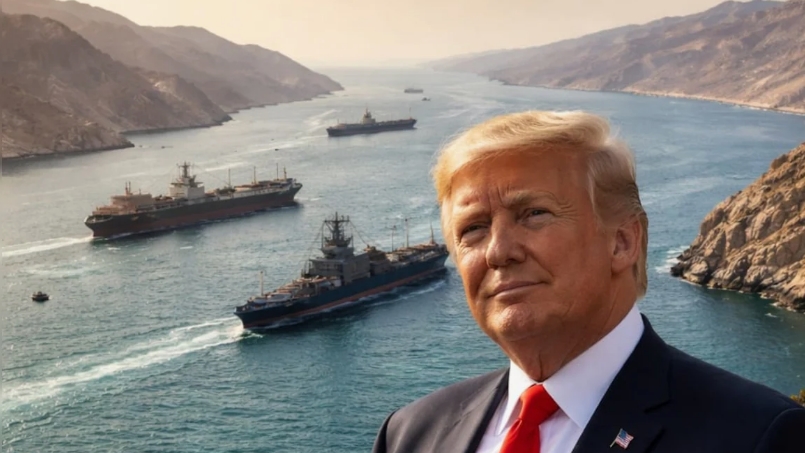
Iran declares Hormuz ‘open.’ Trump continues US blockade – For the time being, the precarious calm over one of the most strategically important waterways in the world is holding, but tensions are still tightly wound beneath the surface. Iran’s announcement that the Strait of Hormuz is “open” hasn’t done much to ease the more serious impasse with Donald Trump, who has stated unequivocally that the US will maintain its naval blockade against Iran despite what initially seems to be a move in the right direction.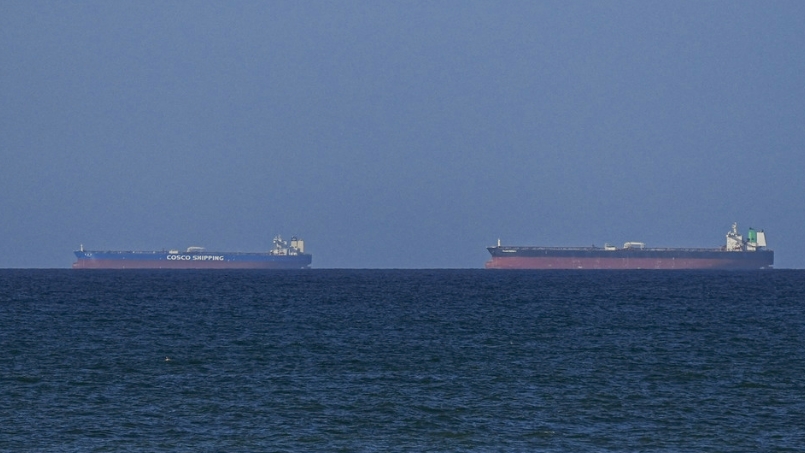
It’s crucial to take a step back and think about what the Strait of Hormuz actually means in order to comprehend why this moment seems so unsettling. Situated between Iran and Oman, this tiny corridor serves as more than just a shipping route; it is one of the most important conduits for the world economy. This waterway is a vital lifeblood for energy markets and international trade, carrying around a fifth of the world’s oil supply. Iran is not merely providing a standard marine update when it declares that the strait is “open.” A deliberate geopolitical statement is being made.
Fundamentally, Tehran’s message is an effort to change the story. Iran is indicating that it is not the party responsible for interfering with international trade following weeks of increased tensions, security incidents, and concerns about a wider regional conflict. It is portraying itself as a stabilizing force that is prepared to permit unrestricted trade by reopening the strait, albeit under some restrictions.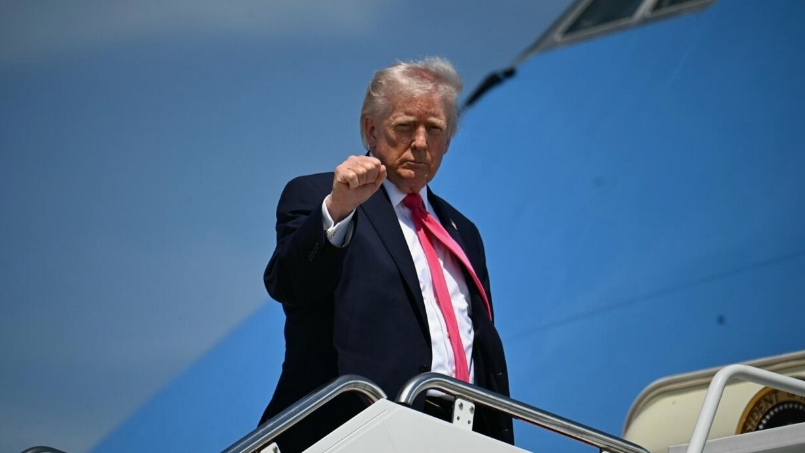
However, the truth is more nuanced. There are conditions attached to the reopening. Ships must adhere to specified transit routes, stay in touch with Iranian officials, and occasionally work with security agencies like the Islamic Revolutionary Guard Corps. Shipping businesses are concerned because these requirements add a degree of unpredictability. Practically speaking, “open” does not always equate to “risk-free.”
That caution is justified. Although the Strait of Hormuz has always been a hot spot, recent events have significantly increased worries. There is a persistent sense of danger due to reports of marine accidents, including possible mine placements and tanker incidents. Decisions made by shipping companies and insurance are nonetheless influenced by the recent surge, despite official declarations suggesting stability. Simultaneously, the United States is pursuing a policy that, while seemingly at odds with Iran’s declaration, actually works in tandem with it. Iran declares Hormuz open
The United States continues to exert pressure while Iran emphasizes transparency. Trump’s desire that the blockade be maintained “in full force” is indicative of a calculated strategy: permit international trade to pass across the strait but limiting Iran’s capacity to profit economically from it. This implies that Iranian exports are still essentially restricted whereas oil shipments from other Gulf producers can travel somewhat freely.
A complicated and perhaps confusing scenario is produced by this dual-track approach. The strait is partially blocked to Iran but open to the rest of the globe. It is not totally unrestricted, but it is accessible. This strategy maintains leverage from Washington’s point of view. The United States hopes to keep pressure on Iran during current negotiations by restricting its access to international markets, especially its capacity to export oil. The goal is obvious: force Tehran to compromise on important matters, such as its nuclear program and regional operations.
This balancing task has resulted in conflicting responses for international markets. Following Iran’s announcement, there was a notable decline in oil prices as traders expected steady supply flows to resume. The reality of the ongoing U.S. blockade and the general uncertainty surrounding the situation, however, have dampened that optimism.
The current environment that investors must navigate is one of cautious optimism. It seems that the worst-case scenario—a total closure of the strait—has been averted. However, the existing setup is not stable at all. Rather than a long-term solution, it represents a transient equilibrium formed by conflicting interests.
Particularly, shipping firms are subject to increased monitoring. These days, every trip across the strait requires a thorough risk evaluation. Operators must continuously assess the changing geopolitical landscape, insurance rates are still high, and security measures have become more stringent.
The reopening and the relative lack of immediate risks have encouraged some vessels to resume travel. Others are still apprehensive and decide to hold off on reentering the road until they get more certain assurances. Instead of a quick return to regular operations, the outcome is a slow and uneven recovery in maritime trade. The situation is further complicated by ongoing diplomatic attempts in the background.
Although there are still many obstacles to overcome, negotiations between the US and Iran are allegedly moving well. Limiting Iran’s nuclear operations, creating verification procedures, and possibly lifting some economic constraints, such as the release of frozen assets, are reportedly the main goals of these negotiations.
But success is not assured by progress. There are still fundamental differences, especially when it comes to the extent and timing of sanctions release. After years of financial hardship, Iran’s economic rehabilitation is a top goal. Maintaining long-term security commitments is similarly important for the United States.
The current state of affairs feels unsettled, which can be explained by this difference in priorities. Both parties are working toward a possible deal, but neither is prepared to make significant concessions in the absence of solid assurances.
The picture is further complicated by regional dynamics. Israel and Hezbollah have reached a temporary ceasefire that has eased immediate tensions in one region and made room for more extensive diplomatic interaction. However, the ceasefire is still in jeopardy, and any new hostilities might swiftly bring about the destabilization of the once more.
The Strait of Hormuz is more than just a sea route in this larger perspective. It serves as a gauge of stability in the area. The strait becomes more hazardous and constricted when tensions increase. Diplomacy becomes more accessible as it develops. It is currently in a precarious equilibrium, neither totally steady nor completely secure.
The stakes are larger than they may appear for people all throughout the world. Global energy pricing, supply chains, and economic stability are all directly impacted by the oil flow over the Strait of Hormuz. Anything from fuel prices to the pricing of common commodities can be swiftly impacted by disruptions in this small canal. International markets can be rocked by a single incident in the strait. Long-term effects could be considerably more extensive. The most important concern for the future is whether the current equilibrium can be sustained. Iran declares Hormuz open
The result might be revolutionary if talks between the US and Iran are successful. The removal of the blockade, Iran’s reintegration into international energy markets, and a general reduction in regional tensions might all result from a complete agreement. Such an agreement might greatly lessen the possibility of additional escalation, even while it wouldn’t completely remove all threats.
However, if talks fail, things might get worse very fast. The current setup, which combines some openness and some limitation, is intrinsically unstable. Both parties must exercise restraint, which can be challenging to maintain during protracted standoffs. The world is keeping a careful eye on things for the time being.
Iran has indicated that it is open, at least in theory. In order to strengthen its strategic position, the United States has continued to apply pressure. The Strait of Hormuz, which is narrow, disputed, and vital to the world economy, is located between them. Every development will be significant in the coming days. What happens next will be shaped by every diplomatic signal, every change in policy, and every ship passing through the strait. Because even the slightest alteration in this precarious situation might decide whether the Strait of Hormuz becomes a route to stability or a hot spot for a far more serious problem. Iran declares Hormuz open
About the Author