iOS 27 offers the clearest sign that a foldable iPhone is right around the corner

iOS 27 offers the clearest sign that a foldable iPhone is right around the corner – For years, the idea of a foldable iPhone has lived in the same space as Apple’s most persistent rumors: always believable, frequently denied, and never quite materializing. But with early signs coming from iOS 27’s design and system behavior changes, the conversation is shifting again. This time, it doesn’t feel like speculation floating in a vacuum. It feels like groundwork.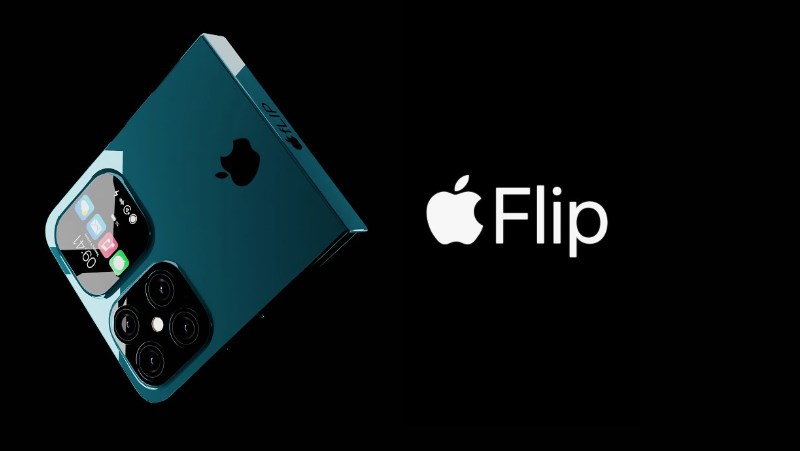
Apple rarely telegraphs hardware intentions directly. Instead, it hides them in software—years before a product ever reaches shelves. That’s why developers and analysts pay such close attention to operating system updates. And iOS 27, based on what’s being observed in early developer frameworks and interface patterns, is starting to look like one of those quiet preparatory steps.
The clearest signal isn’t a “foldable mode” toggle or an explicit mention of flexible displays. Apple doesn’t work that way. Instead, it’s the accumulation of smaller architectural shifts: adaptive UI scaling behaviors, new multitasking persistence rules, and interface elements that behave more like they’re designed for dynamic screen geometries than fixed slabs of glass. Individually, these changes might seem minor. Together, they point toward a future where screen shape is no longer assumed.
A software foundation that no longer assumes a single rectangle
For most of its history, iOS has been built around a simple assumption: every iPhone is a rigid rectangle. Even when Apple introduced larger screens, multiple aspect ratios, and features like Split View on iPad, the underlying philosophy stayed the same. The operating system always knew what shape it was running on.
What’s changing in iOS 27 is more subtle. Interface layouts are increasingly described in relative terms rather than fixed constraints. Instead of anchoring UI components to a single screen geometry, Apple appears to be leaning into fluid layout containers that can reflow depending on available space in real time.
This matters because foldable devices don’t just “change size”—they change shape while in use. A phone transitioning from closed to open state doesn’t simply scale up; it reconfigures. That requires a system that treats screen dimensions as a variable, not a constant. The shift toward more responsive layout logic suggests Apple is preparing for exactly that kind of variability.
Multitasking behavior that feels less like iPhone, more like hybrid devices
Another notable change in iOS 27 is how apps are being encouraged to maintain state across dynamic transitions. Apps are becoming more resilient to sudden changes in screen dimensions, orientation shifts, and window-like behavior. On existing iPhones, this might seem unnecessary. But on a foldable device, it’s essential.
Imagine starting a message on a compact outer screen, then unfolding the device into a larger canvas where the same app expands into a split-view conversation layout. If the system isn’t designed for continuity, that transition feels jarring. If it is, it feels natural.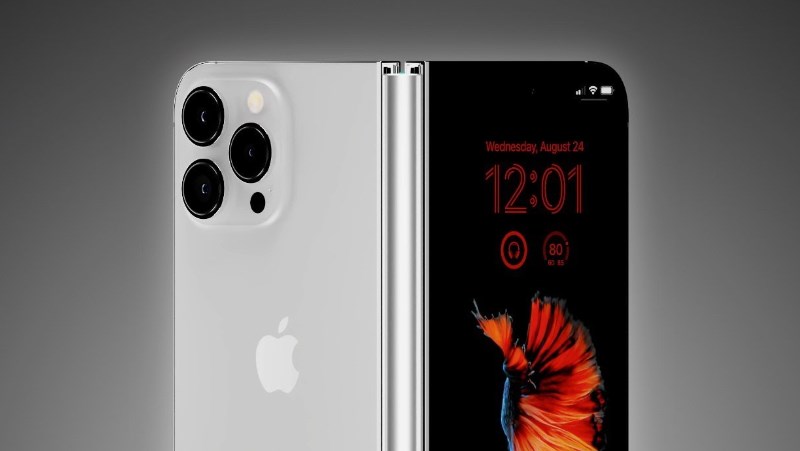
iOS 27 appears to be moving toward that second experience. App continuity frameworks are reportedly more forgiving of intermediate states, meaning apps can “reflow” rather than reload when the display changes. That kind of behavior is not just convenient—it’s foundational for foldable hardware.
Interface scaling that hints at multiple “active personalities” for one device
One of the more intriguing undercurrents in iOS 27 is the idea that a device may not have a single consistent interface personality anymore. Instead of simply scaling icons and text, the system seems to be exploring context-dependent layouts. A home screen might present a denser grid when more space is available, while expanding widget surfaces when additional screen real estate is detected. Control elements subtly shift position based on ergonomic reach zones inferred from device orientation and size. iOS 27 offers the clearest sign that a foldable iPhone is right around the corner
On a traditional phone, this can feel like refinement. On a foldable device, it becomes essential behavior. The operating system must constantly reinterpret itself based on how the hardware is being held and used at any moment. That level of adaptability suggests Apple is preparing for devices where the “correct” interface is not fixed, but situational.
Why iOS changes matter more than rumors
The reason iOS changes are taken seriously in foldable discussions is simple: Apple never builds software features without a hardware intent somewhere in the pipeline. Historically, major iOS shifts have preceded major device categories:
- Multi-touch gestures came before the modern iPhone interface matured
- iPad multitasking features evolved long before professional iPad workflows became mainstream
- Spatial UI frameworks in visionOS were preceded by years of interface experimentation in iOS and macOS
So when iOS begins adapting to unpredictable screen geometry, it raises a familiar question: what hardware requires this?. The answer increasingly points toward foldable or hybrid devices.
The quiet challenge Apple has been waiting to solve
Apple has reportedly delayed entering the foldable market for one main reason: experience consistency. Early foldables from other manufacturers struggled with visible compromises. Apps stretched awkwardly, interfaces broke during transitions, and user experiences felt like two different phones stitched together.
For Apple, that inconsistency is unacceptable. A foldable iPhone wouldn’t just need to work—it would need to feel inevitable. That requires the operating system to absorb the complexity, so users never notice it exists. iOS 27 appears to be laying the groundwork for that invisibility.
The “two-screen problem” is becoming a single continuum
Most current foldable devices still treat their form factor as two states: closed and open. But Apple’s approach, judging by software evolution patterns, seems to be moving toward a continuum instead. Rather than thinking in discrete modes, the system behaves as if screen space is fluid. Apps are not designed for “small” or “large” screens, but for a sliding scale of available canvas.
This matters because it eliminates the most awkward part of foldable UX today: the feeling of switching devices inside a single device. If Apple succeeds, a foldable iPhone wouldn’t feel like two experiences—it would feel like one experience that naturally expands. iOS 27 offers the clearest sign that a foldable iPhone is right around the corner
What this suggests about timing
Software groundwork of this scale is rarely accidental, and it is rarely short-term. When Apple begins reshaping core layout systems and app behavior rules, hardware typically follows within a 12–24 month window. That doesn’t guarantee a foldable iPhone is imminent, but it does suggest that Apple is now actively designing for hardware that cannot be described by a single fixed display size. In practical terms, iOS 27 may represent the “quiet phase” of preparation—where the operating system becomes flexible enough that new form factors can plug into it without breaking everything. iOS 27 offers the clearest sign that a foldable iPhone is right around the corner
The bigger picture: Apple is redefining what a phone is allowed to be
A foldable iPhone, if it arrives, won’t just be a novelty device. It will represent a philosophical shift: the idea that a phone does not need to have a single, permanent shape. Instead, it becomes a transformable interface—one that adapts to context, task, and physical configuration. iOS 27, in that sense, is less about features and more about permission. It’s Apple quietly allowing the operating system to stop assuming stability in hardware geometry. And that is often the moment right before a new category appears.
Conclusion
Nothing in iOS 27 officially confirms a foldable iPhone. Apple hasn’t announced one, hinted at one directly, or even acknowledged the concept in recent public statements. But software rarely lies about direction. When operating systems begin adapting to conditions that don’t yet exist in mainstream hardware, it usually means the hardware is already being built.
If the current trajectory continues, iOS 27 may be remembered not for what it added to the iPhone—but for what it quietly prepared it to become. And that makes the possibility of a foldable iPhone feel less like a distant rumor, and more like an approaching inevitability. iOS 27 offers the clearest sign that a foldable iPhone is right around the corner
About the Author