How HUAWEI allegedly solved the foldable smartphone crease on the Mate X8 – For years, anyone who picked up a foldable smartphone ran into the same visual catch: a visible valley or ridge running down the middle of the inner screen. Even as foldables grew slimmer, lighter, and sturdier, that center crease remained a constant reminder that the display was bending rather than sitting completely flat. How HUAWEI allegedly solved the foldable smartphone crease on the Mate X8
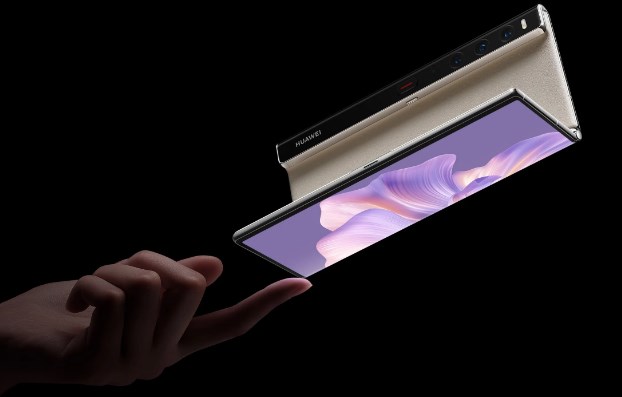
With the launch of the Huawei Mate X8 in China on November 24, 2026, Huawei is making a bold claim about finally taming that flaw. Instead of relying solely on waterdrop hinge geometry or softer display layers, Huawei introduced a magnetic flattening system designed to pull the 8.2-inch inner screen taut when opened—though real-world hands-on footage suggests the story is more nuanced than a magic “crease-free” cure.
How Huawei’s Magnetic Trick Is Supposed to Work
Traditional foldable phones try to hide or soften the crease by changing how the screen folds inward when closed. Huawei’s approach on the Mate X8 focuses on what happens when you open the phone back up.
According to details shared at the launch and leaked presentation slides, Huawei placed ultra-thin magnets along the hinge directly behind the crease zone, paired with an aerospace-grade steel support layer laminated beneath the display. When the Mate X8 unfolds, magnetic attraction between the hinge assembly and the steel backing pulls the panel flatter across the center fold.
Huawei also points to precision manufacturing behind the scenes. Reports indicate the company uses micron-level 3D printing leveling processes and a slim magnetic composite layer—cited around 0.1 mm thick—to keep tension even without adding bulky hardware.
Impressive Numbers on Paper, Skepticism in Real Life
At its unveiling, Huawei put striking numbers behind the new mechanism. The company claimed the Mate X8 reduces inner-screen flatness error by 90%, keeps crease height variation as low as 15 microns, boosts bending stiffness by 140%, and achieves up to 99.9% shape recovery after folding.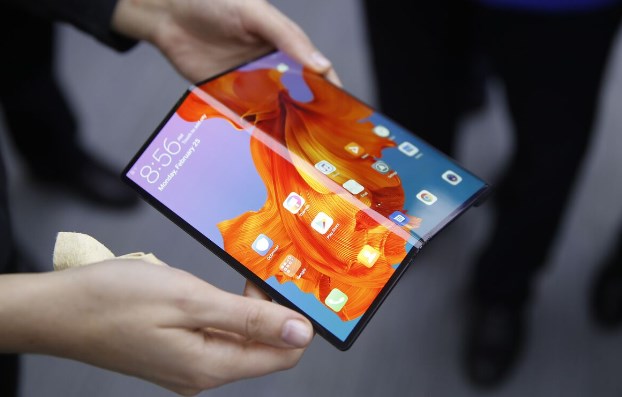
In practical terms, the goal isn’t just making the screen look flatter on day one, but keeping it from getting progressively deeper after thousands of folds. Anyone who has lived with a foldable knows how a faint line can turn into a much more noticeable groove over months of daily use.
Still, calling the Mate X8 completely “creaseless” stretches what early clips show. Short videos and hands-on impressions circulating after the announcement indicate that while the crease looks shallower and more controlled than on earlier models, a subtle crease can still be spotted at certain angles or under reflections. In other words, Huawei appears to have significantly reduced the crease—not erased it from existence.
A Thinner Body and Bigger Battery Alongside the Hinge
The magnetic hinge doesn’t sit in isolation; it is part of a broader hardware push on the Mate X8. Huawei trimmed the frame down to 8.95 mm when folded and just 4.2 mm when unfolded, making it slimmer than the Mate X7 while expanding the main screen from 8 inches to 8.2 inches and the cover screen to 6.54 inches.
Powering the device is Huawei’s Kirin 9050 Pro chip running HarmonyOS 7, paired with a 6,200 mAh battery—the largest battery Huawei has put into a single-fold phone. Both LTPO OLED displays support 1 Hz to 120 Hz adaptive refresh rates and sky-high peak brightness ratings (8,000 nits on the inner screen and 12,000 nits on the cover display), alongside IP58 and IP59 durability ratings and an XMAGE camera system with support for an external modular lens. How HUAWEI allegedly solved the foldable smartphone crease on the Mate X8
Where the Crease Battle Stands Now
Pricing in China starts at 12,999 yuan (roughly $1,950 USD) for the base 12 GB + 256 GB model, with higher-tier and Collector’s Edition configurations climbing past 20,000 yuan and global availability still unannounced. Even if the Mate X8 doesn’t deliver a 100% invisible crease in every lighting condition, using magnets to actively flatten a folding panel is a creative engineering angle. As rival foldable makers race to shrink that center line even further, Huawei’s magnetic hinge shows the industry is still willing to rethink basic mechanics—even when perfection remains just out of reach.
About the Author