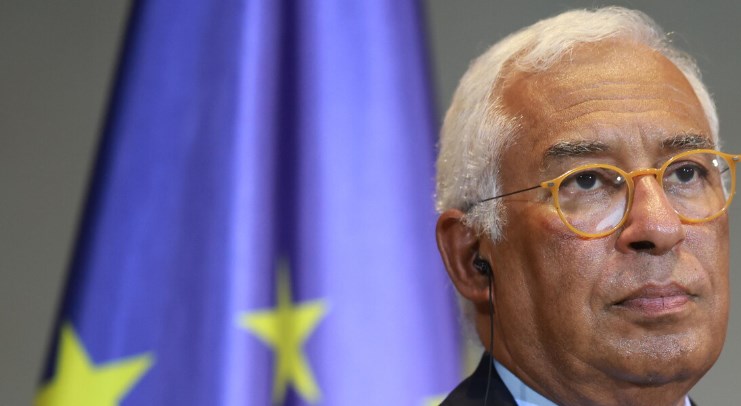
EUCO President Costa wants to cut EU budget by over €200 billion – Negotiations over the European Union’s next seven-year spending plan entered a high-stakes phase on Saturday, November 21, 2026, after European Council President António Costa unveiled a compromise blueprint that trims the European Commission’s original budget proposal by more than €200 billion.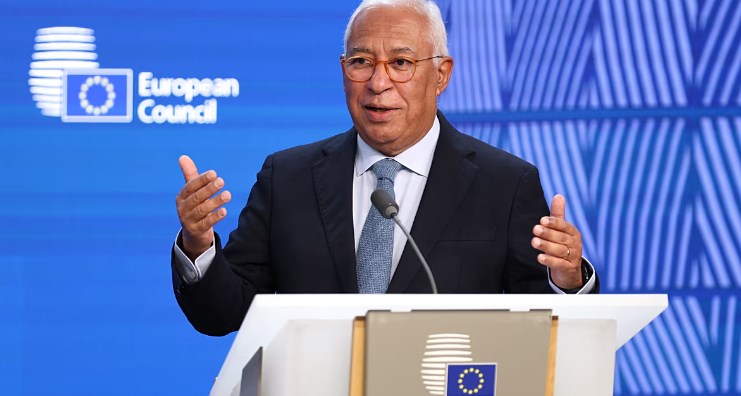
Speaking at a press conference in Brussels ahead of next week’s special summit of the bloc’s 27 national leaders, Costa proposed capping the 2028–2034 Multiannual Financial Framework (MFF) at approximately €1.78 trillion in current prices. According to Council figures reported by The Brussels Times and Kyiv Post, the revised ceiling represents a €204 billion—or roughly 10.2 percent—reduction compared to the European Commission’s initial July 2025 blueprint, and marks a further €44 billion trim from an earlier draft circulated by the Irish presidency in October.
Costa framed the scaled-back package as a realistic middle ground designed to bridge widening divisions between fiscally conservative net-contributing governments and member states determined to protect traditional EU subsidies.
“This is a realistic budget that addresses our new priorities while preserving our established policies, a budget that keeps national contributions within reasonable limits, and that includes a balanced basket of new own resources,” Costa told reporters in Brussels.
Where the Cuts Fall—and What Remains Protected
To bring the overall headline figure down by €204 billion without asking national treasuries to shoulder steep increases in direct contributions, Costa’s negotiating box reshapes several major spending pillars:
-
Competitiveness and Defense: The newly conceived European Competitiveness Fund—which includes allocations for security and defense—faces one of the steepest adjustments. According to Science|Business, Costa reduced the fund to €223 billion, a 19 percent drop from the Commission’s initial pitch.
-
Regional Cohesion Funds: For the first time in the current round of budget talks, regional development spending—known as —was trimmed by €8 billion compared to October’s draft. That move directly tests a coalition of 17 member states, including Poland, Italy, and Spain, which had warned against cutting regional aid just days earlier.
-
Research and Education: While the Horizon Europe research program was spared deeper reductions relative to October’s draft, its €158 billion allocation in current prices remains nearly 10 percent below the Commission’s original €175 billion target. Similarly, the Erasmus+ student exchange budget stands at €39 billion, slightly down from the Commission’s €41 billion proposal.
-
Support for Ukraine and Farming: Despite tightening the overall purse strings, Costa preserved up to €100 billion in long-term financial assistance for Ukraine through a dedicated off-ceiling reserve. He also spared agricultural subsidies from any additional cuts in this latest revision in an effort to ease political resistance from farming-heavy economies.
A New Digital Tax and Fresh Revenue Streams
Because several wealthy member states have refused to increase their direct national payments into Brussels, Costa’s proposal leans heavily on creating new European-level revenue streams—known in EU terminology as .
According to Council documents reviewed by AFP, Costa’s revenue package is projected to raise roughly €60 billion annually and centers on five potential levies. The centerpiece is a 3 percent digital services levy targeting tech giants with more than €750 million in global turnover and at least €50 million in annual EU digital revenue. Rather than taxing corporate profits, the levy would apply to net revenue generated from online advertising, digital intermediation platforms, and user-generated data. EUCO President Costa wants to cut EU budget by over €200 billion
“This tax is in no way directed against any particular company or country,” Costa emphasized during his press conference, aiming to preempt trade friction with Washington over the impact on major American technology firms. Alongside the digital levy, the Council’s revenue basket includes charges on uncollected electronic waste, higher tobacco duties, and exploratory taxes on crypto-assets and radio spectrum auctions.
Pushback From Every Direction
Rather than immediately uniting the bloc, Costa’s Saturday compromise drew sharp criticism from both sides of Europe’s fiscal divide as well as from the European Parliament—underscoring just how difficult it will be to reach his goal of a final political deal by December 2026.
From the frugal camp, governments argued that trimming €204 billion off the Commission’s initial expansionary pitch still leaves the overall budget far too bloated. Writing on the social media platform X, Swedish European Affairs Minister Jessica Rosencrantz stated bluntly that negotiators remain “a long way from a compromise,” adding that the proposed budget “is still too large”. EUCO President Costa wants to cut EU budget by over €200 billion
Conversely, major beneficiaries of agricultural and regional spending warned that the cuts go too far. The French presidency issued a statement calling Costa’s blueprint “deeply disappointing,” arguing that even without new cuts in Saturday’s text, the framework still fails to provide adequate income protection for European farmers.
Meanwhile, lawmakers in the European Parliament—whose consent by an absolute majority is legally required before any seven-year budget can take effect—rejected the proposal outright. Siegfried Mureșan, the budget negotiator for the center-right European People’s Party, warned that Costa’s trimmed-down plan “is unacceptable to the European Parliament and cannot form the basis for our consent”.
The Road to the December Summit
With EU leaders scheduled to gather in Brussels next week for dedicated talks on the 2028–2034 framework, Costa’s €1.78 trillion proposal now serves as the formal baseline for the endgame. Balancing the competing demands of frugal northern capitals, agricultural and cohesion-dependent states, and an assertive European Parliament will test the Portuguese leader’s consensus-building skills over the coming weeks. Whether his €204 billion trim becomes the foundation for a December breakthrough or simply the opening salvo in months of prolonged deadlock remains the central question hanging over Brussels. EUCO President Costa wants to cut EU budget by over €200 billion
About the Author