British minister does not rule out EU membership – For years after the United Kingdom formally left the European Union, the prospect of reversing Brexit remained an unspoken taboo across Westminster’s front benches. On Saturday, November 21, 2026, that political orthodoxy shifted markedly when Foreign Secretary Ed Miliband stated publicly that “all options will be on the table”—explicitly including full EU membership—as Britain begins a new phase of long-term discussions with Brussels.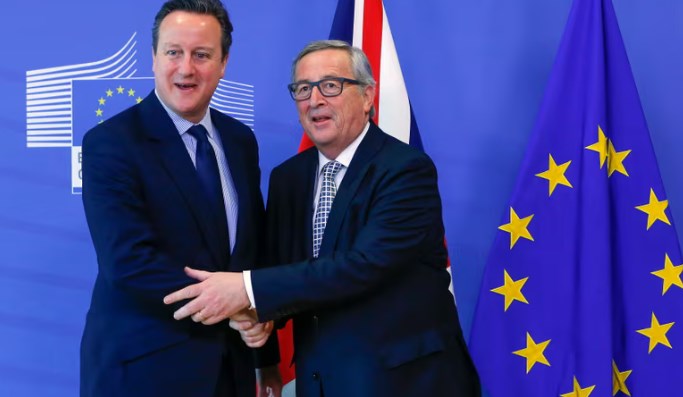
Miliband’s remarks came during broadcast interviews following a landmark UK-EU summit in Brussels, where Prime Minister Andy Burnham and European Commission President Ursula von der Leyen sealed a trio of bilateral agreements covering trade, agricultural standards, and youth mobility. While Downing Street insists that existing manifesto red lines will remain intact for the duration of the current Parliament, the Foreign Secretary’s comments signal that the government is preparing the ground for a far broader national conversation ahead of the next general election. British minister does not rule out EU membership
“The World Has Changed Massively”
Speaking to broadcasters on Saturday morning, Miliband acknowledged the outcome of the 2016 referendum while arguing that a decade of global economic and geopolitical upheaval requires Britain to take a fresh, pragmatic look at its place in Europe.
“All options will be on the table,” Miliband said when pressed on whether rejoining the bloc could form part of upcoming exploratory discussions. “Europe is changing too, so we’ve got to look at what that means. It’s not about this Parliament—we’re respecting the red lines in this Parliament.”
The Foreign Secretary’s distinction between immediate parliamentary commitments and longer-term possibilities mirrors the careful balancing act pursued by Prime Minister Andy Burnham. Under the Labour Party’s 2024 general election manifesto, ministers pledged not to seek a return to the European single market, the customs union, or freedom of movement. However, following Friday’s summit in the Belgian capital, Burnham confirmed that London and Brussels will spend the coming year conducting informal “brainstorming” sessions to map out what a deeper, post-election partnership could look like.
What Was Agreed in Brussels—and Where Friction Remains
Before looking toward the next electoral cycle, the UK government is focused on implementing the immediate reset packages signed at the Brussels summit. According to UK government estimates, Friday’s agreements are projected to add 0.5 percent to Britain’s gross domestic product—roughly a £17 billion annual economic boost—by 2040.
Key pillars of the newly struck summit deal include:
-
Agri-Food and Border Friction: New sanitary and phytosanitary arrangements aimed at reducing border checks, paperwork, and export costs for British farmers and food producers. Environment Secretary Angela Eagle described the agreement as a “win-win” that will reopen European markets and dissolve longstanding trade bottlenecks.
-
Youth Mobility Scheme: A reciprocal framework allowing young citizens from the UK and EU member states to live, work, and study across borders under a negotiated cap of 100,000 participants, with the first cohorts scheduled to travel no later than January 2030.
-
Strategic Brainstorming: A structured year-long dialogue between British ministers and European Commission officials to evaluate future institutional ties without immediately breaching current manifesto limits.
Despite the warm diplomatic tone in Brussels—where von der Leyen told reporters the European Commission welcomes the brainstorming process—significant hurdles remain. EU negotiators have warned that parts of the wider package could face delays within six months unless London agrees to lower university tuition fees for European students to match domestic undergraduate rates. UK higher education leaders have cautioned that such a concession could cost British universities around £500 million a year without additional Treasury funding, though Miliband insisted on Saturday that Friday’s core trade and mobility deals are not conditional on resolving the tuition dispute.
Pressure From Inside Labour and Political Pushback
Miliband’s refusal to rule out EU membership comes amid intensifying pressure from senior figures within the Labour movement—as well as shifting public sentiment. Earlier in the week, former business secretary Peter Kyle and former foreign secretary David Lammy publicly urged Burnham to campaign at the next general election on an explicit pledge to rejoin the European Union, with Lammy writing in The Times that closer incremental ties can never match the economic weight of full membership. Former chancellor Rachel Reeves has similarly voiced support for Britain eventually returning to the bloc.
Opinion polling throughout 2026 has consistently shown a majority of British voters favoring closer ties or full re-accession, creating an opening that allies of the Prime Minister believe could reshape the next election campaign. Opposition leaders, however, wasted no time accusing the government of preparing to overturn the 2016 referendum result by stealth. Reform UK leader Nigel Farage condemned the prospect of Britain accepting new European regulations and oversight from the European Court of Justice, branding the move “a complete breach of the Labour manifesto” and “a total betrayal” of voters. Conservative leader Kemi Badenoch has likewise maintained that Britain’s economic future lies outside EU institutions. British minister does not rule out EU membership
A New Chapter in Britain’s European Debate
By keeping full membership on the table for future discussions while honoring existing red lines until voters next go to the polls, Ed Miliband and Andy Burnham have opened a consequential new chapter in British politics. Over the next twelve months, as British and European officials quietly explore the legal, economic, and political realities of deeper integration, the question of whether Britain’s future lies back inside the European Union is set to move from the political margins back to the center of national life. British minister does not rule out EU membership
About the Author