A timeline of the bromance between President Trump and Jensen Huang
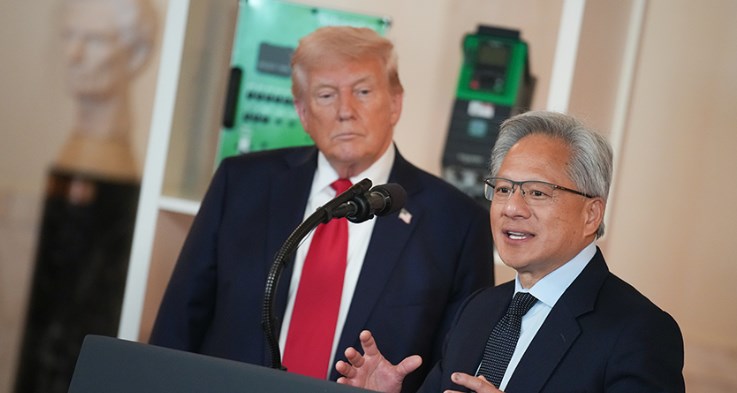
Over less than two years, their relationship evolved from polite White House introductions into high-stakes policy dealmaking, shared diplomatic trips, and a dramatic rescue mission that sent shockwaves through Wall Street.
2025: High-Stakes Deals and Chip Diplomacy
When Donald Trump returned to the White House in January 2025, artificial intelligence and semiconductor export controls were already front and center. Rather than viewing Huang solely as an adversary over China trade rules, Trump quickly pulled the Nvidia founder into his orbit.
-
January 31, 2025 — First White House Meeting: Weeks after Trump took office, he met Huang at the White House for the first time. Trump described the sit-down as a good meeting, setting the stage for frequent access between the administration and one of Silicon Valley’s most powerful executives.
-
April 2025 — Mar-a-Lago Dinner and Tariff Pause: Huang attended a high-dollar donor dinner at Mar-a-Lago. Around that period, Trump briefly paused new restrictions on Nvidia AI chip sales to China before moving ahead with controls shortly afterward—an early sign of how closely chip policy and personal access were intertwined.
-
Summer 2025 — Summits and Public Praise: Huang returned to the White House in July ahead of a trip to China, and Trump gave him a public shout-out while speaking and signing executive orders at an AI summit. Talks over advanced chip sales to China continued into August.
-
September 2025 — State Visit to Britain: Huang joined Trump during a state visit to the United Kingdom, underscoring how the Nvidia leader had become a regular fixture alongside the president on international trips.
-
Fall 2025 — Intelligence Briefings and Regulatory Pushback: Reports later emerged that U.S. intelligence officials briefed Trump in the fall of 2025 about Huang’s extramarital relationship with Alice Huang, a woman alleged to have ties to Chinese intelligence—a briefing Trump did not act on at the time and later said he did not remember. Meanwhile, Huang lobbied lawmakers in Washington against state-by-state AI rules that he argued would slow American progress.
-
December 2025 — The H200 Chip Shift: Trump announced a major policy pivot allowing Nvidia to sell advanced H200 AI chips to China in exchange for a cut of the sales going to the U.S. government. It was a striking example of transactional dealmaking that favored keeping American hardware in global markets.
Early to Mid-2026: Advisory Roles and Air Force One
By 2026, the alliance moved from policy debates into formal advisory circles and shared travel. Trump treated Huang less like a routine industry guest and more like a trusted confidant on technology and global competition.
-
January 2026 — Selective Exports Continue: The administration moved forward with selective AI chip exports to China amid ongoing debates in Washington over national security versus commercial dominance.
-
March 2026 — Presidential Science Council: In late March, the White House named Huang to the President’s Council of Advisors on Science and Technology, giving him a formal platform to shape federal thinking on AI and innovation.
-
May 2026 — Boarding Air Force One: In a last-minute addition to Trump’s trip to China, Huang boarded Air Force One during a refueling stop in Alaska on the way to Beijing. Few tech executives have traveled so visibly alongside a sitting president into geopolitical hotspots.
-
September 2026 — Speakerphone at an AI Summit: During an AI safety event in Los Angeles, Huang answered a phone call from Trump and put him on speaker for the crowd. During the roughly five-minute call, Trump dismissed AI safety alarms as a “hoax,” showcasing their easy, informal rapport in front of a live audience.
November 2026: Scandal, Resignation, and a Boardroom Rescue
Everything changed in November 2026 when Huang’s personal life and alleged ties involving Alice Huang and her data-center firm, Megaspeed, collided with federal scrutiny and market turmoil. What followed tested the limits of presidential loyalty.
-
November 8, 2026 — Public Admission: Huang wrote to employees admitting to an extramarital affair, apologizing to his family, and pledging his commitment to Nvidia while the board launched a review.
-
November 9–11, 2026 — Trump Vows Support: At a White House press conference, Trump said he had asked Huang directly if he knew the woman was a spy, believed his denial, and predicted Huang would be “in good shape” despite an FBI inquiry. Days later, Trump spoke with Huang by phone, urged him to fight for his job, and said on a podcast that Huang was “going through hell”.
-
Resignation and Market Slide: Amid intense pressure and investigations into alleged chip-routing schemes, Huang stepped down as CEO, and Nvidia’s market value tumbled—dragging broader tech stocks down with it. Initially, Nvidia’s board signaled it would not bring him back and began searching for a successor.
-
Mid-to-Late November 2026 — Pressing for a Second Chance: Trump publicly called for Huang to get a second chance, calling him one of the world’s most brilliant minds and even noting that Chinese President Xi Jinping had praised Huang’s brilliance during their APEC meeting in Shenzhen. Privately, Trump spoke with Wall Street and Silicon Valley figures out of concern that a weakened Nvidia would hurt the broader U.S. economy.
-
November 22–23, 2026 — The Phone Call That Changed the Vote: Over the weekend, Trump personally dialed into an Nvidia board meeting to push for Huang’s reinstatement, assuring leadership that the U.S. government did not view his return as a national security risk. By Monday morning, November 23, the board reversed course and reinstated Huang as president and CEO—triggering a massive surge in Nvidia shares while sparking fierce pushback from congressional Democrats. A timeline of the bromance between President Trump and Jensen Huang
Why Their Bond Matters
The bromance between Donald Trump and Jensen Huang captures a defining feature of the AI era: big tech and high-stakes statecraft are no longer separate spheres. For Trump, Huang represented American technological supremacy and a key player in global dealmaking. 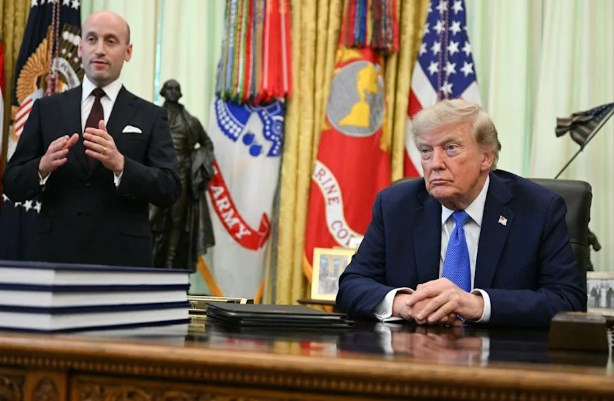 For Huang, Trump proved to be a fierce political shield who backed him publicly and intervened directly when his career—and his company’s trajectory—hung in the balance. Even with congressional hearings and federal probes still unfolding, their partnership has already left an unmistakable mark on both Silicon Valley and Washington. A timeline of the bromance between President Trump and Jensen Huang
About the Author