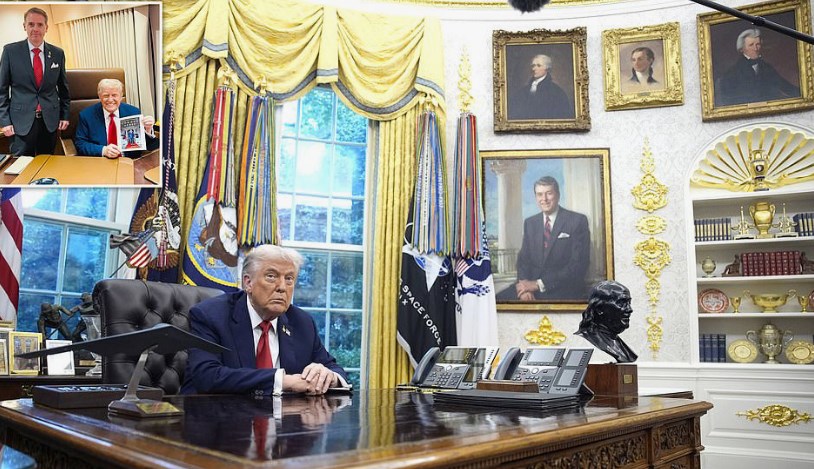
Trump declares Oval Office, Cabinet Room a national monument – President Donald Trump has taken another unusual step in reshaping the White House, signing a proclamation that designates the Oval Office, the Cabinet Room, and the surrounding Outer Oval Office as a national monument. The announcement, made on November 5, 2026, comes just days after Republicans suffered significant losses in the midterm elections, putting the administration under renewed political pressure.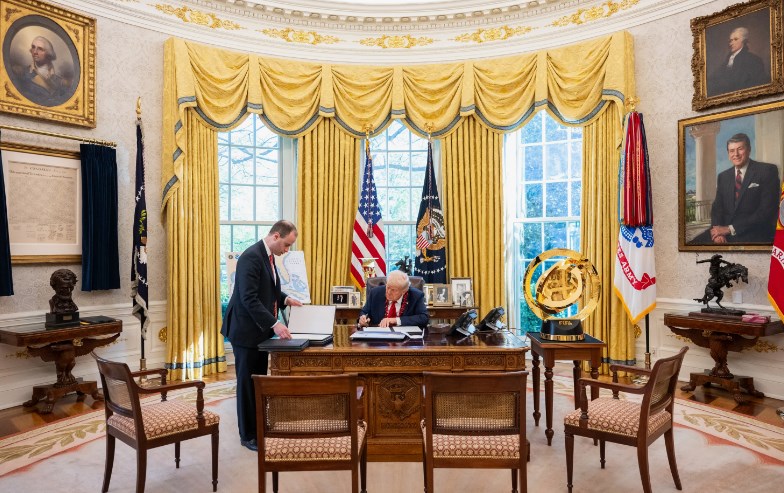
Trump described the decision as an effort to protect some of the most recognizable spaces in American government from major changes by future presidents. During the signing ceremony, he said the rooms should be preserved rather than demolished or dramatically redesigned by someone who might eventually occupy the White House.
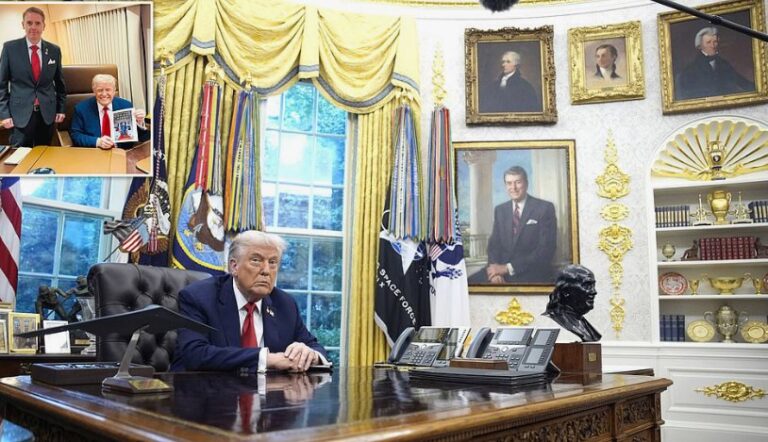
The move has attracted attention because Trump has already introduced extensive decorative changes to the presidential residence during his second term. From gold-colored decorations inside the Oval Office to major construction projects on the White House grounds, his renovation plans have become a regular subject of political debate.
While the president says the new designation will help preserve the building’s history, questions remain about how much legal protection the proclamation actually provides and whether a future administration could reverse it.
Trump Signs Proclamation to Protect the Oval Office
Trump signed the proclamation on Thursday, November 5, establishing what the White House calls the Oval Office National Monument. The designation covers three important areas: the Oval Office itself, the Outer Oval Office, and the Cabinet Room, where the president regularly meets with senior advisers and administration officials. The proclamation directs the Department of the Interior, working through the National Park Service, to develop a management plan focused on preserving the rooms’ historic character and architectural features.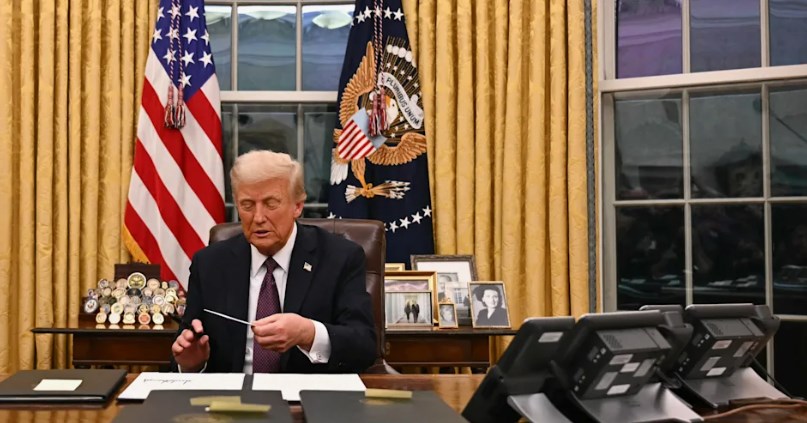
Under the new arrangement, any proposed action that would substantially alter or demolish the protected spaces must undergo documentation and review. Officials are also required to consider alternatives before approving major changes that could affect the rooms’ historic significance.
Trump argued that the designation would prevent future administrations from making dramatic structural changes. During the announcement, he described the Oval Office as an important symbol of the American presidency and said he wanted to ensure that it remained recognizable for generations.
He also suggested that turning the Oval Office into a completely different shape would require congressional approval. However, that specific requirement does not appear in the final proclamation, leaving questions about how much authority the document actually gives Congress over future renovations.
Why Trump Wants to Preserve the Oval Office
The Oval Office has played an important role in American political history for generations. It serves as the president’s principal working office and has been the setting for major announcements, diplomatic meetings, national security discussions, and decisions affecting millions of people.
Its distinctive design dates back to the early twentieth century. President William Howard Taft introduced the oval-shaped office in the West Wing in 1909, while President Franklin D. Roosevelt established its present location and general arrangement during renovations in the 1930s. Trump declares Oval Office
Over the decades, different presidents have changed the room’s appearance to reflect their personal preferences. Furniture, artwork, carpets, curtains, and other decorations have regularly been replaced as administrations have come and gone.
Trump’s approach has been particularly noticeable. Since returning to office in January 2025, he has introduced numerous gold-colored decorative elements, additional portraits, elaborate frames, and other personal touches. He has also displayed a copy of the Declaration of Independence and expanded the number of decorative objects throughout the room. These changes have made the Oval Office look noticeably different from the more restrained appearances associated with some previous presidents.
Trump has defended the renovations as improvements intended to make the White House more beautiful and historically significant. The national monument proclamation appears to extend that preservation argument by giving the rooms a specific designation under federal law.
What the National Monument Designation Actually Means
The proclamation uses the Antiquities Act, a federal law that allows presidents to designate certain historic landmarks and structures on federally controlled property as national monuments. Under this authority, Trump established the Oval Office National Monument and directed the Interior Department to oversee its preservation. The designation is intended to protect the rooms’ architectural integrity and historical importance. It also establishes procedures for reviewing substantial structural changes before they take place.
However, the proclamation does not mean that the rooms can never be changed again. Its language specifically allows the president to redecorate, select furnishings, and make ordinary operational or security modifications, provided those changes do not substantially damage the historic structure or architectural character.
This distinction is important because presidential offices have traditionally undergone decorative changes whenever a new administration takes over. The White House and its grounds already have National Historic Landmark status. Trump’s proclamation argues that the Oval Office deserves additional recognition because of its unique connection to the presidency and the major decisions made inside its walls.
Nevertheless, the practical legal effect of the new designation remains uncertain. The proclamation does not eliminate existing congressional authority over federal property, and it does not remove the White House’s existing statutory exemptions under the National Historic Preservation Act. Trump declares Oval Office
Trump’s White House Renovations Continue to Attract Attention
The monument announcement comes amid a wider renovation effort that has transformed several parts of the White House during Trump’s second presidency. One of the most significant projects involves the construction of a massive White House ballroom. The project required the demolition of the historic East Wing, a decision that generated criticism from preservation advocates and Democratic lawmakers.
Trump has defended the ballroom as a necessary addition that will provide more space for major official events, diplomatic gatherings, and state functions. The administration has argued that the project will expand the White House’s hosting capacity for future presidents.
Other changes have included paving over the Rose Garden’s lawn, installing new flagpoles, adding decorative features, and making improvements to various outdoor areas. Trump has also promoted plans for a large triumphal arch near Arlington National Cemetery. The proposed structure has generated debate over its design, cost, location, and historical significance.
Supporters of the president’s renovation efforts argue that the White House should remain well maintained and capable of hosting major national and international events. Critics, however, question whether the administration has given sufficient consideration to preserving historically important parts of the property.
The new national monument proclamation adds another dimension to that debate because it attempts to protect specific rooms while Trump continues overseeing substantial changes elsewhere on the grounds.
Can Future Presidents Reverse Trump’s Decision?
One of the biggest questions surrounding the announcement is whether a future president could undo the national monument designation. Legal experts have questioned how much long-term protection the proclamation can provide. The Washington Post reported that the legal force of the measure is unclear and that a future president could potentially reverse it through another presidential action.
There is also an interesting historical complication. Trump himself has previously changed national monument boundaries established by earlier presidents, demonstrating that such designations can become subjects of political and legal disputes. The new proclamation also leaves considerable room for ordinary decorative changes. This means a future president could potentially replace furniture, artwork, and other furnishings without necessarily violating its preservation requirements.
The document does require greater consideration before substantial structural changes are made, but it does not establish an absolute prohibition against future modifications. Trump acknowledged that future presidents might still make certain changes. When asked about his gold decorations, he indicated that another president could remove them, provided the work was handled carefully. That explanation highlights the difference between preserving the historic structure of the Oval Office and protecting every decorative choice made by the current president.
A Political Announcement After Republican Midterm Losses
The timing of Trump’s announcement has also attracted attention. The proclamation was signed shortly after Republicans suffered major losses in the November 2026 midterm elections, giving Democrats control of Congress.
Rather than focusing entirely on the election results, Trump spent much of the following days discussing construction and beautification projects in Washington.
The monument signing was part of a series of public appearances centered on his White House renovation plans. His activities included discussing the ballroom construction and highlighting improvements to historic sites around the nation’s capital.
Democrats have indicated that they intend to increase scrutiny of the administration’s decisions once they assume greater congressional power. White House construction projects, spending decisions, and questions involving historical preservation could become subjects of additional oversight.
The political environment makes Trump’s latest announcement particularly notable. His administration is attempting to establish a lasting legacy through changes to the White House, while opponents are questioning the priorities and legal procedures behind several of those projects. Trump declares Oval Office
What Trump’s National Monument Decision Means for the White House
Trump’s decision to designate the Oval Office, Outer Oval Office, and Cabinet Room as a national monument represents another unusual chapter in the history of the presidential residence. The proclamation creates a framework for reviewing major structural changes and emphasizes the importance of preserving spaces associated with the American presidency. At the same time, its exceptions and uncertain long-term legal effect mean it cannot guarantee that every aspect of Trump’s redesign will remain untouched. Trump declares Oval Office
For now, the Interior Department and National Park Service are responsible for developing the preservation plan required by the proclamation Whether the designation ultimately provides lasting protection or becomes another political dispute between successive administrations remains to be seen.
What is clear is that Trump wants his influence on the White House to extend beyond his time in office. By giving the Oval Office and Cabinet Room a specific national monument designation, he is attempting to place his renovation decisions within a broader conversation about American history, presidential traditions, and the future of one of the country’s most recognizable buildings.
About the Author