Rural Data Centers Are in for a Big Federal Tax Breakin

Rural Data Centers Are in for a Big Federal Tax Breakin – America’s data center industry has spent years racing toward major cities, technology hubs, and places with abundant power and fiber connections. But that pattern may be changing. A new federal tax incentive aimed at rural data centers could make smaller communities far more attractive to companies looking to build the massive facilities that power cloud computing, artificial intelligence, streaming, and countless online services.
At first glance, the idea might sound like another tax break for a booming technology industry. But the bigger story is where these facilities could be built and what they could mean for communities that have traditionally been left outside the technology investment boom. Rural America has plenty of challenges when it comes to attracting large employers. Population density is lower, infrastructure can be limited, and many communities have struggled to replace traditional industries. Data centers will not solve all of those problems, but federal incentives could make rural locations considerably more competitive.
Why Rural America Is Suddenly Attractive to Data Centers
The explosion of artificial intelligence has changed the economics of data center development. AI systems require enormous computing power, and that computing power needs specialized facilities capable of handling huge amounts of electricity, cooling, networking equipment, and servers. That demand is putting pressure on established data center markets. Areas around Northern Virginia, Dallas, Phoenix, Atlanta, and other major technology corridors have attracted billions of dollars in investment. Yet those regions are also facing problems that make additional development increasingly difficult.
Electricity availability is one of the biggest issues. A modern AI-focused data center can consume extraordinary amounts of power, and utilities sometimes struggle to connect new projects quickly enough. Land prices can also become expensive in popular markets. Local opposition, water concerns, transmission constraints, and permitting challenges add another layer of difficulty.
Rural communities can offer a different equation. There may be large parcels of relatively inexpensive land, fewer competing developments, and opportunities to build closer to new power-generation projects. If federal tax incentives reduce the cost of construction, the financial case for choosing a rural location becomes even stronger. The result could be a significant shift in where America’s digital infrastructure is built.
What the Federal Tax Break Could Change
The proposed or newly available federal incentives are important because data center construction is extraordinarily capital intensive. A single large facility can require hundreds of millions or even billions of dollars before it becomes operational. Tax incentives can change the calculation by lowering the effective cost of investment. For developers, that can turn a location that previously looked marginal into one that makes financial sense. The basic concept is relatively straightforward: encourage investment in areas that might otherwise struggle to attract major technology projects. Instead of concentrating data centers in the country’s traditional technology centers, policymakers want to encourage companies to bring some of that investment into rural areas.
For communities, the potential benefits extend beyond the facility itself. Construction projects can generate temporary employment for contractors, electricians, engineers, equipment operators, and other workers. Once a facility opens, it requires technicians, security personnel, maintenance workers, network specialists, and other support staff. There is also the possibility of indirect economic activity. Restaurants, hotels, construction suppliers, transportation companies, and local service businesses can benefit when a major project arrives.
Still, communities should be realistic. Data centers are highly automated compared with factories, so a billion-dollar facility does not necessarily create thousands of permanent jobs. The economic impact depends heavily on the project’s size, local supply chains, wages, and how much infrastructure investment stays within the community.
The AI Boom Is Driving the Rush
Artificial intelligence is perhaps the biggest reason the data center market has become so aggressive. Training and running advanced AI models requires enormous computing resources. Companies developing AI products are building increasingly sophisticated networks of graphics processors, specialized accelerators, storage systems, and high-speed networking equipment. All of that hardware needs a physical home.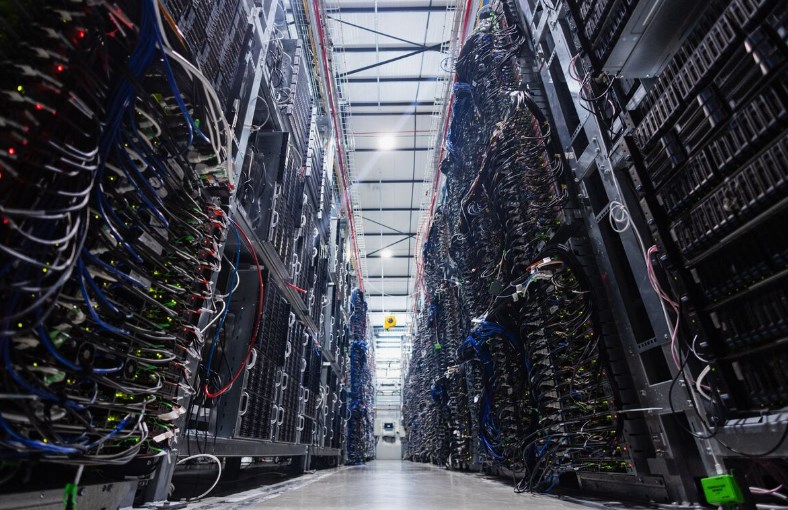
Cloud providers and technology companies are therefore looking for locations where they can secure reliable electricity, fiber connectivity, land, and favorable regulatory conditions. Rural areas could become increasingly appealing if they can offer those fundamentals at a lower cost.
This could be particularly important as AI demand expands beyond experimental applications. Businesses are beginning to use AI for customer service, software development, logistics, healthcare administration, financial analysis, manufacturing, and countless other tasks. The infrastructure supporting those applications has to expand accordingly. That means the data center boom may not be a short-lived phenomenon. If AI computing demand continues to grow, developers could need new facilities for years to come.
Rural Communities Could See Real Benefits — and Real Costs
For a rural town, landing a major data center project can sound like winning the economic-development lottery. The investment can bring construction activity, property-tax revenue, infrastructure upgrades, and new business opportunities. But large data centers can also create difficult local questions. Electricity is the biggest concern. A facility may require as much power as a small town, meaning utilities could need to build new substations, transmission lines, or generation capacity. Communities must determine who ultimately pays for that infrastructure.
Water can also become an issue, particularly for facilities using water-intensive cooling systems. In areas already dealing with drought or limited water supplies, residents may question whether a technology project should receive access to scarce resources. There are also concerns about noise, land use, backup generators, and the visual impact of enormous industrial buildings. That is why tax incentives alone should not determine whether a project moves forward. Local governments will still need to negotiate agreements that protect residents while ensuring developers have a reasonable path to construction.
A New Opportunity for Infrastructure Investment
One of the most interesting effects of rural data center incentives could be improved infrastructure. Data centers cannot operate without reliable electricity and high-speed communications networks. If a developer builds in a rural area, it may become economically worthwhile to expand fiber networks, upgrade substations, improve roads, or strengthen regional power infrastructure.
Those improvements can benefit other businesses and residents. A community that previously had limited broadband access, for example, could eventually find itself sitting near a major fiber corridor because a data center project helped justify the investment. The same principle applies to electricity. A project that requires significant new generation or transmission capacity could accelerate improvements that support other industries. The key question is whether those benefits are deliberately shared with the surrounding community or simply treated as incidental byproducts.
The Tax Break Is Not a Guarantee of Success
There is a temptation to assume that offering a federal tax break automatically means rural America will experience a data center boom. It probably will not be that simple. Developers still need access to power, fiber, land, skilled workers, and transportation infrastructure. A tax incentive cannot overcome every physical limitation. Location also matters for network performance. Data centers serving certain applications may need to be relatively close to major population centers to reduce latency. Others can operate farther away without significant problems.
Local regulations and community attitudes will matter as well. A project facing years of permitting disputes may not be attractive even with a substantial tax advantage. In other words, the incentive can improve the economics of rural development, but it cannot eliminate the fundamentals of the data center business.
What Comes Next for Rural Data Centers
The biggest question is whether this federal incentive becomes the beginning of a broader transformation in digital infrastructure. If developers discover that rural locations can provide cheaper land, available power, favorable tax treatment, and reliable connectivity, more projects could follow. That could create a new class of technology-oriented communities far beyond the traditional Silicon Valley-style centers.
For rural America, the opportunity is significant. Data centers could bring investment to places that have struggled to attract large employers, while helping the country build the computing infrastructure needed for the next generation of digital services.
But the best outcomes will require careful planning. Communities should negotiate for infrastructure improvements, local employment opportunities, responsible water and energy use, and fair contributions from developers. The federal tax break may open the door, but local decisions will determine what happens after companies walk through it.
America’s digital future is becoming increasingly dependent on physical infrastructure. Behind every AI chatbot, cloud application, streaming service, and online platform is a building full of servers consuming enormous amounts of electricity. For years, those buildings were concentrated in a relatively small number of locations. With new federal incentives putting rural communities into the conversation, that could start to change.
The next major data center boom may not happen only around America’s biggest cities. Some of it could happen in places where the landscape is dominated by farmland, small towns, and open space. And for rural America, that could turn the country’s growing appetite for computing power into a surprisingly important economic opportunity.
About the Author