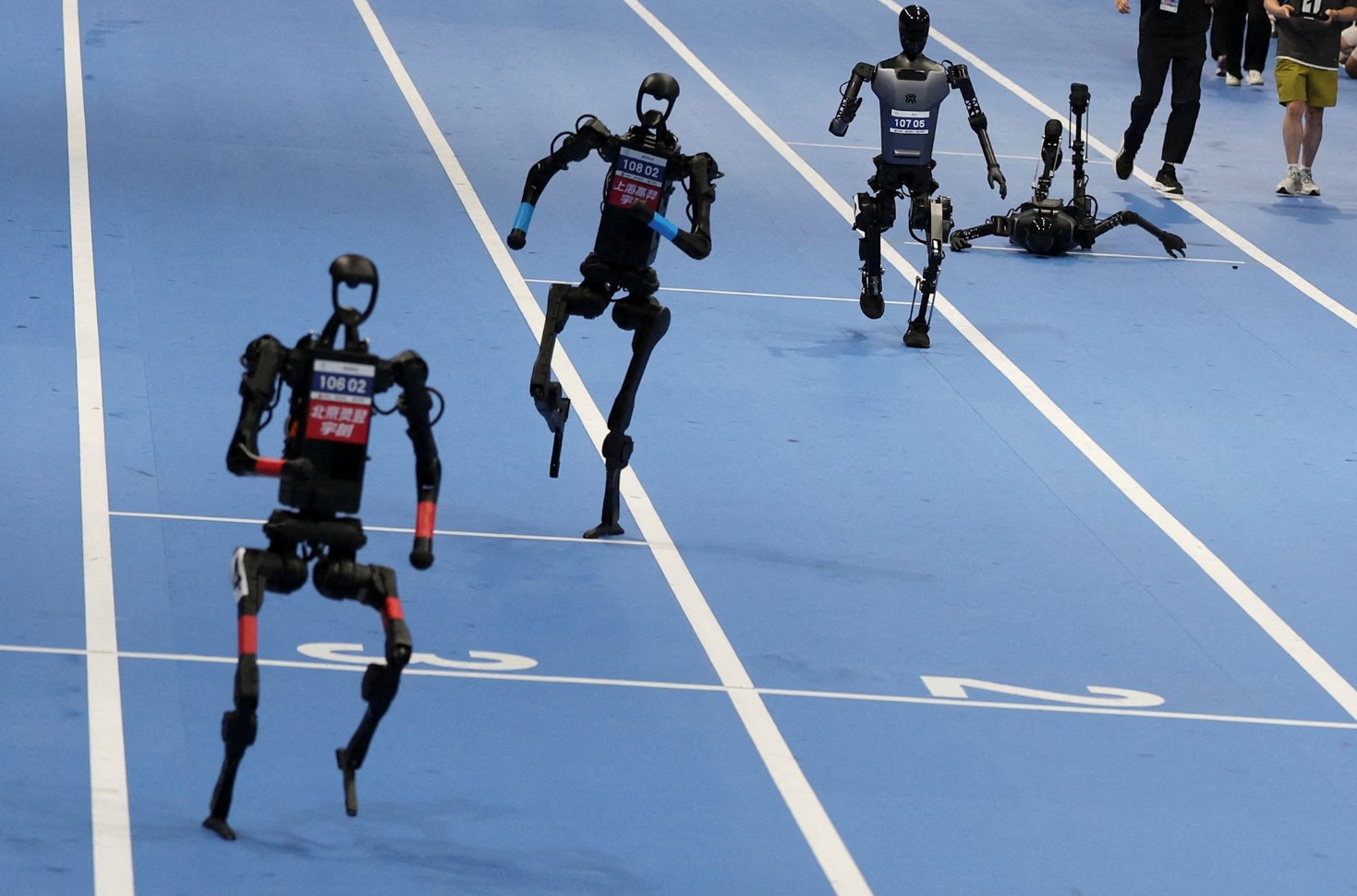
Although the humanoids at China’s Robot Games raced faster that Usain Bolt, their mastery of the tweezer surprised me more. – This year’s new events were intended to challenge the robots’ minds as much as their bodies, yet some of them would be too easy for human athletes. These included carefully placing a piece of trash in a trash can inside a pretend bedroom and plugging cables into outlets.
According to Tellex, it is far harder to teach robots to operate items in a more complicated environment than it is to teach them to run or jump through the air. Some US startups are attempting to use more sophisticated AI to achieve the robotics holy grail of advanced manipulation.
Robots find it challenging to do fiddly finger skills because they include a lot of unpredictable factors, such as friction and slippage. Humans have a highly developed sense of touch, a natural grasp of physics, and the capacity to quickly adjust at the microscopic level. Automated systems? Not very much.
According to Tellex, “it’s an example of Moravec’s paradox.” “Where things that appear more impressive than plugging in a cable, like backflips, are actually simpler than doing so.”
One important warning about the event is that several pictures and videos appear to show people controlling some of the robots from a distance, implying that the bots are unable to do so on their own. Nevertheless, it is quite remarkable that robot hands are now skilled enough to use tools to grip small items, even when controlled by a person.
On the second day of the 2025 World Humanoid Robot Games at the National Speed Skating Oval, a humanoid robot competes in the hotel scenario cleaning service event.
The games’ whole agenda included activities like “block building” and “tweezer bean picking” that were intended to assess physical dexterity. These jobs, like running wiring through an automobile’s chassis or assembling electronics, appear to mirror China’s ambition to automate work in factories and warehouses.
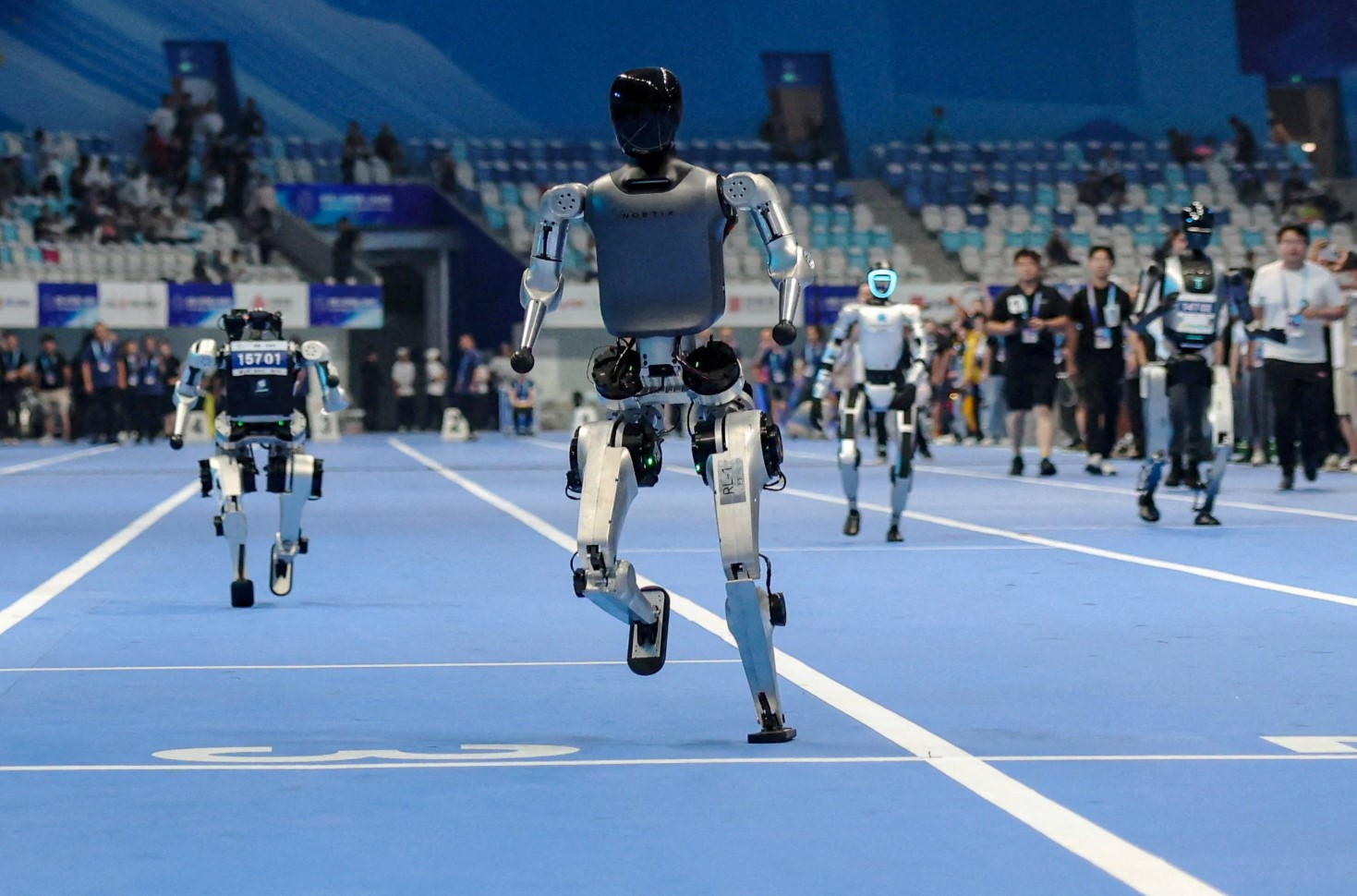
A Supermarket Scenario Competition, which involves stocking shelves in a retail store, was one of the events in which a business named Galbot participated. They are viewed by the corporation as a means of advancing commercial skills. “Galbot will continue to advance humanoid robot capabilities by taking on increasingly challenging scenarios,” a business official, Yvonne Yuan, informed me via email. “Transitioning from controlled settings to more unpredictable, open real-world applications where robots must comprehend, adapt, and work with humans.”
About the Author