“A single generation away’: Why in the world hasn’t the USMNT established itself as a World Cup power? – When Janusz Michallik, a teenager from Poland, immigrated to the US in the 1980s, he found a country that favored indoor soccer. Within months of his arrival, the only significant professional outdoor league had vanished. It had been over thirty years since the US national team had visited the FIFA World Cup. The world his family had left behind was quite different from this one.
Over the course of six years, he played for four different indoor teams, including a Louisville team that won a league championship before folding nearly instantly. In order to prepare for a home World Cup in 1994, he accepted an invitation to play just for the U.S. men’s national team shortly after gaining citizenship. The players jogged on the neighboring Pacific beach since the California facility intended for them wasn’t completed when training started.
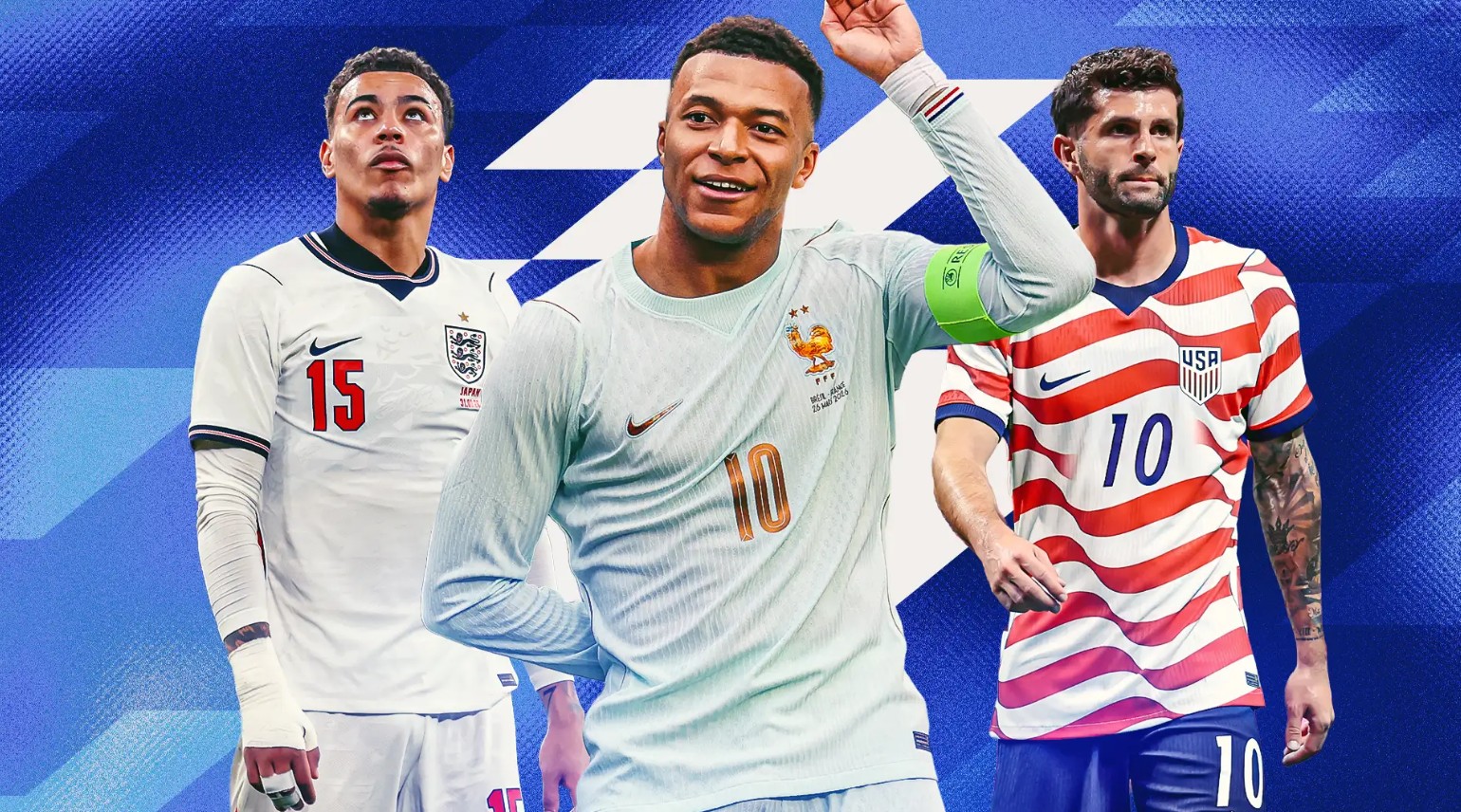
Compared to what Janusz, Cobi Jones, Alexi Lalas, and others went through in the early 1990s, the current national team’s circumstances seem almost Star Trekian. The 2026 U.S. team started training in a $250 million facility outside Atlanta this year, coinciding with the World Cup’s first trip to North America in thirty years. Major League Soccer, a U.S. outdoor league that started two years after the 1994 World Cup and currently has thirty clubs, employs eight players today, and thirteen more started their careers with MLS academies or senior teams. Christian Pulisic, Weston McKennie, Tyler Adams, and Folarin Balogun are just a few of the elite players who make over $3 million a year while playing for prestigious European teams.
Michallik told The Sporting News, “We’re better, but we’re still far away.” “I’m content. We’ve come a long way, I believe. In my opinion, we began in 1990. For Americans, it didn’t really matter prior to that.
However, I believe that occasionally we forget how old this game is. We’re still in second gear when you look at the past.
Oddsmakers put the USMNT as the 13th most probable team to win the trophy as the World Cup gets underway on Thursday in Los Angeles against Paraguay. tied with Uruguay, whose population is one-hundredth that of the United States. Is it appropriate to give that statement a little more emphasis? Like, “just” the 13th most likely team to prevail? Before the world’s largest sporting event takes off from one end of North America to the other, it certainly seems reasonable to raise this straightforward question:
Why do we not do better?
When the USMNT returned to the World Cup in 1990 after a 40-year hiatus, they lost all three matches by a total score of 8-2. From then on, they significantly improved. Since then, they have participated in seven of the eight World Cups and made it past the group stage in five of them. The Americans advanced to the quarterfinals and lost a contentious match against Germany in 2002 after defeating rival Mexico in the Round of 16.
“We’ve come a long way. Landon Donovan, a three-time World Cup hero who will work this event as a Fox Sports game analyst, told SN, “We’ve made tremendous, tremendous progress off the field. Major League Soccer, what the national team is now, the facilities we have here.” “World-class clubs from all over the world have players on the pitch. Major League Soccer has all these young development academies. In general, we are deeper than we have ever been. We’ll learn more about the top, top-end quality this summer, but I believe there is still a significant gap.
Of the 26 players on the U.S. roster, just two were born during the last time the tournament was held here, and only Tim Ream, a 38-year-old defender, has lived long enough to recall what happened. However, they all grew up in the world of soccer created by FIFA’s need that the United States establish a large professional league in order to win the 1994 Cup. The money raised from that event contributed to the league’s and the sport’s expansion. Enthusiasm was increased by television and the availability of the in-person encounter.
However, American soccer players encounter challenges that are unfamiliar to those in England, France, Germany, or Spain.
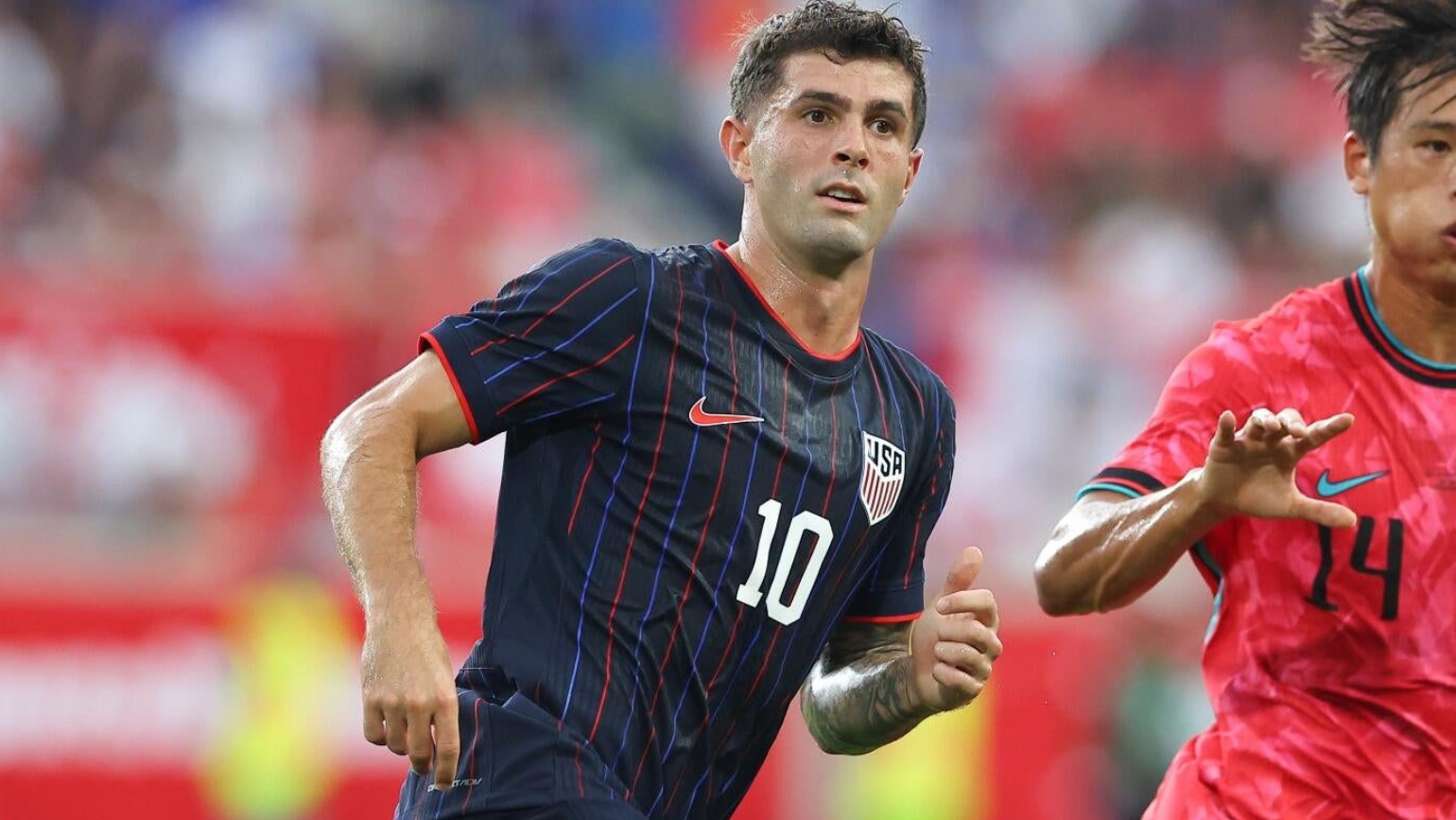
Since Americans are exceptionalists, I believe it is difficult to contextualize that in this nation. Former MLS champion and Premier League player Stu Holden told SN, “We want to be the best at everything.” “We need to raise the standard and have a mindset that we can compete with the world’s finest, that we are not an inferior soccer nation. We are so far behind the game merely based on the history of the game in this country.
“We have enough skilled players to compete against some of the top nations in the world once we can start thinking and playing like that. We simply lack the breadth and depth.
For his intriguing new book, “The Long Game,” soccer journalist Leander Schaerlaeckens spent years studying the history of the U.S. national team. His account of the time leading up to Paul Caliguiri’s left-footed goal to secure a spot at Italia ’90 in the final qualifying game is even more bizarre than previously mentioned.
The national squad embarked on an almost unbelievable athletic odyssey after competing in the first World Cup in 1930 and defeating Belgium and Paraguay to place third out of 13 competitors. The United States spent 11 years without winning a game in the 1950s and 1960s. There weren’t 11 players available to suit up for one World Cup qualifier in 1974, so they had to recruit someone from the spectators.
“To be honest, it was kind of shocking how much it had turned into a clown show,” Schaerlaeckens told SN. “Getting together for a qualification on the day of the game or, if they were fortunate, the day before, was incredibly careless. Without practice balls or shirts. It was a true case of “Bad News Bears.”
It is interesting, perhaps, that he utilized a baseball metaphor to make his point. There aren’t many of these points of comparison because soccer is still relatively young in the culture. In the middle of the 20th century, there were a few places in the United States where people were passionate about the sport: Southern California, New Jersey, and St. Louis. The North American Soccer League, a professional league that existed from 1968 to 1984, attracted some interest due to the signing of the legendary Pele. However, if you were a young person who was passionate about sports in the 1960s or 1970s, soccer was hardly ever seen on television or played in your neighborhood.
It was present in these kinds of ethnic and regional leagues that were specifically made to be unappealing to mainstream America. According to Schaerlaeckens, “that’s where immigrants who were still yearning for the old country would gather and celebrate themselves.” “It simply wasn’t present or visible at all.”
In July 1988, the FIFA executive committee decided not to hold the 1994 World Cup in that nation. It was sometimes referred to as a “soccer desert,” but the soil was too fertile for it to be accurate. The United States was more of an expansive, uncharted territory. And observe what has developed in this area since then.
This year marks MLS’s 30th anniversary. Seven of the league’s teams are in the top 30 most valuable in the world, according to Forbes, with Inter Miami, LAFC, Los Angeles Galaxy, New York City FC, and Atlanta United all believed to be worth at least $1 billion. Prominent USMNT players like Chris Richards, Alex Freeman, McKennie, and Adams advanced their careers in the youth academies that the league mandates its teams run.
In addition to the UEFA Champions League and its lower divisions, a soccer enthusiast in the United States with access to cable and streaming services can watch men’s games from the Premier League and Championship division in England, La Liga in Spain, Serie A in Italy, LigaMX in Mexico, and the Eredivisie in the Netherlands.
Now, most of the 104 World Cup matches in 2026 will take place in venues across the country, from Southern California to New England.
“Coming from a place where they weren’t at a World Cup for 40 years, I don’t know that another country has done as much structural work and made as many wholesale improvements as the U.S. has in 40 years,” Schaerlaeckens remarked. Additionally, no one has done it on this scale. I believe there’s a reason why the world’s two most populous nations, China and India, don’t truly compete at the highest level. Because it’s a disaster from an organizational standpoint. Smaller nations like the Netherlands and Uruguay typically perform well because it’s much simpler to organize if you have a soccer tradition and infrastructure.
It hasn’t been a straight climb. Three owners—Philip Anschutz, Lamar Hunt, and Bob Kraft—managed the whole ten-team league to save and maintain Major League Soccer (MLS), which was on the verge of collapse within its first ten years. In 2005, Chivas USA paid $7.5 million to join the league when it finally decided to grow once more. San Diego FC’s expansion cost $500 million by 2023.
An aged national squad did not make it to the 2018 competition in Russia, after making progress in World Cups in 2010 and 2014, including from the supposed “Group of Death” in Brazil. This resulted in a thorough analysis of U.S. operations for soccer and the resignation of president Sunil Gulati, who had led the sport for twelve years and was crucial to its development.
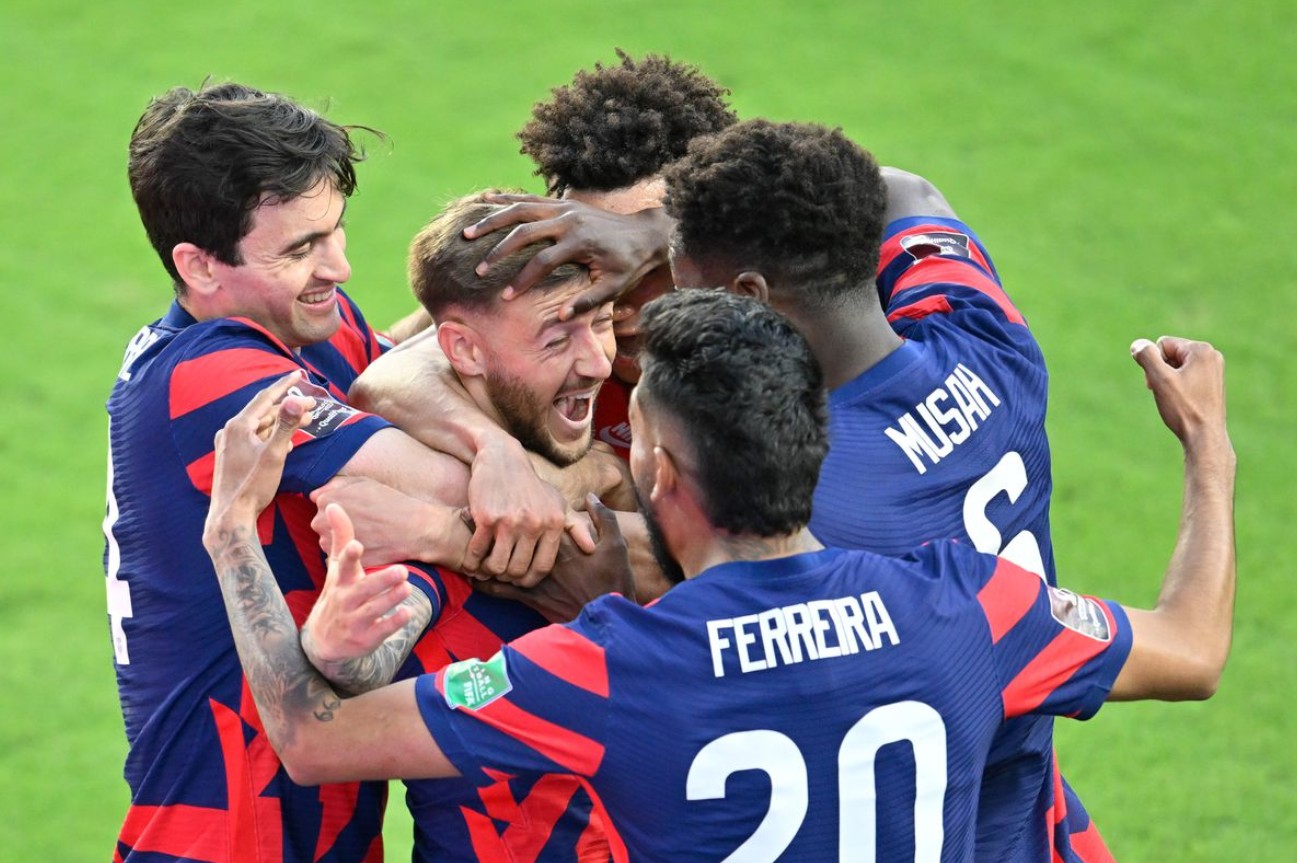
Other popular sports continue to be a barrier in the absence of established soccer power matches. American football, baseball, basketball, and hockey are among the options available to young athletes in the country. They all offer, on average, higher financial rewards and have much longer histories here.
Holden, who will be the primary analyst for Fox Sports during the World Cup, has a 10-year-old daughter and observes how kids her age tend to gravitate toward other sports. “Because they’re not training every day or dedicating themselves to soccer in a way that could seriously have a shot at being an elite-level athlete, and their friends play baseball and flag.”
Holden now thinks it’s beneficial for kids to participate in several sports at a young age, even though more sports are requiring players to be specialized. However, he stated, “I do think soccer is more of a sport that requires some level of specialization, just because of the technicality and how different the main skillset is to the rest of the sports.”
While many young Americans swing bats, shoot jumpers, and catch back-shoulder out routes, the rest of the world clearly uses their feet.
Why do we not resemble everyone else? Although it’s superior, why isn’t it at the top? “I think the main reason is that (soccer) isn’t everything,” Michallik told SN. It’s that easy. Everyone would be watching this if it were crucial. Everyone would be discussing it. The game would become more prestigious. There would be a lot more pressure. Similar to France or Germany, there would be ten times as much rivalry for spots.
“Everyone wants to be that if the game is everything and nothing else is important. Every child is only interested in one game. And you switch to volleyball, basketball, or hockey if you don’t succeed in soccer.
At the very moment the World Cup arrived in the United States, Todd Yeagley was wrapping up his studies at Indiana University, but he had already grown up in the sport in a way that few could match. Jerry, his father, won six NCAA titles over his thirty years as head coach at IU, the final one coming in 2003.
Todd had a seven-year career in Major League Soccer after winning the Hermann Trophy for top collegiate men’s player in 1994. Since taking over as coach of the Hoosiers in 2010, he has led them to five College Cups (pardon the outside-of-sport analogy, but that’s the equivalent of basketball’s Final Four) including the 2012 championship. Since it’s essentially his profession, Yeagley is familiar with the youth soccer scene, which is where potential college students are found.
The size of our nation is both a blessing and a curse. Yeagley told SN that many nations where the game is the most popular and where generations of players participate have an advantage since all of the young players aspire to be the next Messi or Neymar. They continue to look at our culture and ask themselves, “How can I be the next LeBron or Tom Brady?” That remains a challenge.
Having said that, I believe that both as a youth player and as a college coach, our coaching has completely improved. We’re very large, there are several leagues, and it’s a little fractured on the youth side, but other than that, I don’t think anything is really broken. I believe we’ve also begun to see that the younger children need to be coached by some of our best coaches. For a while, I believe we had things a touch backwards in many clubs, with the better coaches working with older kids and the parents and volunteers working with the 8-, 9-, and 10-year-olds. That might be effective in some places, and that’s OK, but in the rest of the globe, some of the best coaches are working with young players and are genuinely passionate about the game.
Donovan, who spent the majority of his career in Major League Soccer, also played for Germany’s Bayer Leverkusen as a teenager and briefly played for Everton in the Premier League, has witnessed youth soccer on both sides of the Atlantic.
Common practices in the American version, which is sometimes referred to as a “pay-to-play” system, worry him. As Schaerlaeckens pointed out, it’s odd that a sport as basic can be so costly.
“Winning and earning money are the main goals of youth soccer in this country. Donovan told SN, “It’s not about creating good players.” That is the most straightforward way to express it. Clubs and coaches are motivated to win in order to earn money.
It’s not really altruism guiding the approach in the European clubs he witnessed and participated in. Although it’s a more sensible approach, they also want to make money.
“They have no interest in winning. Because the goal is to get an 8-, 9-, or 10-year-old to play for the first squad,” Donovan stated. “Winning a soccer match is not the motivation to recruit more children in order to increase revenue. The goal is to get that young player on the first team so they can play and contribute to the team’s victory, as well as so you can sell them for tens or hundreds of millions of dollars.
“When I was sixteen, the coach at Leverkusen was a fifty-eight-year-old man who had been coaching the under-16 team for twenty years because he was very skilled at it.” He didn’t want to coach the first team. They didn’t give a damn about how the game turned out; all we were doing was getting the guys they wanted to play the right minutes in the correct locations.
Some of these problems have been addressed by the Major League Soccer structure’s inclusion of academies, but most don’t truly engage with prospects until they are teenagers. In a nation of 350 million, there are only 30 Major League Soccer teams. With 60 million people living in England, there are 92 professional teams that run academies.
“The FC Dallas academy director noted in the book that Madrid’s population is about the same as Dallas’s,” Schaerlaeckens stated. With around twelve professional soccer teams, Madrid has twelve professional youth academies, which are elite settings where players can go for free. By American standards, FC Dallas is a truly excellent youth program in Dallas. However, it has one.
“The likelihood of a child with any kind of talent attending a professional academy is twelve times higher in Madrid than it is in Dallas. And one of the cities where we’re succeeding is that one.
Whatever happens in North America over the next six weeks is unlikely to have the same effect on the sport as it did in 1994.
because there is no longer a need for a revolution.
These days, evolution is more important.
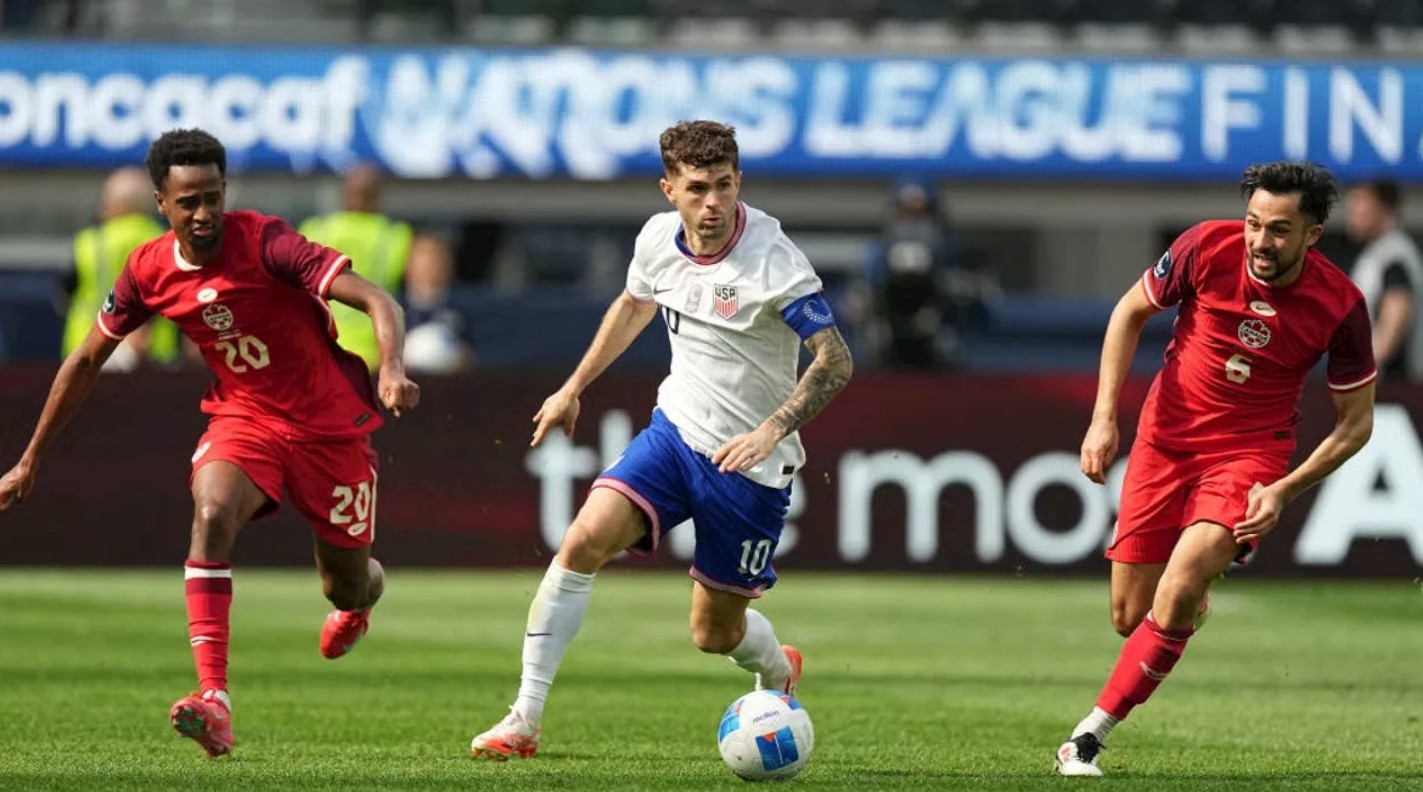
Holden expressed his belief that “my kids, or my kids’ kids” will witness the United States become a global power. It might be “one generation away” from that level, according to Yeagley.
Regardless of the success of the national team, soccer will receive a boost. Yeagley stated, “That is a fact.” “Everyone will be more attentive. Next year, there will be more children participating. Every soccer level will see an increase in attendance.
But if our national team performs exceptionally well, it might be a time and place when you go: That might have been the turning point. That’s the opportunity. You shouldn’t place too much emphasis on this summer, but you won’t get the chance to witness it in your own nation for many years, so that little child can observe and follow it up close.
Beginning in 1996, Michallik played with the Columbus Crew in the first Major League Soccer. He participated in a league where a few clubs played in minor-league baseball venues and the majority used NFL or college football stadiums as home fields. On Ohio State’s intramural fields, the crew rehearsed.
“I hope this league lasts longer than any league we’ve been a part of,” he remarked, recalling that he had participated in five, six, or seven unsuccessful leagues. “The most crucial thing is to have a league to play in. Prior to that, consider the national team. These guys met at the airport five times a year.
Every major professional men’s league in our country—the NFL, NBA, NHL, and MLB—offers the greatest competition in the planet, with the exception of MLS. Some people who identify as soccer fans support the USMNT yet disapprove of the domestic competition in the United States.
Holden told SN, “MLS is a cheap punchline to a certain segment of soccer fans.” It undermines the excellence of our league, in my opinion. Accepting that you are still more American is acceptable. We must overcome our inferiority complex and the belief that we must perform all tasks in the same way as everyone else.
“I don’t anticipate MLS becoming a major topic on every sports talk program on July 20, the day following the World Cup final. We still have a lot of work to do in that regard. We have everything we need to be legitimate, but it won’t happen overnight.
Starting on Thursday and continuing for the duration of the competition, the USMNT will showcase everything that makes them distinctively American. In 1994, we witnessed the impact that a certain level of success may have on both the participants and the sport as a whole.
Fifteen of the twenty-two players on the team at the time been inducted into the National Soccer Hall of Fame. The Fox Sports team that broadcasts the competition on US television employs Jones and Lalas as analysts. Tony Meola is co-host of the Counter Attack show on SiriusXM, an analyst for CBS Sports’ UEFA Champions League coverage, and a member of the well-known “Call It What You Want” podcast. Eric Wynalda co-hosts Wynalda Talks Football, an afternoon drive program on SiriusXM. Marcelo Balboa is a Spanish language analyst for MLS telecasts on Apple TV. For over thirty years, their impact on the game has persisted.
At that World Cup, they only managed one victory. Switzerland, Drew. Colombia was greatly favored by the defeat. Romania won. They were eliminated in the Round of 16 after holding eventual champion Brazil to a single goal.
“There was nothing here in ’94, so I don’t believe it’s practical or reasonable for this to have the kind of groundswell ’94 did. Schaerlaeckens told SN, “It was like landing on the moon.” This time, I believe the game has the potential to further popularize soccer. Due to a disconnect, soccer is now a very popular sport, but in reality, people watch the Premier League, Bundesliga, Serie A, and other leagues, as well as the Mexican League. This isn’t necessarily related to the men’s national team specifically, the MLS, or the NWSL.
“The next step for American soccer is to establish more of a connection between the domestic and international game, to make it more than this hipster thing where you’re really into FC Koln or Rayo Vallecano and people get more invested in the local teams.”
“Kids will aspire to follow in the footsteps of American athletes who become wealthy and well-known, preferably from their home state or metropolitan area. How many players in this age were motivated by Landon Donovan’s 2010 goal against Algeria? It is the majority of those who were raised in the United States. All you have to do is make more of those moments.
About the Author