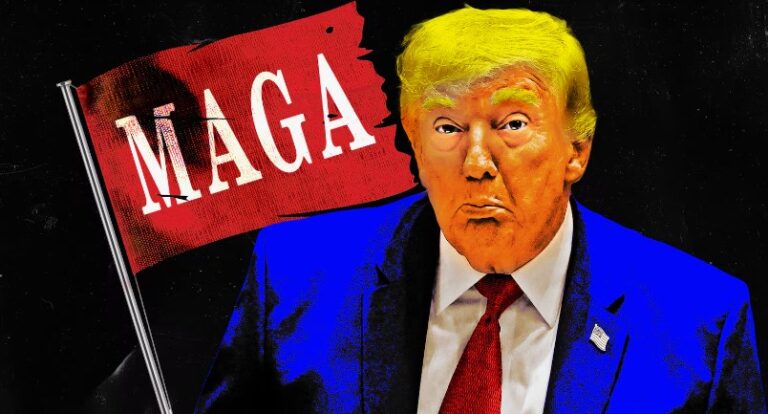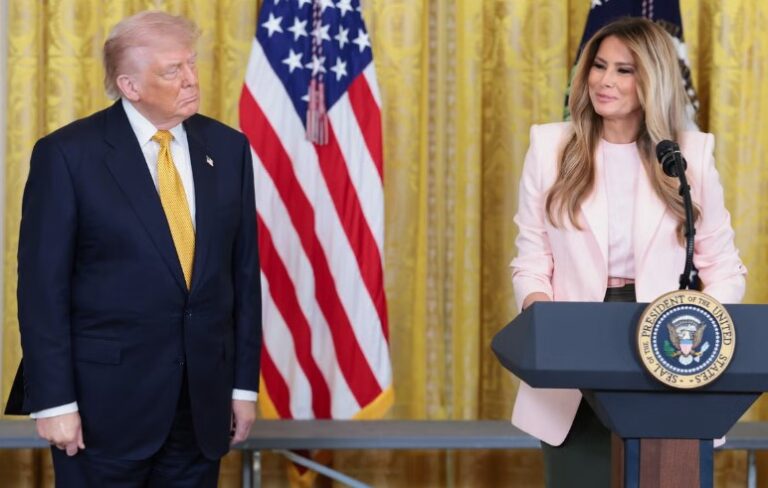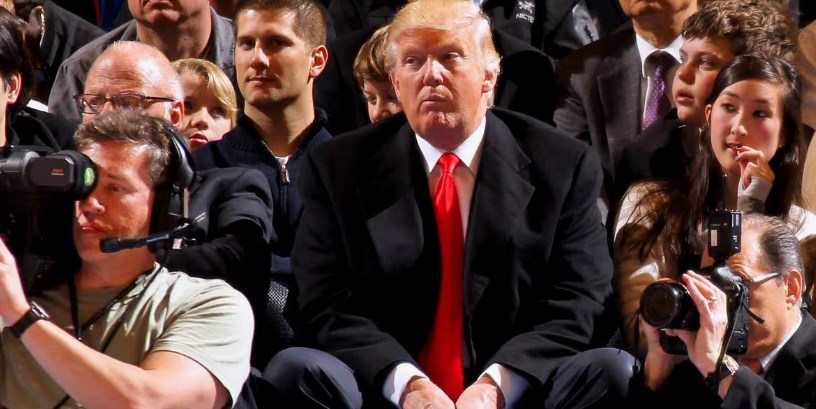
Trump trashes the NBA. So why will he attend Knicks-Spurs finals game? – Donald Trump has never been shy about his opinions on sports, and the NBA has been a frequent target of his criticism over the years. From comments about player activism to disputes over league leadership and culture, his relationship with the league has often been framed by tension rather than admiration. So when reports emerged that Trump would attend a high-profile NBA Finals matchup between the NBA, featuring the New York Knicks and the San Antonio Spurs, it immediately raised eyebrows.
Why would someone who has publicly criticized the league show up at one of its biggest events? The answer is more layered than a simple contradiction. It sits at the intersection of politics, media attention, personal branding, and the evolving relationship between sports and public life in America.
At first glance, the contradiction seems obvious. Trump has repeatedly taken aim at the NBA in the past, especially during periods when players and coaches have spoken out on social and political issues. His criticisms have often focused on what he perceives as the league becoming “too political” or losing touch with traditional fan bases. These statements have made him a polarizing figure within basketball culture, where many players and fans embrace activism as part of the sport’s modern identity.
Yet attending a marquee NBA Finals game is not necessarily an endorsement of the league’s policies or culture. In fact, it may say more about visibility than alignment. The NBA Finals remain one of the most-watched sporting events in the United States, drawing global media coverage, corporate presence, and celebrity attendance. For any public figure, particularly one with Trump’s media instincts, the event represents a stage that is difficult to ignore.
There is also a historical precedent for political figures attending major sporting events despite disagreements with the institutions behind them. Sports often operate as a rare cultural space where ideological divides are temporarily set aside in favor of spectacle. Presidents, governors, and candidates frequently appear at games not to signal agreement with every aspect of a league or team, but to engage with a shared national audience. Trump trashes the NBA
In Trump’s case, the optics matter as much as the game itself. Sitting courtside at a Finals matchup between two iconic franchises like the Knicks and Spurs is not just about basketball. It is about being seen at the center of American sports culture. The NBA Finals provide a backdrop that blends entertainment, competition, and celebrity in a way few other events can match.
The Knicks, in particular, add another layer of significance. As one of the league’s most storied franchises, rooted in New York City—a place deeply tied to Trump’s personal and professional history—their presence in the Finals amplifies the symbolic weight of the moment. The Spurs, meanwhile, represent consistency, discipline, and championship pedigree, often viewed as one of the most respected organizations in modern basketball history. Together, the matchup represents a classic Finals narrative: tradition versus resilience, legacy versus evolution.
For the NBA itself, a high-profile attendee like Trump is both a media challenge and a visibility boost. The league thrives on attention, and Finals games already attract a global audience. The presence of a controversial political figure only intensifies the spotlight. Cameras will inevitably cut to celebrity rows, social media will react in real time, and commentary shows will dissect every reaction, gesture, and moment.
This is where modern sports culture becomes inseparable from media culture. Attendance at a game is no longer a passive act. It is content. Every appearance is analyzed, clipped, and circulated. In that environment, Trump’s presence becomes part of the broadcast narrative whether the league intends it or not.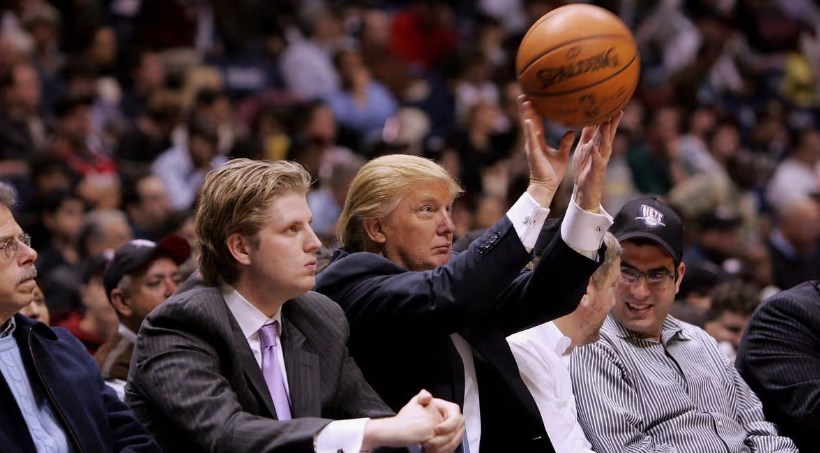
There is also a strategic interpretation that cannot be ignored. Public figures often use sports events as opportunities to reach audiences outside traditional political spaces. Unlike rallies or interviews, sports appearances allow for a different kind of engagement—less formal, more emotional, and often more broadly appealing. A Finals game, especially one involving high-profile teams like the Knicks and Spurs, offers a diverse audience that spans demographics, regions, and political affiliations.
Still, the tension between Trump’s past criticism of the NBA and his attendance at its premier event will likely remain the dominant talking point. Critics may view it as contradictory, while supporters may interpret it as pragmatism or simply an appreciation of major American sporting culture despite disagreements with its leadership or messaging.
But contradictions are not unusual in the world of sports and politics. In fact, they are increasingly common. The NBA itself has navigated complex relationships with political figures across administrations, balancing advocacy, business interests, and entertainment value. Players have also evolved into multifaceted public figures who engage in activism while participating in a league driven by global commercial appeal.
In that sense, Trump’s presence at a Finals game does not exist in isolation. It reflects a broader reality: sports today are not separate from political and cultural discourse—they are deeply embedded within it. Every courtside seat, every halftime interview, every televised reaction becomes part of a larger conversation about identity, influence, and visibility. Trump trashes the NBA
For fans watching the game, however, the focus will likely remain where it belongs: on the court. The intensity of the Finals, the battle between the Knicks and Spurs, and the pursuit of a championship will still define the night. The narratives off the court may swirl around the event, but the scoreboard remains the ultimate measure of attention.
In the end, Trump’s attendance at an NBA Finals game he has publicly criticized is less about contradiction and more about coexistence. It illustrates how public figures navigate spaces they may critique but cannot fully ignore. The NBA, for its part, continues to exist as one of the most powerful cultural platforms in the world—capable of drawing both admiration and criticism, sometimes from the same individuals. And as the lights shine brightest on the Finals stage, the intersection of politics, personality, and sport becomes just another part of the spectacle—one more storyline unfolding alongside the game itself. Trump trashes the NBA
About the Author