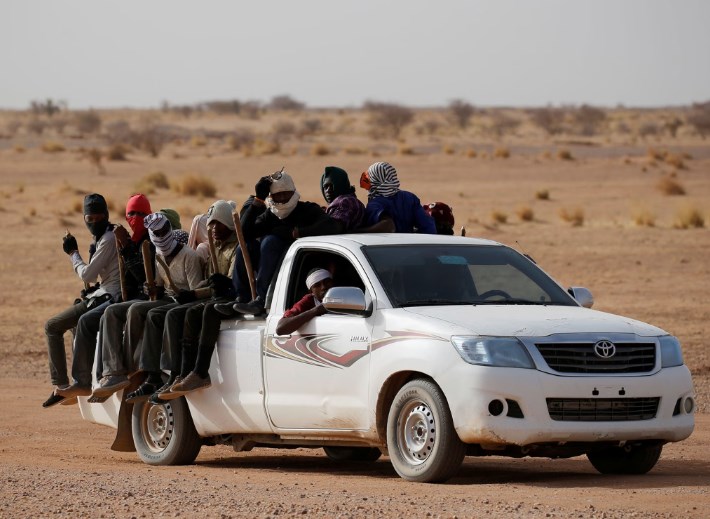
Forty-nine people die of dehydration after truck breaks down in the Sahara – In the vast, unforgiving expanse of the Sahara Desert, where horizons blur into endless waves of sand and heat shimmers like a mirage, a routine journey turned into a devastating tragedy. Forty-nine people are believed to have died of dehydration after a crowded transport truck broke down in the middle of the desert, leaving passengers stranded under extreme temperatures with no immediate access to water, shelter, or rescue.
The incident, according to preliminary reports from regional authorities and humanitarian organizations operating in the area, unfolded during what was meant to be a long but familiar crossing route used by migrants, laborers, and informal transport operators. These journeys, often arranged through informal networks, traverse some of the most hostile terrain on Earth, where daytime temperatures can soar above 45°C (113°F) and survival without water becomes a matter of hours rather than days.
A Journey That Never Reached Its Destination
Survivors—few in number and still receiving medical care—described a harrowing sequence of events that began with a mechanical failure. The truck, heavily overloaded with passengers and luggage, reportedly suffered engine trouble sometime in the late afternoon. At first, the situation seemed manageable. The driver attempted makeshift repairs, while passengers remained hopeful that another passing vehicle might offer assistance.
But in the desert, hope is often as fragile as heat-thinned glass. As hours passed, the engine failed completely, leaving the vehicle immobilized in a remote stretch far from established roads or settlements. The absence of mobile signal and the scarcity of traffic turned what might have been a solvable breakdown into a deadly isolation.
Without air conditioning or shade beyond the truck’s metal frame, temperatures inside and around the vehicle quickly became unbearable. Water supplies, already limited for such a long journey, were exhausted within hours as passengers attempted to ration what little they had.
The Desperation of Heat and Isolation
By nightfall, the desert’s temperature dropped slightly, but not enough to reverse the damage already done. Dehydration, accelerated by the scorching daytime heat, had already begun to take its toll. Witnesses who survived recounted confusion, disorientation, and extreme weakness among passengers. Some attempted to walk in search of help, but the desert’s scale and lack of landmarks made navigation nearly impossible. In such conditions, even short distances can become fatal.
Medical experts explain that in extreme desert heat, the human body loses water rapidly through sweat and respiration. Without replenishment, symptoms escalate from dizziness and confusion to organ failure. In this case, the combination of prolonged exposure, overcrowding, and lack of water created conditions that were tragically unsurvivable for many. By the time help eventually arrived—after a separate convoy noticed the abandoned vehicle too late—forty-nine people had already died. Survivors were found in critical condition, suffering from severe dehydration, heatstroke, and exhaustion.
A Pattern of Risky Crossings
This tragedy is not an isolated event. The Sahara has long been both a route of migration and a corridor of peril. Every year, thousands attempt to cross its vast stretches in search of employment opportunities, safety, or a better future. Many rely on informal transport networks that operate with limited regulation, often using old trucks or overcrowded vehicles not designed for such extreme journeys.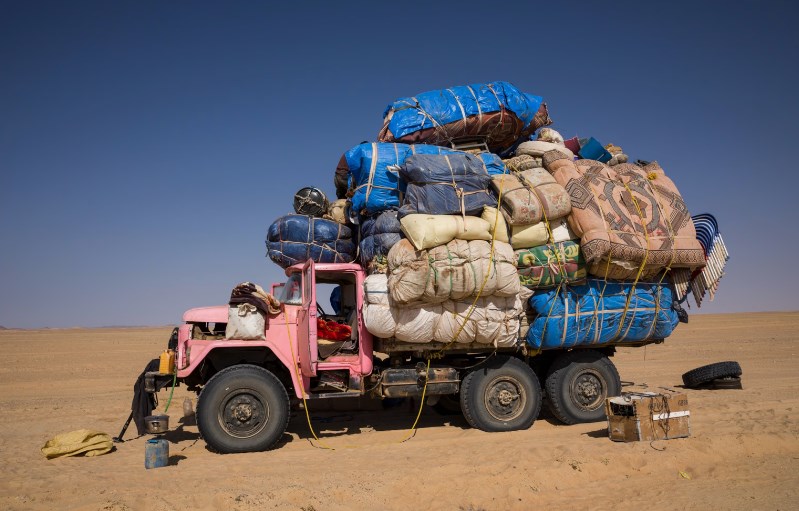
Humanitarian organizations have repeatedly warned about the dangers of desert crossings. The combination of unreliable transportation, harsh climate conditions, and lack of emergency infrastructure makes rescue operations extremely difficult. In many cases, by the time distress signals are received—or even detected—it is already too late. Experts say that breakdowns are one of the most common catalysts for disaster. In urban settings, a stalled vehicle is an inconvenience. In the Sahara, it can become a death sentence.
The Human Cost Behind the Numbers
While reports often focus on statistics, each number in this tragedy represents a life abruptly cut short. Men, women, and possibly children were among the passengers, though official identification efforts are still underway. Many of them were believed to be migrants traveling together, bound not by nationality alone but by shared hopes for opportunity beyond the desert. Forty-nine people die of dehydration after truck breaks down in the Sahara
Families awaiting news in home villages and transit towns now face agonizing uncertainty. Local authorities have begun the process of notifying relatives where possible, but identification in such conditions is slow and complicated. Aid workers on the ground describe the emotional weight of the recovery effort as overwhelming. One volunteer noted that the silence of the desert is often the hardest part—not just the absence of sound, but the absence of help when it is needed most.
The Challenge of Rescue in the Desert
Search-and-rescue operations in the Sahara Desert are notoriously difficult. The terrain is vast, with shifting dunes that can erase tire tracks and landmarks within hours. Temperatures fluctuate dramatically between day and night, complicating both ground and aerial operations. In this case, it appears that the truck’s remote location and lack of communication equipment delayed any chance of timely intervention. Authorities are now reviewing how long the vehicle had been stationary before it was discovered and whether earlier detection could have changed the outcome.
Some regional officials are calling for improved monitoring systems along known migration routes, including emergency water stations, satellite tracking for commercial transport, and stricter oversight of passenger vehicles operating in desert zones. Forty-nine people die of dehydration after truck breaks down in the Sahara
A Call for Safer Routes and Accountability
In the aftermath of the tragedy, discussions have intensified around the regulation of informal transport networks. Advocates argue that many of these deaths are preventable and stem from systemic gaps in infrastructure, governance, and enforcement.
They emphasize that while migration and movement across regions is not inherently dangerous, the conditions under which it currently occurs in parts of the Sahara make it perilous. Overcrowded vehicles, lack of trained drivers, and absence of emergency protocols all contribute to repeated loss of life.
International organizations have urged cooperation between transit countries to strengthen safety measures, improve road monitoring, and ensure that those undertaking such journeys are not left vulnerable to environmental extremes.
Remembering Those Lost
As the desert winds continue to sweep across the silent landscape, the remains of the truck stand as a stark reminder of the fragility of life in extreme environments. Investigations are ongoing, and officials are expected to release more detailed findings in the coming days.
But for many, the numbers alone already tell a painful story: forty-nine individuals who set out on a journey and never returned, undone not by violence or conflict, but by thirst, heat, and isolation in one of the most unforgiving environments on Earth.
In the end, the Sahara does not discriminate. It offers neither mercy nor malice—only conditions that demand respect, preparation, and caution. And when those are absent, as this tragedy shows, the consequences can be irreversible. Forty-nine people die of dehydration after truck breaks down in the Sahara
About the Author