Trump’s Golden Dome missile shield would cost $1200 billion
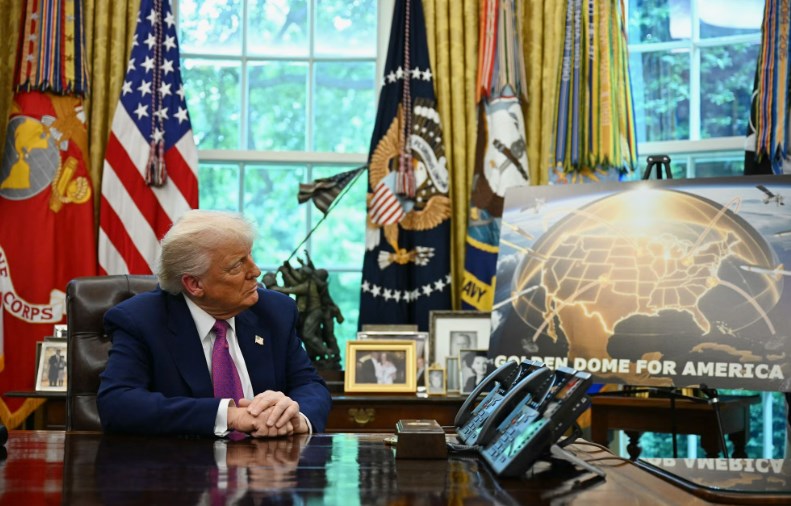
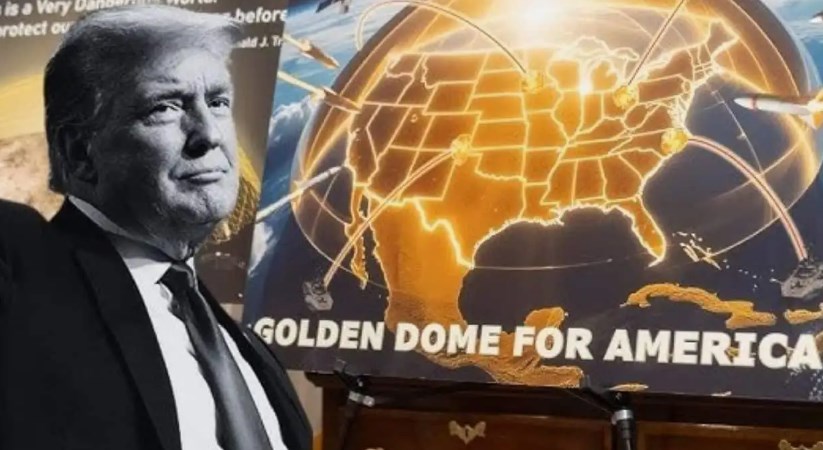
The proposal has sparked fierce debate among defense experts, lawmakers, and economists, many of whom question whether such a gigantic investment would truly make America safer or simply drain taxpayer money into an endless technological arms race. At the center of the discussion is Trump’s vision of a next-generation missile shield inspired by systems like Strategic Defense Initiative, often remembered by critics as the “Star Wars” defense program introduced during the presidency of Ronald Reagan.
Reagan’s original concept imagined satellites and advanced weapons intercepting enemy missiles before they could reach American soil. While the technology of the 1980s was nowhere near capable of achieving those goals, advances in artificial intelligence, space systems, radar networks, and hypersonic interception have revived similar ambitions decades later. Trump’s Golden Dome missile shield would cost $1200 billion
Trump’s “Golden Dome” concept reportedly aims to combine space-based sensors, advanced missile interceptors, satellite tracking systems, and ground defense networks into one massive protective shield surrounding the United States. The project would likely involve cooperation between the Pentagon, private aerospace companies, and intelligence agencies on a scale rarely seen before. Supporters argue the threat landscape has changed dramatically in recent years. Hypersonic missiles developed by China and Russia can travel at extreme speeds while maneuvering unpredictably, making them far harder to intercept than traditional ballistic missiles. Military analysts warn that older American defense systems were designed for Cold War-era threats and may struggle against modern weapons capable of evading radar detection or attacking from unexpected trajectories.
Backers of the Golden Dome say America cannot afford to fall behind. They believe a comprehensive missile shield could deter adversaries from launching attacks in the first place. Some conservatives have framed the proposal as a necessary investment in national survival, especially as geopolitical tensions continue rising across Eastern Europe, the Middle East, and the Pacific region. Yet the projected price tag has alarmed even some defense hawks.
Analysts estimate the system could cost roughly $1.2 trillion over several decades once research, deployment, maintenance, upgrades, and operational expenses are included. To put that number into perspective, it exceeds the annual GDP of many major countries and rivals the total cost of some of the largest military programs ever undertaken by the United States. Trump’s Golden Dome missile shield would cost $1200 billion
Experts point out that building a truly comprehensive missile shield is extraordinarily difficult. Intercepting a missile traveling thousands of miles per hour requires detecting the launch almost instantly, calculating its trajectory within seconds, and successfully destroying it mid-flight — often in space. The challenge becomes even more complicated when dealing with multiple simultaneous launches, decoys, electronic warfare systems, or hypersonic glide vehicles designed specifically to avoid interception.
Some defense researchers caution that no missile defense system can ever guarantee perfect protection. Even a 90 percent success rate could still allow devastating attacks to penetrate defenses. Critics therefore question whether spending trillions on such a project would create a false sense of security while encouraging rivals to simply build more advanced offensive weapons. Another concern centers on the militarization of space. Because the Golden Dome concept would likely rely heavily on satellites and orbital tracking systems, some experts fear it could trigger a new global space arms race. Countries such as China and Russia may respond by developing anti-satellite weapons, cyberattacks targeting defense networks, or entirely new missile technologies aimed at bypassing American systems.
Economic critics have also raised questions about the impact on the federal budget. The United States already spends hundreds of billions annually on defense, while also facing rising national debt, infrastructure needs, and political battles over healthcare and social programs. Opponents argue that a $1.2 trillion defense shield could divert resources away from domestic priorities that many Americans consider more urgent. Still, supporters counter that national defense is the government’s most important responsibility. They argue that preventing even a single catastrophic missile strike on American cities would justify the enormous cost. Some analysts compare the proposal to nuclear deterrence programs during the Cold War, which were also criticized for their expense but ultimately viewed by supporters as necessary investments in national security.
Private defense contractors would likely play a major role in any Golden Dome initiative. Aerospace giants and technology firms could receive enormous contracts for satellite production, AI systems, missile interceptors, radar arrays, and cybersecurity infrastructure. That prospect has already triggered concerns about potential lobbying influence and whether corporate interests could shape policy decisions surrounding the project. The political dimension is equally significant. Trump has frequently promoted large-scale, headline-grabbing initiatives that emphasize strength and dominance on the world stage. The name “Golden Dome” itself appears designed to project power, protection, and technological superiority. For supporters, it symbolizes American innovation and resilience. For critics, it represents branding and political theater attached to an enormously complex military challenge.
The debate is also unfolding at a time when global tensions remain high. Wars in Europe and the Middle East, rising competition between Washington and Beijing, and fears surrounding nuclear modernization have all increased public anxiety about international security. Missile defense systems, once considered futuristic concepts, are increasingly viewed as realistic necessities by many policymakers.Even so, defense historians note that similar visions have surfaced repeatedly throughout American history. From Reagan’s Strategic Defense Initiative to various missile shield programs under later administrations, the promise of an impenetrable defense system has always faced the same reality: offensive weapons tend to evolve just as quickly as defensive technologies. Trump’s Golden Dome missile shield would cost $1200 billion
Whether Trump’s Golden Dome ever becomes reality remains uncertain. A project of this scale would require congressional approval, massive long-term funding commitments, and sustained political support across multiple administrations. It would also demand technological breakthroughs that may still be years away. What is certain is that the proposal has reignited one of the oldest debates in modern military strategy — whether true security can ever be achieved through technological defense alone.
As geopolitical rivalries intensify and missile technology advances at breathtaking speed, the pressure to develop stronger protections will only grow. For now, the idea of a trillion-dollar missile shield remains both a symbol of America’s technological ambitions and a reminder of the staggering costs that come with trying to defend a superpower in an increasingly dangerous world. Trump’s Golden Dome missile shield would cost $1200 billion
About the Author