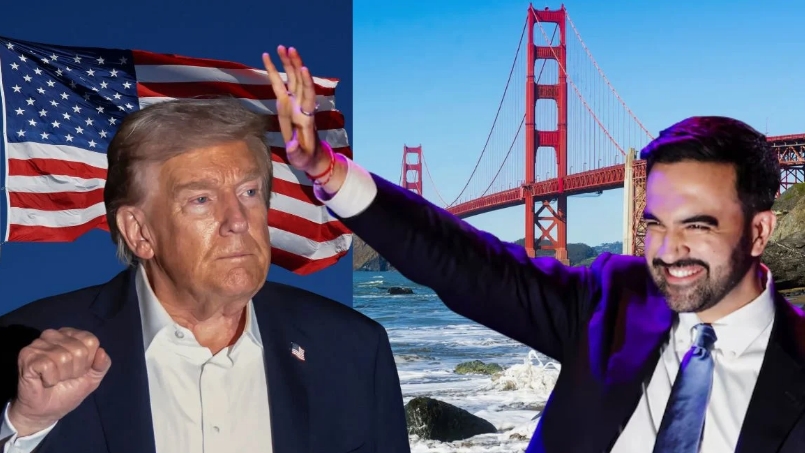
Why is Trump bashing Mamdani? The latest feud between president, mayor – Donald Trump and Zohran Mamdani’s most recent political altercation has swiftly developed into a media-grabbing rivalry that represents deeper divisions in American politics. At first look, what could appear to be just another back-and-forth argument is actually a fascinating glimpse of how media strategy, personality, and ideology interact in today’s political environment. In order to see why Trump is “bashing” Mamdani, it’s critical to examine both the immediate causes and the larger environment that feeds these kinds of conflicts.
A sharp ideological difference is at the core of the conflict. Mamdani is a progressive politician in New York who has made a name for himself by promoting policies that upend established economic systems, such as increased public services, tenant protections, and a more forceful approach to wealth redistribution. Younger urban voters who are becoming more wary of corporate control and economic inequity find great resonance in his beliefs. Conversely, Trump has always presented himself as an advocate of free-market capitalism and an opponent of what he sometimes refers to as “radical left” ideas. Trump views Mamdani’s arguments for more taxes on the wealthy and housing as human rights as existential challenges to the system he supports, rather than merely political differences.
Personal attacks have flourished as a result of this ideological conflict. Mamdani’s growing prominence makes him an ideal target for Trump, whose style has always been toward direct, frequently aggressive criticism of opponents. By singling out Mamdani, Trump is symbolically opposing a larger movement that Mamdani symbolizes rather than merely interacting with a single local politician. Mamdani is essentially a stand-in for the progressive side of American politics, which Trump has continuously worked to weaken.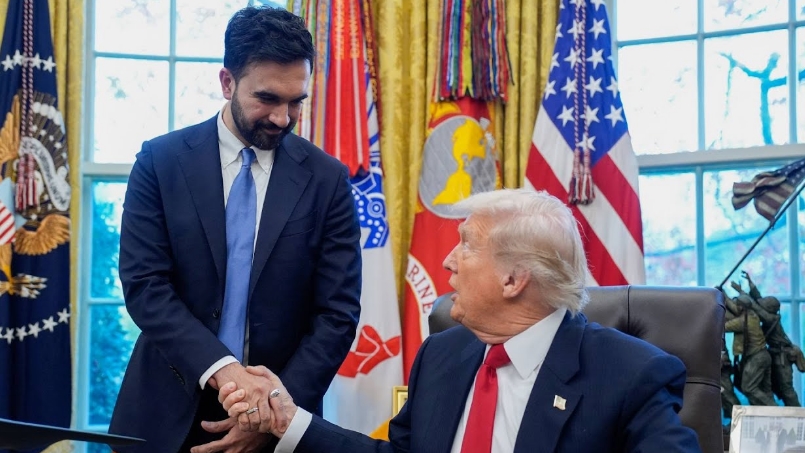
However, the severity of the conflict cannot be explained by ideology alone. Additionally, there is a strategic component involved. Trump has consistently shown a deep understanding of media dynamics. Attacking a more youthful and vocal politician such as Mamdani attracts attention, especially on social media sites where political debate is fueled by confrontation. Trump may galvanize his supporters by portraying Mamdani as a symbol of “extreme” policies, strengthening the idea that he is opposing a tide of radical change. It’s a well-known strategy: choose a person who represents opposing ideals, highlight their most divisive stances, and utilize that contrast to mobilize followers.
The attention is a double-edged sword for Mamdani. Being singled out by someone as well-known as Trump raises his profile nationally, on the one hand. It potentially increases his influence in progressive circles by introducing him to audiences much beyond his local area. However, it also exposes him to harsh criticism and scrutiny, which frequently distorts his opinions into talking points. This dynamic exemplifies a recurrent pattern in contemporary politics, where visibility can be a major liability as well as a potent gain. Why is Trump bashing Mamdani
The conflict highlights the generational gap influencing modern political discourse as well. Mamdani is an example of a younger generation of leaders who feel more at ease adopting drastic, systemic reforms. Their discourse frequently highlights the importance of implementing broad reforms to address social fairness, economic injustice, and climate change. Trump, on the other hand, appeals to a distinct sensibility that places more value on national identity, stability, and caution about quick change. When these viewpoints collide, there is more than just disagreement—there is a fundamental difference in how each side sees the future.
Geographical factors also play a role in the dispute. For many years, New York City has served as a metaphorical battlefield in American politics, standing for both progressive action and economic might. This climate, where appeals for reform frequently acquire traction, is the foundation of Mamdani’s political base. Trump has increasingly positioned himself against the political orientation of New York, despite his own strong links to the city. By criticizing a New York politician such as Mamdani, Trump is able to access more general narratives about economic policy, crime, and urban governance—issues that are highly relevant to his followers.
The role that personal branding plays in the conflict is also noteworthy. Confrontation has always been central to Trump’s political persona. One of his most appealing qualities is his openness to criticize opponents, frequently in direct and memorable ways. Mamdani, on the other hand, has developed a reputation as a morally upright change agent who is prepared to confront long-standing institutions. There will inevitably be a collision when these two styles collide. Each character supports the other’s narrative: Mamdani’s supporters use Trump’s criticisms as proof of opposition to essential reform, while Trump depicts Mamdani as being overly radical.
All of this is amplified by the media environment. Conflicts like this one are practically designed for virality in a time when news cycles move quickly and social media encourages fury. The fundamental policy disagreements that underpin the disagreement are frequently overshadowed by headlines that emphasize personal assaults, which attract clicks and shares. As a result, the rivalry becomes more about the show of battle than it is about particular problems. Why is Trump bashing Mamdani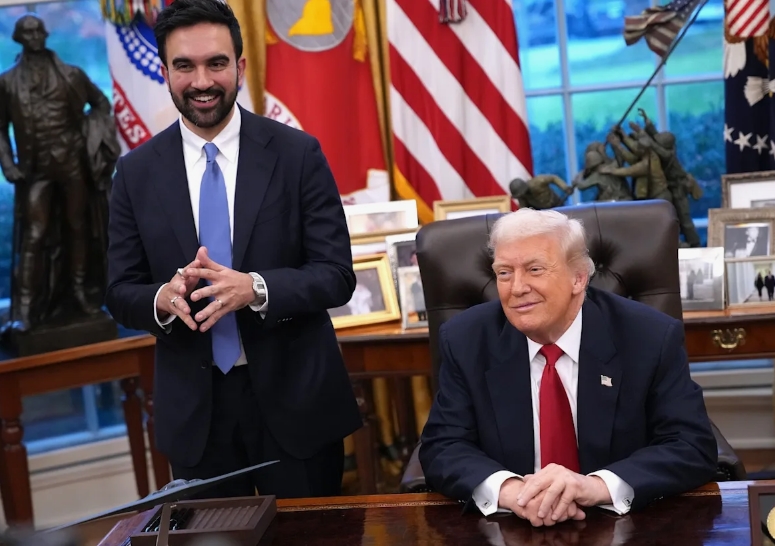
There are actual stakes, though, beneath the commotion. The policies under discussion—public services, taxes, and housing affordability—have real effects on people’s lives. Even if the conversation is presented in more aggressive terms, Trump is indirectly addressing these issues when he criticizes Mamdani. In a similar vein, Mamdani’s answers serve as both rebuttals and chances to express his ideas and reach a larger audience.
Ultimately, the conflict between Trump and Mamdani is more about the collision of two political systems than it is about two people. It captures a time in American politics when conflicts are not only ideological but also generational and cultural. The intensity of the conversation reflects the general lack of clarity regarding the nation’s future—whether it will adopt audacious reforms or strengthen its current institutions.
The feud will probably follow a well-known pattern as it develops: acrimonious confrontations, more media coverage, and continuous discussion of the fundamental problems. However, its importance extends beyond the headlines. It provides a window into the changing dynamics of political power, where local leaders can become national icons and every fight has ramifications that go well beyond its initial setting.
Whether Mamdani is viewed as a visionary or a provocateur, and whether Trump’s critique is perceived as a necessary challenge or an excessive attack, one thing is certain: this is not a minor disagreement. The deeper currents influencing contemporary politics are reflected in it, and they don’t appear to be slowing down. Why is Trump bashing Mamdani
About the Author